Best Gas Stove in Pakistan (2026): Price Guide & Buying Tips
Every Pakistani kitchen runs on its stove. From the morning chai and paratha to the evening salan and the weekend biryani for guests, the gas stove is the one appliance that gets used three times a day, every day, for years. When it starts giving trouble — a burner that will not light, a flame that stays yellow, a knob that turns stiff — the whole kitchen slows down. That is why choosing the best gas stove in Pakistan is worth a little care before you pay. Prices for gas stoves in Pakistan are typically around Rs 8,000–35,000 (check the seller for the current price).
This guide covers the five main types sold in Pakistan, their prices, and the details that decide whether your stove cooks evenly, lasts for years, and stays safe in daily use.
Quick Picks
- Best for small kitchens: a two-burner tabletop gas stove that fits a narrow counter and covers daily cooking for a small family.
- Best for large families: a four-burner hob or built-in stove with room for two pots and a kettle at the same time.
- Best for easy cleaning: a glass-top gas stove with a smooth surface that wipes clean after a spill.
- Best for low gas pressure: a stove with heavy brass burners and a good regulator, which holds a steady flame when the pressure drops in winter.
- Best budget pick: a simple stainless steel two-burner stove, tough and cheap to repair, for a rented home or a first kitchen.
Two-Burner Tabletop Gas Stoves for Small Kitchens
The two-burner tabletop stove is the stove most Pakistani homes start with. It sits on the kitchen counter, connects to the gas line or a cylinder with a rubber pipe, and covers the daily cooking of a small family: one burner for the salan, one for the roti or the chai. Most models are about two feet wide, so they fit the narrow counters of flats in Karachi, Lahore and Islamabad.
The body is usually stainless steel, which handles heat and spills without rusting. Burners come in brass or aluminium; brass burners last longer and spread the flame more evenly, while aluminium burners cost less but wear out sooner. A two-burner stove is light enough to move for cleaning behind it, and if a burner fails, a local shop can replace it cheaply.
Two-burner tabletop gas stoves are typically around Rs 8,000–15,000 (check the seller for the current price). Before paying, light both burners in the shop and look for a steady blue flame with no yellow tips, and check that the knobs turn smoothly without sticking.
- Pros: affordable, fits small kitchens, easy to move and clean, cheap spare parts everywhere.
- Cons: only two burners, so cooking for guests takes longer; basic looks; no auto ignition on most models.
Three-Burner Gas Stoves for Everyday Family Cooking
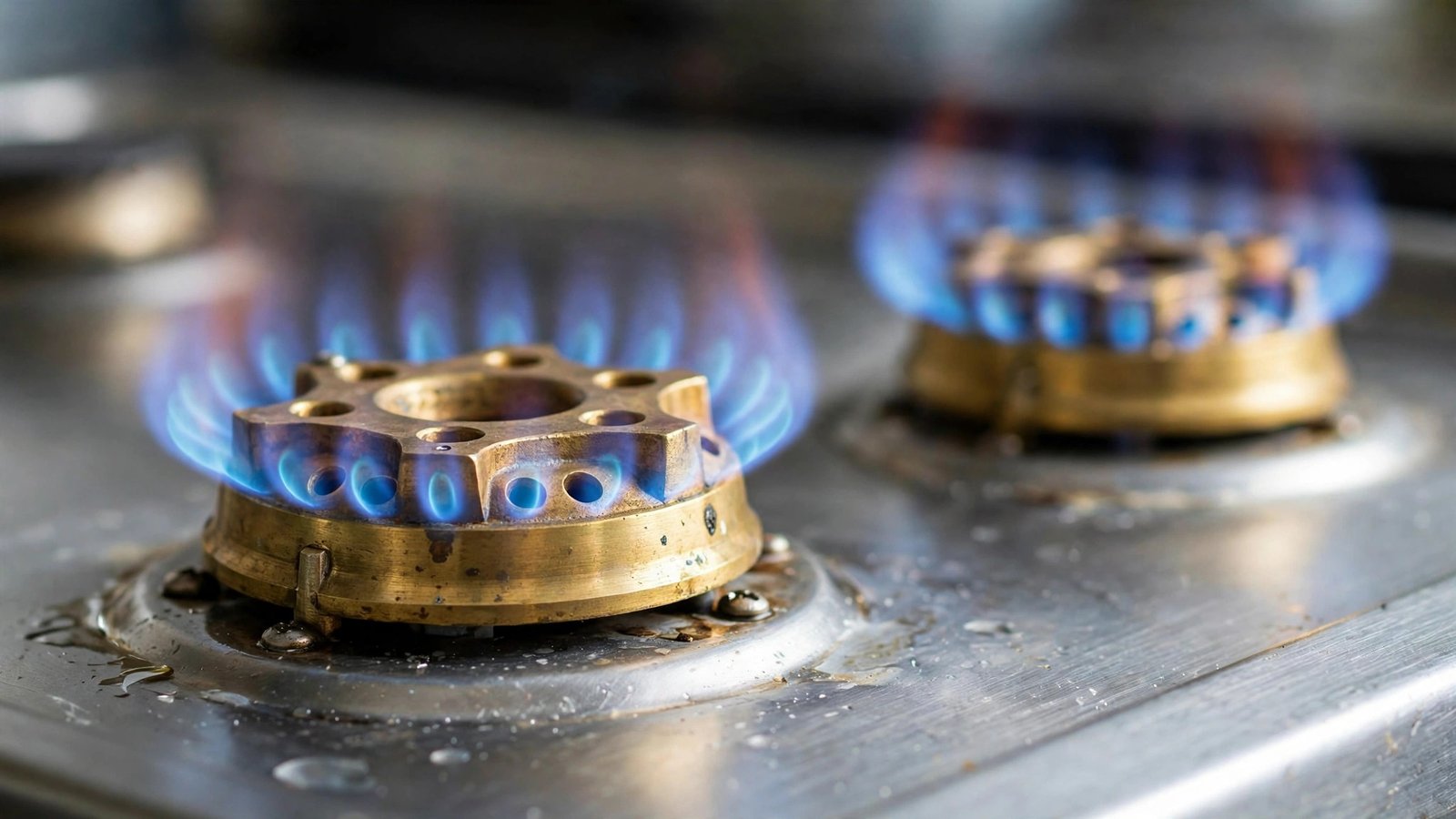
A three-burner stove is the middle ground, and for many families it is the sweet spot. Two large burners handle the main cooking while a smaller third burner keeps the chai warm or simmers the daal. The extra burner makes a real difference when guests arrive: you can keep the salan hot, boil rice, and fry at the same time instead of juggling pots on two burners.
Most three-burner models are wider, around two and a half feet, so measure your counter before buying. The layout matters too — burners placed too close together make it hard to fit a large degchi next to a tawa. Good models space the burners so a big pot and a frying pan can sit side by side without touching.
Three-burner gas stoves are typically around Rs 12,000–22,000 (check the seller for the current price). Look for a sturdy body that does not bend when you lift a full degchi off it, and check that the burner caps sit flat so the flame stays even.
- Pros: three burners cover family cooking and guests, good value for the size, widely available.
- Cons: needs a wider counter, heavier to move, costs more than a two-burner.
Four-Burner Hobs and Built-in Stoves for Large Families
A four-burner hob or built-in stove is made for large families and for kitchens where cooking is a big daily job. With four burners, you can run the salan, the rice, the roti and the kettle all at once, which is what a joint family kitchen needs at dinner time. Built-in models sit flush in the counter, giving the kitchen a clean, modern look.
Hobs usually come with a glass top or a stainless steel top, and many include auto ignition, so you press a knob and the burner lights without a matchbox. The burners are often a mix of sizes: one large burner for fast boiling, two medium burners for daily cooking, and one small burner for simmering. That mix is what makes a four-burner stove genuinely useful rather than just bigger.
Four-burner hobs and built-in gas stoves are typically around Rs 20,000–35,000 (check the seller for the current price). A built-in stove needs a proper cut in the counter and a safe gas connection, so get it fitted by a trained installer rather than doing it yourself.
- Pros: four burners for large families, auto ignition on most models, modern built-in look, mixed burner sizes.
- Cons: highest price in this guide, needs a wide counter or a counter cut, installation costs extra.
Glass-Top Gas Stoves for Easy Cleaning
A glass-top stove is the choice for anyone tired of scrubbing burnt food off a steel surface. The top is a single sheet of toughened glass, so a spilled curry or boiled-over milk wipes off with a damp cloth once the glass cools. In a modern kitchen, a glass-top stove also looks far better than a plain steel one, which is why so many new homes in Pakistan now choose it.
The glass is made to handle heat, but it is still glass: a heavy degchi dropped on it can crack it, and a cold cloth on a hot surface can cause damage. Good glass-top stoves use thick, heat-resistant glass and have a frame that protects the edges. The burners sit on top of the glass, usually brass, and the knobs sit at the front where they stay cool.
Glass-top gas stoves are typically around Rs 15,000–30,000 (check the seller for the current price). Ask the seller whether the glass carries a warranty and how much a replacement glass costs, because that is the one expensive repair on this type of stove.
- Pros: wipes clean in seconds, looks modern, auto ignition common, good resale appeal.
- Cons: glass can crack if a heavy pot is dropped, needs care with hot and cold, replacement glass is costly.
Stainless Steel Stoves with Auto Ignition
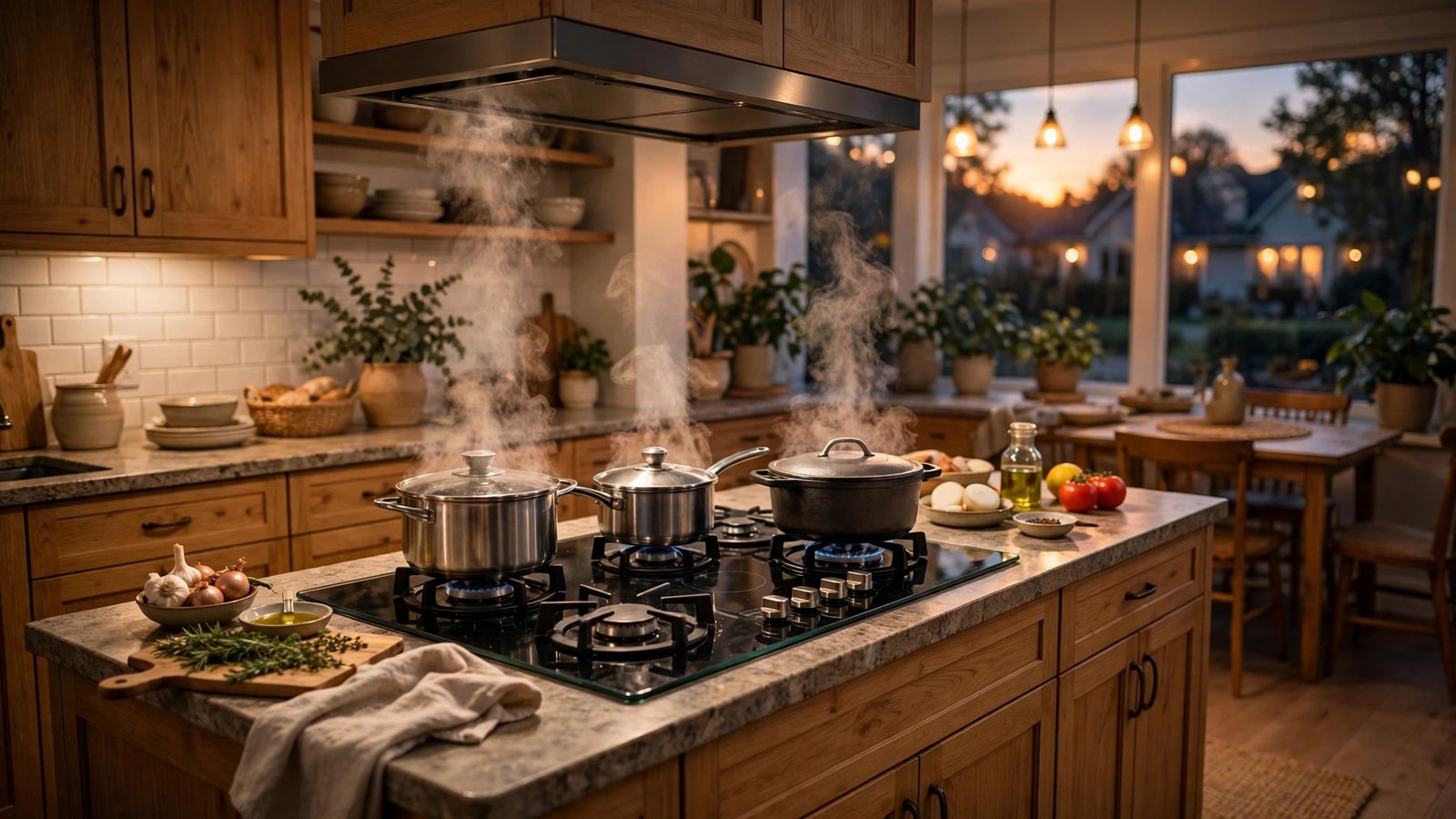
A stainless steel stove with auto ignition is the practical workhorse of Pakistani kitchens. The steel body takes daily knocks, hot pots and spills without marking, and it can be scrubbed hard without damage. Auto ignition means no more searching for a matchbox with wet hands: push the knob in, turn it, and a spark lights the burner.
The ignition system runs on a small battery or on mains power, depending on the model. Battery models are simpler and keep working during load shedding, while mains-powered models never need a battery change. Either way, check that the spark is strong and lights the burner on the first try in the shop, because a weak spark is the most common complaint on cheap auto-ignition stoves.
Stainless steel stoves with auto ignition are typically around Rs 12,000–25,000 (check the seller for the current price). Confirm that the ignition parts and knobs are available as spares locally, since a stove without a working spark is just a stove with extra knobs.
- Pros: tough steel body, no matchbox needed, easy to repair, spare parts widely available.
- Cons: steel shows stains and needs scrubbing, auto ignition parts can wear out, heavier than glass-top models.
Gas Stove Prices in Pakistan
Gas stove prices in Pakistan are typically around Rs 8,000–35,000 (check the seller for the current price). Two-burner tabletop stoves sit at the lower end, typically around Rs 8,000–15,000 (check the seller for the current price). Three-burner stoves follow, typically around Rs 12,000–22,000 (check the seller for the current price). Glass-top stoves and stainless steel models with auto ignition sit in the middle, typically around Rs 12,000–30,000 (check the seller for the current price). Four-burner hobs and built-in stoves sit at the top, typically around Rs 20,000–35,000 (check the seller for the current price).
Prices move with the season and with gas supply. In winter, when gas pressure drops in many cities, demand for stoves with heavy brass burners rises, and so do their prices. Compare two or three sellers before you pay — a general store in your own neighbourhood, a kitchenware market such as Akbari Mandi in Lahore or Liaquatabad in Karachi, and an online store such as Daraz — and keep the receipt.
Buying Tips
Count your burners honestly. A family of four that cooks twice a day manages fine with two burners, but a joint family or a home that hosts guests often will feel the lack of a third or fourth burner every single day.
Check the flame before you pay. Ask the seller to connect the stove and light every burner. A good flame is blue with a small, steady inner cone. A yellow, flickering flame means a dirty or poorly made burner, and it will blacken your pots.
Choose brass burners over aluminium. Brass burners cost a little more but spread heat evenly, resist corrosion, and last for years. Aluminium burners are cheaper but warp and wear out sooner, especially with daily use.
Look at the knobs and the pipe connection. Knobs should turn smoothly and stay cool while cooking. The gas inlet should fit a standard rubber pipe tightly, with a proper clamp — a loose pipe is a safety risk, not a small defect.
Ask about warranty and spare parts. A written warranty of one year is normal in Pakistan. Confirm the shop will honour it, and ask whether burners, knobs and glass are stocked locally, because a stove with no spares becomes scrap after one broken part.
Buy from a seller you can return to. A general store, a kitchenware shop, or a known online seller with a return policy all work. Test every burner in the shop and keep the box and the receipt.
Frequently Asked Questions
Which gas stove is best for a Pakistani kitchen?
For most homes, a three-burner stainless steel or glass-top stove is the best balance of price, space and cooking power. Small families can manage with a two-burner stove, while large joint families will use all four burners of a hob.
Why does my gas stove flame turn yellow?
A yellow flame usually means the burner is dirty or the gas-air mix is wrong. Clean the burner holes with a thin pin, let the burner dry fully, and try again. If the flame stays yellow on all burners, the problem may be low gas pressure or a faulty regulator.
Is a glass-top gas stove safe?
Yes, if it uses proper toughened glass and is used with care. Do not drop heavy pots on it, do not pour cold water on a hot glass surface, and do not leave a burner on high with an empty pot sitting on it for a long time.
How do I fix low gas pressure on my stove?
First check that the regulator and pipe are not blocked. A stove with heavy brass burners holds a steadier flame at low pressure than one with light aluminium burners. In winter, when pressure drops across the city, cooking early in the morning or late at night often gives a better flame.
How long should a gas stove last?
A well-made stainless steel stove with brass burners can last ten years or more with basic care: clean the burners regularly, wipe spills after cooking, and replace worn knobs and pipes when they start to loosen.
Conclusion
The best gas stove in Pakistan is the one that fits your family, your kitchen and your gas supply. A two-burner tabletop stove covers a small kitchen, a three-burner stove suits most families, a four-burner hob handles a large joint family, a glass-top stove makes cleaning easy, and a stainless steel model with auto ignition is the tough, practical choice. Prices are typically around Rs 8,000–35,000 (check the seller for the current price) — count your burners, check the flame in the shop, choose brass over aluminium, and insist on a written warranty.
For more trending picks and buying guides for Pakistan, browse the product feed at trendz.pk.