Best Smart Speaker in Pakistan (2026): Price Guide & Buying Tips
A smart speaker is a small box that sits on a table and answers when you talk to it. Say “play Coke Studio” and the music starts. Ask for the weather in Lahore, set a timer for the chai, or check what time the Pakistan match starts. The best smart speaker in Pakistan hears you clearly from across the room, plays music that actually sounds good, and keeps working on the Wi-Fi most Pakistani homes really have. Prices for a smart speaker in Pakistan are typically around Rs 8,000–60,000 (check the seller for the current price).
This guide covers the five types of smart speakers Pakistani buyers actually choose, what each one does well, and the local realities to plan for: patchy Wi-Fi, load-shedding, and voice commands that work best in English. Every price here is an approximate range: use it to set your budget, then confirm the current price with the seller before you buy.
Quick Picks
- Budget pick: A small round speaker for a bedroom or kitchen, for music, timers, and questions at the lowest price.
- Everyday pick: A mid-size speaker with better microphones and clearer sound, for daily use in a living room.
- Best sound pick: A larger speaker with fuller bass and room-filling sound, for daily music listening.
- With display pick: A speaker with a small screen showing the clock, weather, and lyrics, for the kitchen or bedside.
- Premium pick: A top-end speaker with the best sound and smart-home controls, for a main living room.
Budget Pick: The Small Round Speaker
The small round speaker is the cheapest way to try a smart speaker. It is about the size of a cricket ball, plugs into a wall socket, and connects to your home Wi-Fi. You talk to it, it talks back, and it plays music through a single small driver. It is made for one room, and it works best within a few metres of it.
Put one in the bedroom to wake you up with an alarm and the news, or in the kitchen to set cooking timers without touching your phone with wet hands. It answers simple questions, reads out the weather, and plays music at a volume that suits a quiet room.
- Pros: Lowest price, small enough to fit anywhere, simple to set up.
- Cons: Thin sound with little bass, struggles to hear you over a loud TV or a running fan, no screen.
A small budget smart speaker is typically around Rs 8,000–15,000 (check the seller for the current price).
Everyday Pick: The Mid-Size Speaker
A mid-size smart speaker is the one most Pakistani families end up keeping. It is roughly the size of a tissue box, with a bigger driver and microphones that can hear you from across a normal living room. The sound is fuller: voices are clearer, and music has enough bass to enjoy without a separate speaker.
This is the right pick for the whole family: music while the family eats dinner, homework questions, and reminders for prayer times or school runs.
- Pros: Clear sound with real bass, hears you from across the room, good for the whole family, can pair with a second speaker.
- Cons: Costs more than budget models, still no screen.
A mid-size everyday smart speaker is typically around Rs 12,000–25,000 (check the seller for the current price).
Best Sound Pick: The Large Room-Filling Speaker
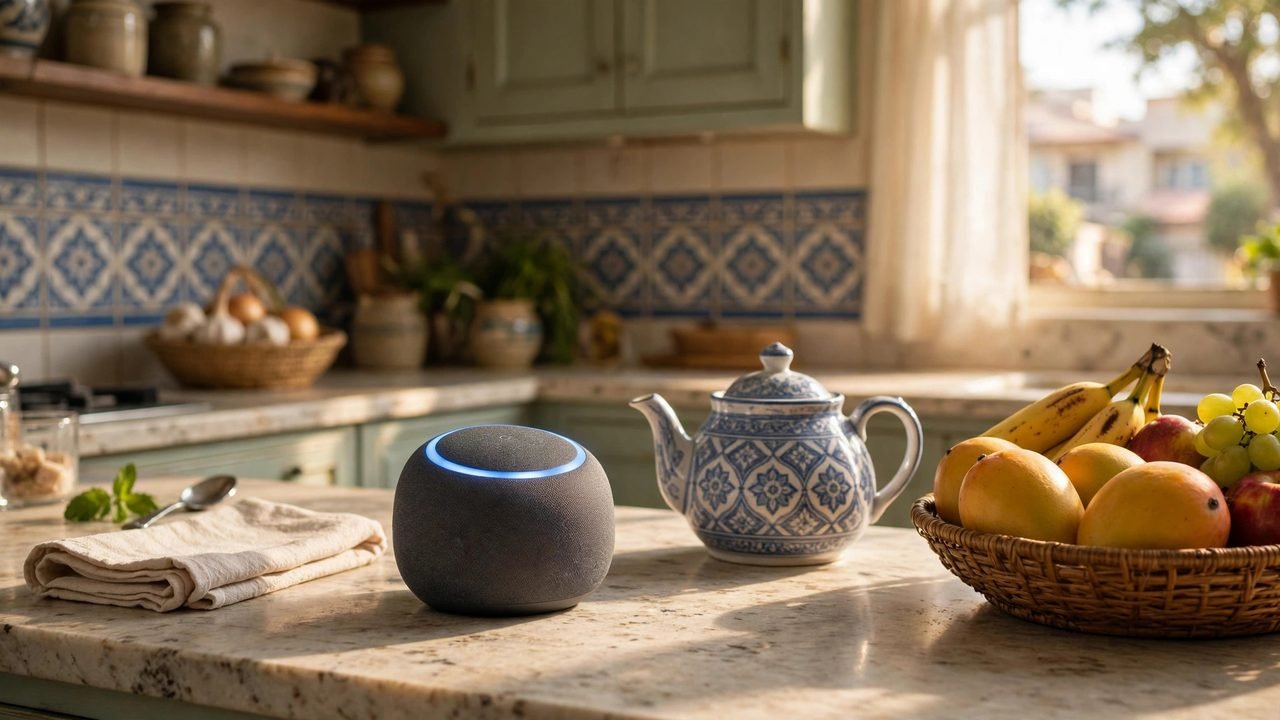
If music is the main reason you are buying, step up to a large smart speaker. These taller, heavier boxes have bigger drivers and fill a drawing room or large lounge with sound. A qawwali night, a Coke Studio session, or a cricket commentary stream all sound richer here than on any smaller speaker, and the bass is strong enough to feel at higher volumes.
At normal listening volume, a large speaker keeps voices clear and instruments separate where a small speaker turns everything into a flat buzz. The trade-off is size and price: it needs a solid spot on a sideboard, and it costs two to three times what a budget speaker costs.
- Pros: Rich, full sound with strong bass, fills a large room, best for daily music listening, premium build.
- Cons: Pricier than smaller models, heavy and hard to move.
A large room-filling smart speaker is typically around Rs 20,000–40,000 (check the seller for the current price).
With Display Pick: The Speaker With a Screen
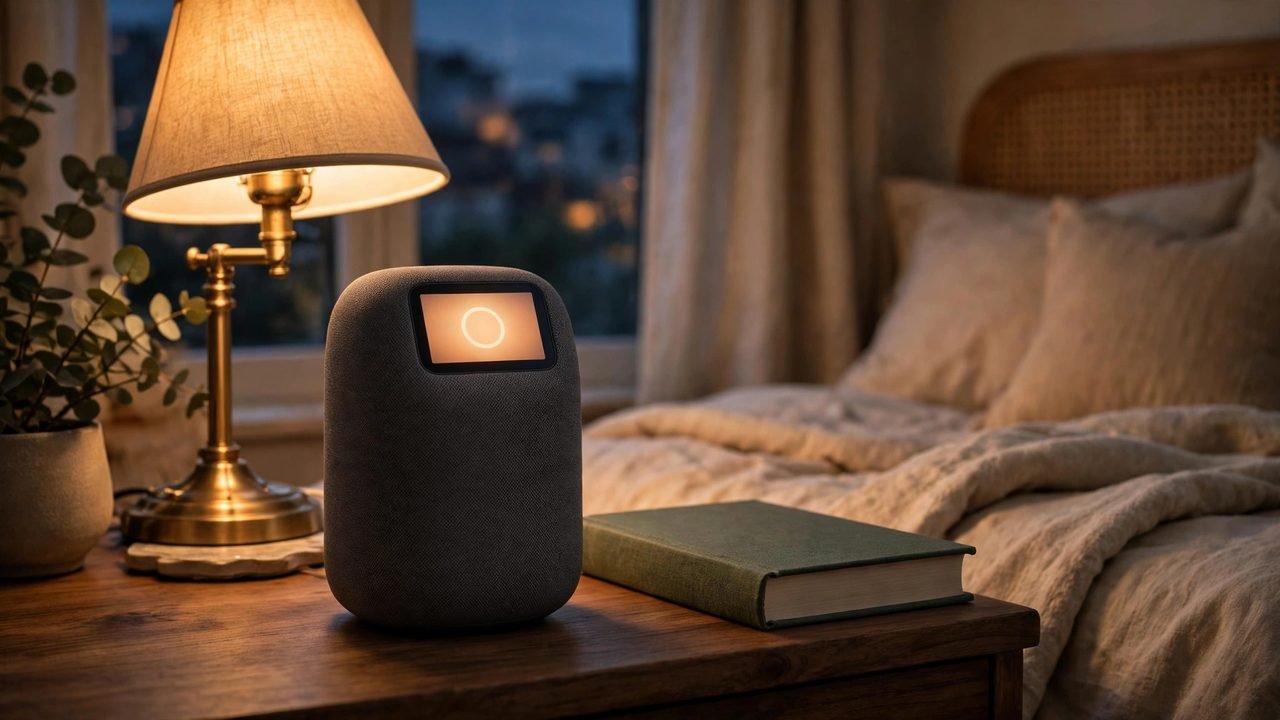
A smart speaker with a display adds a small touchscreen, usually five to ten inches, to the usual speaker. The screen shows the time, the weather, song lyrics, and a video call if someone rings. In the kitchen it can show a recipe step by step while your hands are busy. On a bedside table it works as a clock that dims at night and wakes you with music and the news.
The screen changes how the family uses the speaker. Children ask to see the weather instead of just hearing it, and older family members who are not comfortable talking to a machine can tap the screen instead.
- Pros: Screen shows clock, weather, lyrics, and recipes, tap controls for people who dislike voice commands, good for the kitchen and bedside.
- Cons: Costs more than a speaker alone, needs a clear spot on the counter.
A smart speaker with a display is typically around Rs 18,000–35,000 (check the seller for the current price).
Premium Pick: The Top-End Smart Speaker
The premium smart speaker is the best of everything in one box: the strongest sound, the most sensitive microphones, and built-in controls for smart-home devices. It is made for the main living room of a house that already has smart bulbs, plugs, or a smart TV, and one voice command can switch off the lounge lights and start the music.
For most buyers this is a luxury, not a need. The sound is better than the mid-size models, but the gap is smaller than the jump from a budget speaker to a mid-size one. Buy it if the speaker will be the centrepiece of your living room and you will use it every day for music, calls, and smart-home control. If you only need music and timers, the everyday pick gives you most of the experience for half the money.
- Pros: Best sound and microphones, works as a smart-home hub, premium finish that suits a main living room.
- Cons: Highest price in this guide, more features than most families use.
A premium smart speaker is typically around Rs 35,000–60,000 (check the seller for the current price).
Smart Speaker Price Guide in Pakistan
Smart speaker prices in Pakistan mostly follow size, sound quality, and screen. Prices are typically around Rs 8,000–60,000 (check the seller for the current price), and most buyers land in the middle of that range.
- Rs 8,000–15,000: Small budget speakers for a bedroom or kitchen: music, timers, and questions, with a single small driver and no screen.
- Rs 12,000–25,000: Mid-size everyday speakers, the sweet spot for most homes: better microphones and fuller sound.
- Rs 18,000–35,000: Speakers with a display: a screen for the clock, weather, lyrics, and recipes.
- Rs 20,000–40,000: Large room-filling speakers: bigger drivers and stronger bass for a drawing room.
- Rs 35,000–60,000: Premium speakers: top sound, best microphones, and smart-home hub features.
Prices move with the exchange rate, and smart speakers are often imported, so the same model can cost noticeably more or less from one seller to another. Compare two or three sellers before buying, and check whether the price includes a warranty from the brand or just the shop. Sale seasons can bring the price down, but a price far below every other seller is a warning sign: it may be a used unit, a parallel import with no warranty, or a fake.
Buying Tips
Start with your Wi-Fi, because a smart speaker is useless without a steady connection. Most smart speakers connect on the 2.4 GHz band, which reaches further through walls than 5 GHz. Test the Wi-Fi signal where the speaker will sit with your phone first: a weak signal means the speaker will keep saying it cannot reach the internet. A Wi-Fi extender in the hallway often fixes it for less than the price difference between two speaker models.
Next, think about load-shedding. A smart speaker stops working the moment the power goes out, and it takes a minute or two to restart and reconnect. If your home has a UPS or inverter, plug the speaker into a socket that stays live during outages. A small speaker uses only around 10 to 15 watts, so it will not drain a UPS the way a fridge does.
Be realistic about voice commands. In Pakistan, voice assistants understand English commands far better than Urdu. You can say “play Atif Aslam” or “set a timer for ten minutes” and it will work, but a full sentence in Urdu will often be misunderstood or answered in English. If the family speaks mostly Urdu, test the assistant with the phrases you will actually use, and check it can play the Pakistani music services and radio stations you listen to. Some music and news services are limited by region, so confirm the ones you care about work with your account before you buy.
Check the warranty before you pay. Many smart speakers in Pakistan are parallel imports, which means the shop’s own warranty is all you get. Ask the seller how long the warranty lasts, what it covers, and where the speaker goes if it stops working. An official brand store costs a little more, but the warranty is worth it for a device that stays plugged in all day. Also check the power adapter: imported speakers sometimes come with a foreign plug, so you may need an adapter.
Frequently Asked Questions
Do smart speakers work properly in Pakistan?
Yes, a smart speaker works in Pakistan as long as it has steady Wi-Fi and a power socket. Music, timers, alarms, weather, news, and general questions all work. Some features can be limited by region, so check the services you care about before buying.
Can I give voice commands in Urdu?
Mostly, no. Voice assistants understand English commands well, including Pakistani singer and city names, but full Urdu sentences are often misunderstood. You can mix in Urdu words, like “play Nusrat Fateh Ali Khan” or “set a timer for chai,” and that usually works. If Urdu voice control matters to you, test it in the shop first.
What happens to my smart speaker during load-shedding?
The speaker switches off when the power goes and restarts when the power returns, taking a minute or two to reconnect to Wi-Fi. If your home has a UPS or solar inverter, plug the speaker into a socket that stays live during outages. A small smart speaker uses only about 10 to 15 watts, so it barely adds to the load on a UPS.
Do I need a paid subscription to play music on a smart speaker?
Not always. Most smart speakers can play free radio stations, and some music services offer a free tier with ads. A paid subscription gives you on-demand songs and no ads, but you can enjoy a speaker without one. Check which music services work in Pakistan before paying for a subscription.
Is it better to buy a smart speaker from Daraz or an official store?
Both can work. Daraz and official brand stores list the model, the warranty, and the seller rating clearly, and you can compare prices across sellers. A local electronics market lets you hear the speaker before you buy. Either way, confirm the price, the warranty, and the return policy first.
Conclusion
The best smart speaker in Pakistan is not the most expensive one. It is the one that fits the room it will live in, hears your family over the noise of a real home, and keeps working on your Wi-Fi. A small budget speaker is enough for a bedroom, a mid-size speaker suits most families, and a large or premium model is worth it only if music fills your evenings. Pick the size that fits your room, test the voice commands your family will use, and buy from a seller who gives you a real warranty. For more trending picks and buying guides, visit the product feed at trendz.pk.