Best Electric Oven in Pakistan (2026): Price Guide & Buying Tips
A home oven changes what a Pakistani kitchen can do. With one, you can bake fresh bread and pizza on a Friday evening, roast a whole chicken for a family dinner, and bake birthday cakes without ordering from a bakery. The best electric oven in Pakistan fits your kitchen counter, holds a steady temperature, and handles load shedding and voltage swings. Prices are typically around Rs 8,000–60,000 (check the seller for the current price).
This guide covers the five kinds of electric ovens most Pakistani homes buy, what each does well, and what to check before paying. Every price is an approximate range: use it to set your budget, then confirm the current price with the seller before you buy.
Quick Picks
- Budget pick: A small countertop oven, 10 to 20 litres, for one or two people who bake now and then.
- Everyday pick: A mid-size oven, 25 to 35 litres, for a normal family that bakes a few times a week.
- Family-size pick: A large oven, 40 to 60 litres, for a joint family that bakes in big batches.
- Baking pick: An oven with even heat and a good baking tray, for home bakers who want consistent cakes, cookies, and bread.
- Premium pick: A large convection oven with a fan, rotisserie, and digital controls, for serious home cooks.
Budget Pick: The Small Countertop Electric Oven
A small countertop oven is the simplest way to start baking at home: a compact 10 to 20 litre box that sits on the kitchen counter and plugs into a normal wall socket. It has two heating elements, a temperature dial, and a timer, and most models come with a baking tray and a wire rack.
Its strength is price and size. In a small flat kitchen it takes up about as much space as a microwave and heats up in a few minutes. The size is also its limit: it fits one tray at a time, so baking for more than two or three people means several rounds, and heat can vary between top and bottom. Turning the tray halfway through fixes most of this.
- Pros: Lowest price, fits a small kitchen, heats up fast, simple dials that anyone can use.
- Cons: Small capacity, one tray at a time, uneven heat, no fan or rotisserie.
A basic electric oven is typically around Rs 8,000–15,000 (check the seller for the current price).
Everyday Pick: The Mid-Size Electric Oven
A mid-size oven, 25 to 35 litres, is the type most Pakistani families end up buying. It is big enough for a family pizza, a full tray of biscuits, or a medium cake, and still fits on a normal kitchen counter. Most models add a grill, a rotisserie rod, and an inside lamp so you can watch food brown without opening the door.
This suits a household of four to six people that bakes a few times a week. A 30-litre oven takes a standard baking tray, so you can bake two dozen cookies in one round or roast a chicken with vegetables. The extra space means hot air moves around the food better, so cakes rise evenly and pizza bases cook through. Separate controls for the top and bottom elements help: brown the top of a pizza while keeping the base crisp.
- Pros: Fits a family pizza or a full tray, grill and rotisserie included on most models, better heat spread than a small oven, still countertop size.
- Cons: Costs more than a basic model, takes up more counter space, heavier to move, rotisserie adds parts to wash.
A mid-size electric oven is typically around Rs 15,000–28,000 (check the seller for the current price).
Family-Size Pick: The Large Electric Oven
A large oven, 40 to 60 litres, is built for a joint family or a home that cooks in bulk. It takes two trays at once, fits a whole chicken with room to spare, and can bake several loaves of bread in a single round. For a house where dinner means feeding ten or more people, that capacity is what makes the oven useful.
Large ovens usually come with a rotisserie, a kebab grill rack, and a slide-out crumb tray. Many also have a convection fan: without one, the corners of a large oven stay cooler than the middle, and food on the far tray cooks slower. The trade-off is space and power. A 50-litre oven needs a wide, clear stretch of counter and its own socket, not a shared multi-plug.
- Pros: Two trays at once, fits a whole chicken, rotisserie and kebab rack included, fan keeps large bakes even.
- Cons: Needs a wide counter, draws more power, heavier to move, longer to heat up.
A large electric oven is typically around Rs 28,000–45,000 (check the seller for the current price).
Baking Pick: The Oven for Home Bakers
A home baker needs one thing above all: even, steady heat. A cake that browns on one side and stays pale on the other is almost always a heat problem, not a recipe problem. A baking oven is chosen for how well it holds its temperature, with a thermostat you can trust and a fan that keeps heat even across the tray.
In practice, this means a convection fan, a temperature range reaching at least 230 degrees, and a solid baking tray that does not warp when hot. A light inside matters: checking a cake through the glass keeps the heat in, while opening the door drops the temperature and can make a sponge collapse. This pick suits anyone who bakes weekly — birthday cakes, Eid biscuits, bread for the house, or a small order.
- Pros: Even heat for cakes and bread, fan keeps temperature steady, glass door and lamp let you watch without opening, good tray quality.
- Cons: Costs more than a basic oven of the same size, fan needs cleaning, still limited to one or two trays.
A baking electric oven is typically around Rs 25,000–40,000 (check the seller for the current price).
Premium Pick: The Large Convection Oven with Digital Controls
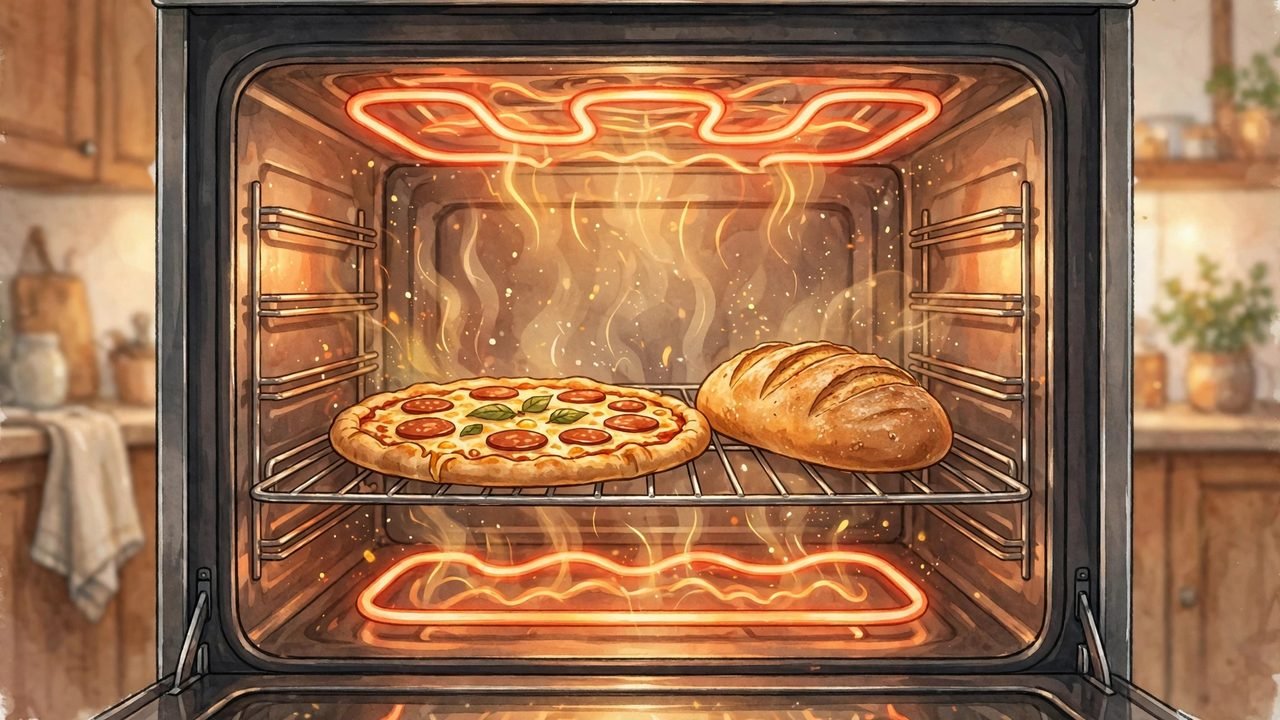
A premium oven is the top end of this guide: a large convection oven, usually 45 litres and above, with a fan, a rotisserie, a kebab grill, and digital presets for baking, grilling, and roasting. Some models add keep-warm and defrost settings, handy when food must wait for the family to sit down.
The fan is the feature that earns the price. It pushes hot air around the food, so two trays bake at the same rate and a tray of biscuits comes out evenly browned without turning halfway through. Digital controls set the temperature precisely in small steps, so a recipe that calls for 180 degrees gets 180 degrees, not a guess between two marks on a dial. This is the oven for a home where baking and roasting happen several times a week.
- Pros: Fan gives even heat on two trays, precise digital temperature, rotisserie and grill included, presets for baking and roasting.
- Cons: Highest price in this guide, large and heavy, digital panel costs more to repair, needs a dedicated socket.
A premium convection electric oven is typically around Rs 40,000–60,000 (check the seller for the current price).
Electric Oven Prices in Pakistan
Prices mostly follow size, the heating elements, and extras like a fan, a rotisserie, and digital controls. Prices are typically around Rs 8,000–60,000 (check the seller for the current price), and most buyers land in the middle.
- Rs 8,000–15,000: Small countertop ovens, 10 to 20 litres. Good for one or two people, small kitchens, and first-time bakers.
- Rs 15,000–28,000: Mid-size ovens, 25 to 35 litres. The sweet spot for most families.
- Rs 25,000–40,000: Baking ovens with even heat and a convection fan. Best for home bakers.
- Rs 28,000–45,000: Large ovens, 40 to 60 litres. Best for joint families and bulk cooking.
- Rs 40,000–60,000: Premium convection ovens with digital controls and presets. Best for serious home cooks and small home-baking businesses.
Prices change with the exchange rate and sale seasons, so treat these bands as a budgeting guide, not a quote. Ovens often go on sale during big online events, so compare two or three sellers before buying, and ask whether the tray, the rack, and the rotisserie rod are included.
Buying Tips
Start with the size of your kitchen, not the size of the oven. Measure the counter where the oven will sit, and leave a few centimetres of clear space on the sides and top so heat can escape. A 50-litre oven that does not fit is useless; a 30-litre oven that fits well gets used every week.
Next, think about power. An electric oven is one of the heaviest loads in a kitchen, and during load shedding it will not run, so bake when the electricity is on. Give the oven its own wall socket, not a shared multi-plug, which can trip the breaker. Where voltage swings are frequent, a stabiliser is worth considering, since repeated low voltage can damage the heating elements.
Check the tray and rack quality before you buy: a thin tray warps when hot and bakes unevenly, while a solid non-stick tray lasts for years. The rack should slide smoothly and sit level. Ask whether spare trays and elements are available, because a rusted tray or a burnt-out element should be replaceable, not a reason to buy a new oven.
Look at the warranty and after-sales support. A one-year warranty on the elements and the thermostat is the minimum to accept, from the brand or an authorised seller, not just a verbal promise from a shop. Ask who repairs the oven if an element fails in six months. Buy from a seller you can reach again: Daraz and official brand stores list the capacity, wattage, and warranty clearly, and a local shop lets you check the size and the tray before you buy. Confirm the price, the warranty card, and the return policy first, and keep the receipt until the warranty ends.
Frequently Asked Questions
What size electric oven is best for a Pakistani family?
For four to six people, a 25 to 35 litre oven is the best fit: it takes a family pizza or a full tray of biscuits and still fits on a normal counter. A joint family should look at 40 to 60 litres, while one or two people can manage with 10 to 20 litres.
Can an electric oven run during load shedding?
No. An electric oven needs mains power to heat, so it will not work during a power cut. Plan baking for hours when the electricity is on, and preheat before the usual load-shedding time. A gas oven is the only option if you need to bake through a power cut.
Does an electric oven use a lot of electricity?
Yes, compared with other kitchen appliances. A mid-size oven draws roughly 1,200 to 2,000 watts while heating, though it uses less once it reaches temperature. Baking once or twice a week adds a noticeable but manageable amount to the bill.
Is a convection oven better than a normal electric oven?
For most home bakers, yes. The fan moves hot air around the food, so cakes and biscuits brown evenly and two trays cook at the same rate. A normal oven without a fan can still bake well, but you will need to turn trays halfway through.
Is it better to buy an electric oven from Daraz or a local shop?
Both can work. Daraz and official brand stores list the capacity, wattage, and warranty clearly, and you can compare prices across sellers. A local shop lets you check the size and the tray before paying. Either way, confirm the price, the warranty card, and the return policy first.
Conclusion
The right electric oven is the one that matches your kitchen and your cooking, not the biggest one in the shop. A small oven suits a couple who bake now and then, a mid-size oven covers most families, a large oven feeds a joint family, a baking oven gives home bakers steady heat, and a premium convection oven rewards a cook who bakes several times a week. Measure your counter, check the tray and the warranty, and confirm the price before you pay. For more trending picks and buying guides, visit the product feed at trendz.pk.