Best Hair Curler in Pakistan (2026): Price Guide & Buying Tips
A good hair curler turns a rushed morning into a finished look in about fifteen minutes. For weddings, Eid gatherings, and office days, curled hair is one of the most requested styles in Pakistani salons — and more women now do it at home instead of paying salon prices every time. The best hair curler in Pakistan is the one that matches your hair length, your hair type, and how often you plan to use it. Prices are typically around Rs 2,500–25,000 (check the seller for the current price).
This guide covers the five types of hair curlers most Pakistani buyers choose, what each one does well, and what to watch out for before you pay. Every price here is an approximate range: use it to set your budget, then confirm the current price with the seller before you buy.
Quick Picks
- Budget pick: A basic curling iron with a single heat setting, for occasional use and first-time curling.
- Everyday pick: A ceramic curling wand with adjustable heat, for regular use on medium-length hair.
- Long-hair pick: A wide-barrel curler (32 mm or larger), for long, thick hair that needs soft, loose waves.
- Short-hair/fine-hair pick: A slim-barrel curler (19–25 mm), for short hair and fine hair that needs tighter, longer-lasting curls.
- Premium pick: A ceramic tourmaline curler or an automatic rotating curler, for frequent use and smoother results.
Budget Pick: The Basic Curling Iron
A basic curling iron is the simplest way to start curling your hair at home. It usually has one barrel, one or two heat settings, and a clamp that holds the ends of your hair while you wrap the rest around the barrel. You plug it in, wait a couple of minutes for it to heat up, and curl one section at a time.
Its real strength is the price. For someone who curls her hair only for weddings or the occasional family function, a basic iron does the job well enough that a salon visit is no longer needed for every event. It works best on straight, fine-to-medium hair.
The trade-off is control. With only one or two heat settings, you cannot turn the heat down for fine hair or up for thick hair, so fine hair can take more heat than it needs. A basic iron also heats slowly, which stretches out styling time.
- Pros: Lowest price, simple to use, no learning curve, light and easy to store.
- Cons: Few or no heat settings, slower to heat, less even heat, harder on fine hair.
A basic hair curler is typically around Rs 2,500–5,000 (check the seller for the current price).
Everyday Pick: The Ceramic Curling Wand
A ceramic curling wand is the type most Pakistani buyers end up choosing, because it covers the widest range of hair. The barrel is coated in ceramic, which spreads heat evenly across the surface instead of concentrating it in hot spots. That even heat means smoother curls and less frizz — a real benefit in Pakistan’s humid summers.
Most ceramic wands in this range come with adjustable heat settings, usually from around 150°C to 200°C or higher, so you can set a lower temperature for fine or colour-treated hair and a higher one for thick, healthy hair. The wand shape — a straight or tapered barrel with no clamp — lets you wrap hair freely, which suits loose waves and natural-looking curls better than a clamped iron.
- Pros: Even heat with less frizz, adjustable temperature, suits most hair types, good for loose waves and natural curls.
- Cons: Costs more than a basic iron, takes practice without a clamp, ceramic coating can chip if the wand is dropped.
A ceramic curling wand is typically around Rs 5,000–10,000 (check the seller for the current price).
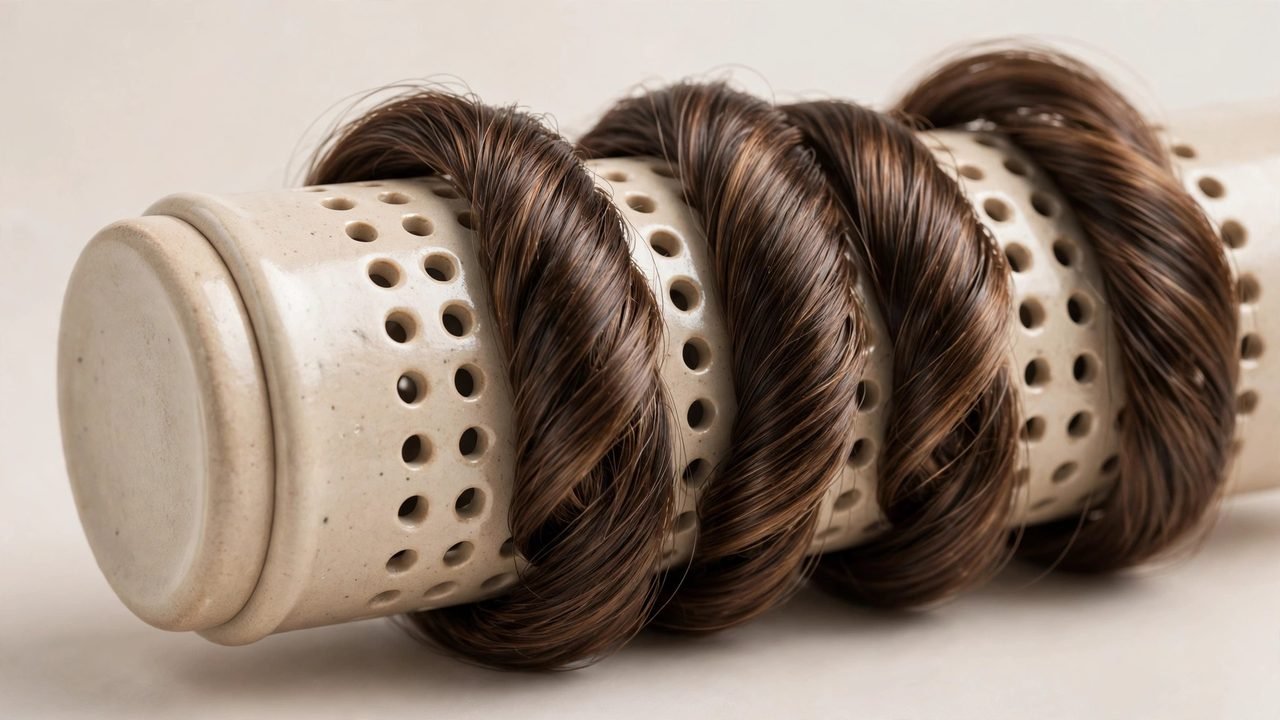
Long-Hair Pick: The Wide-Barrel Curler
Long, thick hair is the hardest to curl, because each section carries more weight and pulls the curl straight as it cools. A wide-barrel curler — 32 mm or larger — solves this by wrapping more hair in a single pass, so you need fewer sections and the curls form faster. The result is the soft, loose waves that suit long hair best, rather than tight ringlets that drop out within an hour.
In Pakistan, where many women keep their hair long, this is the curler that saves the most time. A full head of long hair can take forty minutes with a slim barrel and half that with a wide one. Look for a ceramic or tourmaline coating and heat up to at least 180°C, so curls last through a long wedding function.
- Pros: Fast on long, thick hair, soft loose waves that last, fewer sections needed, suits wedding and party styling.
- Cons: Cannot make tight curls, heavier and bulkier, needs higher heat for thick hair.
A wide-barrel hair curler is typically around Rs 7,000–14,000 (check the seller for the current price).
Short-Hair/Fine-Hair Pick: The Slim-Barrel Curler
Short hair and fine hair need the opposite tool: a slim barrel of 19 to 25 mm. A wide barrel on short hair cannot grip enough length to form a curl, and the result is a bend rather than a wave. A slim barrel wraps the hair tightly, so even a bob or shoulder-length cut holds a defined curl, and the curl lasts longer because the smaller barrel sets a tighter shape.
Fine hair needs the same care for a different reason: it heats through fast and damages easily. A slim-barrel curler with a low heat setting — around 150°C to 160°C — lets you curl without pushing the temperature higher than your hair can take. Look for at least three heat settings and a ceramic barrel, gentler than bare metal on delicate or colour-treated hair.
- Pros: Defined curls on short hair, gentle low-heat options for fine hair, light and easy to handle, good for tight curls and curled ends.
- Cons: Slow on long, thick hair, tight curls can look too formal for everyday wear, small barrel means more sections.
A slim-barrel hair curler is typically around Rs 4,000–9,000 (check the seller for the current price).
Premium Pick: The Ceramic Tourmaline or Automatic Rotating Curler
A premium curler is for the woman who curls her hair several times a week, or who styles other people’s hair as well. Ceramic tourmaline barrels combine the even heat of ceramic with tourmaline, a mineral that releases negative ions as it heats. In practice, that means smoother hair, less static, and less frizz — a clear benefit in dry winters, when static makes hair fly, and in Karachi’s humid monsoon season.
Automatic rotating curlers go a step further: you feed a section of hair into the chamber, the curler draws it in and rotates it around a heated barrel, and a beep tells you when the curl is ready. The result is consistent curls with almost no technique, and styling a full head takes noticeably less time. Several heat levels and curl directions let you alternate each section for a natural look.
- Pros: Smoothest results with least frizz, fastest styling, consistent curls with little technique, multiple heat and direction settings.
- Cons: Highest price in this guide, automatic models need the right section size, heavier and bulkier to store.
A premium ceramic tourmaline or automatic rotating hair curler is typically around Rs 12,000–25,000 (check the seller for the current price).
Hair Curler Prices in Pakistan
Hair curler prices mostly follow barrel material, heat control, and extra features. Prices are typically around Rs 2,500–25,000 (check the seller for the current price), and most buyers land in the middle of that range.
- Rs 2,500–5,000: Basic curling irons with one or two heat settings. Good for occasional use and first-time buyers.
- Rs 4,000–9,000: Slim-barrel curlers for short and fine hair, bobs, and delicate or colour-treated hair.
- Rs 5,000–10,000: Ceramic curling wands with adjustable heat. The sweet spot for most buyers: even heat, less frizz, and a temperature setting for every hair type.
- Rs 7,000–14,000: Wide-barrel curlers for long, thick hair. Fewer sections, faster styling, and loose waves that hold through a long event.
- Rs 12,000–25,000: Premium ceramic tourmaline and automatic rotating curlers. Best for frequent use and the smoothest finish.
Prices change with the exchange rate and sale seasons, so compare two or three sellers before buying.
Buying Tips
Start with your hair length, because it decides the barrel size. Short hair and bobs need a 19–25 mm barrel; medium hair suits a 25–32 mm barrel; long, thick hair needs 32 mm or more. Buying the wrong barrel size is the most common mistake, and no amount of heat will fix it.
Next, match the heat to your hair type. Fine, thin, or colour-treated hair should stay around 150–170°C. Normal hair works well at 170–190°C. Thick, coarse hair usually needs 190–210°C to hold a curl. Adjustable heat is worth paying extra for, because one high setting damages fine hair over time.
Choose ceramic over bare metal when you can. Ceramic spreads heat evenly and causes less frizz, while bare metal barrels create hot spots that scorch some strands and leave others half-curled. Tourmaline is a bonus against frizz and static, but plain ceramic is enough for most users.
Check the voltage and the plug before you buy. Pakistan runs on 220–240V, so a curler made for another market may need an adapter or may not heat properly.
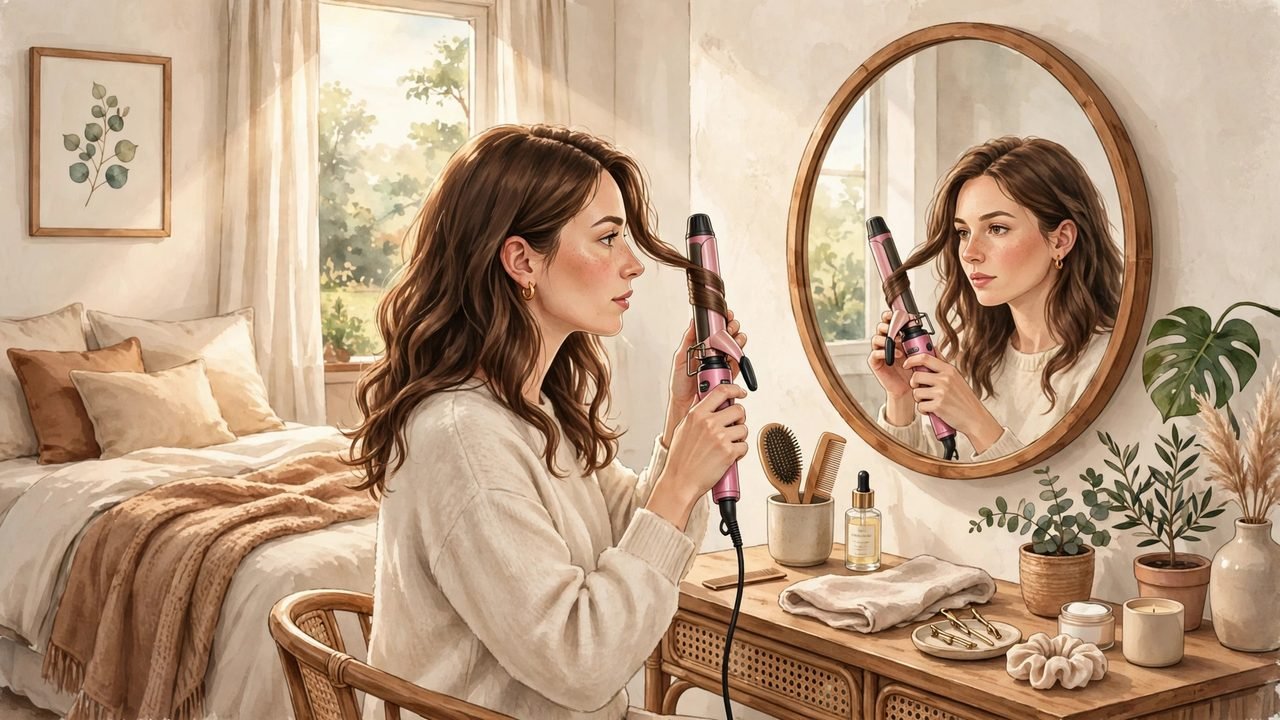
Always use a heat protectant spray or serum before curling, and let it dry for a few seconds first. It keeps hair healthy when you curl regularly and helps curls hold their shape. Curl dry hair only — never use a curler on damp hair, because the water turns to steam inside the hair shaft and causes breakage.
Finally, check the warranty. A one-year warranty from the brand or an authorised seller is the minimum to accept, written on a warranty card rather than promised verbally. Buy from Daraz, an official brand store, or a trusted local shop, and confirm the price, warranty card, and return policy before you pay.
Frequently Asked Questions
What size hair curler is best for beginners in Pakistan?
A 25 mm ceramic curling wand with adjustable heat is the safest starting point. It suits medium-length hair and can make both loose waves and defined curls depending on how you wrap the hair. Start at a low heat setting and practise on a small section first.
Can I use a hair curler on fine or damaged hair?
Yes, if you keep the heat low and use a heat protectant every time. Set the curler to around 150–160°C, hold each section for only a few seconds, and avoid curling the same section twice. A ceramic barrel is gentler than bare metal, and heat protectant is essential for fine, bleached, or colour-treated hair.
How long do curls last in Pakistani weather?
In dry winter weather, curls with a light hairspray can last all day. In humid summer and monsoon weather, curls loosen faster, especially on fine hair. Let each curl cool in your hand for a few seconds, and finish with a light-hold hairspray.
Is a ceramic curler better than a metal one?
For most users, yes. Ceramic spreads heat evenly across the barrel, so the hair heats through at the same temperature everywhere, which means smoother curls and less frizz. Bare metal barrels heat unevenly and can scorch the hair where the barrel is hottest.
Where can I buy a hair curler in Pakistan?
Hair curlers are widely available on Daraz and in official brand stores, both online and in shopping malls in Karachi, Lahore, and Islamabad. Local shops also stock them and let you check the weight and barrel size before paying. Compare prices across two or three sellers, and confirm the warranty card and return policy before you buy.
Conclusion
The best hair curler in Pakistan is the one that fits your hair, not the most expensive one on the shelf. A basic iron suits the occasional wedding look, a ceramic wand covers everyday styling, a wide barrel saves time on long hair, a slim barrel suits short and fine hair, and a premium curler rewards frequent stylers. Check the barrel size and heat settings before you pay, and always use a heat protectant. For more trending picks and buying guides, visit the product feed at trendz.pk.