Best UPS in Pakistan (2026): Price Guide & Buying Tips
Introduction
Finding the best UPS in Pakistan in 2026 starts with one honest question: what do you need to keep running when the power goes out? For most Pakistani homes and offices, the answer is a short list — the WiFi router, a couple of fans, a few lights, and maybe a laptop or a desktop computer. A UPS, or uninterruptible power supply, sits between your wall socket and your devices, and when load shedding cuts the supply it switches to battery power in a fraction of a second, so your work does not vanish.
Load shedding is still a daily reality across Pakistan, from long scheduled cuts in smaller cities to shorter outages in Karachi, Lahore and Islamabad. A good UPS turns those cuts from a disruption into a pause: fans keep spinning, lights stay on, and the internet stays up long enough to save your work and shut down properly.
The mistake most buyers make is buying on price alone, or copying what a neighbour bought. A UPS that suits a home office can be useless for a shop running a fridge. This guide walks through the five main types of UPS sold in Pakistan, what each one costs, and how to size one for your own load.
Quick Picks
- Best for a home office: A line-interactive UPS with a built-in battery.
- Best for sensitive equipment: An online UPS with pure sine wave output.
- Best for long backup: A UPS paired with one or two external batteries.
- Best for a small setup: A compact UPS for the router and a laptop.
- Best value overall: A solar-ready hybrid UPS/inverter.
Line-Interactive UPS for Everyday Home Use
A line-interactive UPS is the most common type sold in Pakistan, and for most homes it is the right starting point. It sits between the mains supply and your devices, and when the power fails it switches to battery in a few milliseconds — fast enough that a computer, a router or a TV does not notice the change. While the power is on, it also corrects small voltage swings, which matter where evening voltage drops or spikes after a cut.
These units usually come in ratings from 650 VA to 2000 VA, and the rating decides how much load you can connect. A 1000 VA unit will typically handle a desktop computer, a monitor, a router and a couple of LED lights at the same time. Push it past its rating and it will shut down or beep a warning, so the rating is the first number to check. They are also the easiest to find, and spare parts are easy to get.
- Pros: Affordable prices, fast switchover protects computers, built-in voltage correction, widely available with local service.
- Cons: Short backup time on the built-in battery, modified sine wave on cheaper models, fan noise under load.
Online UPS for Sensitive Equipment
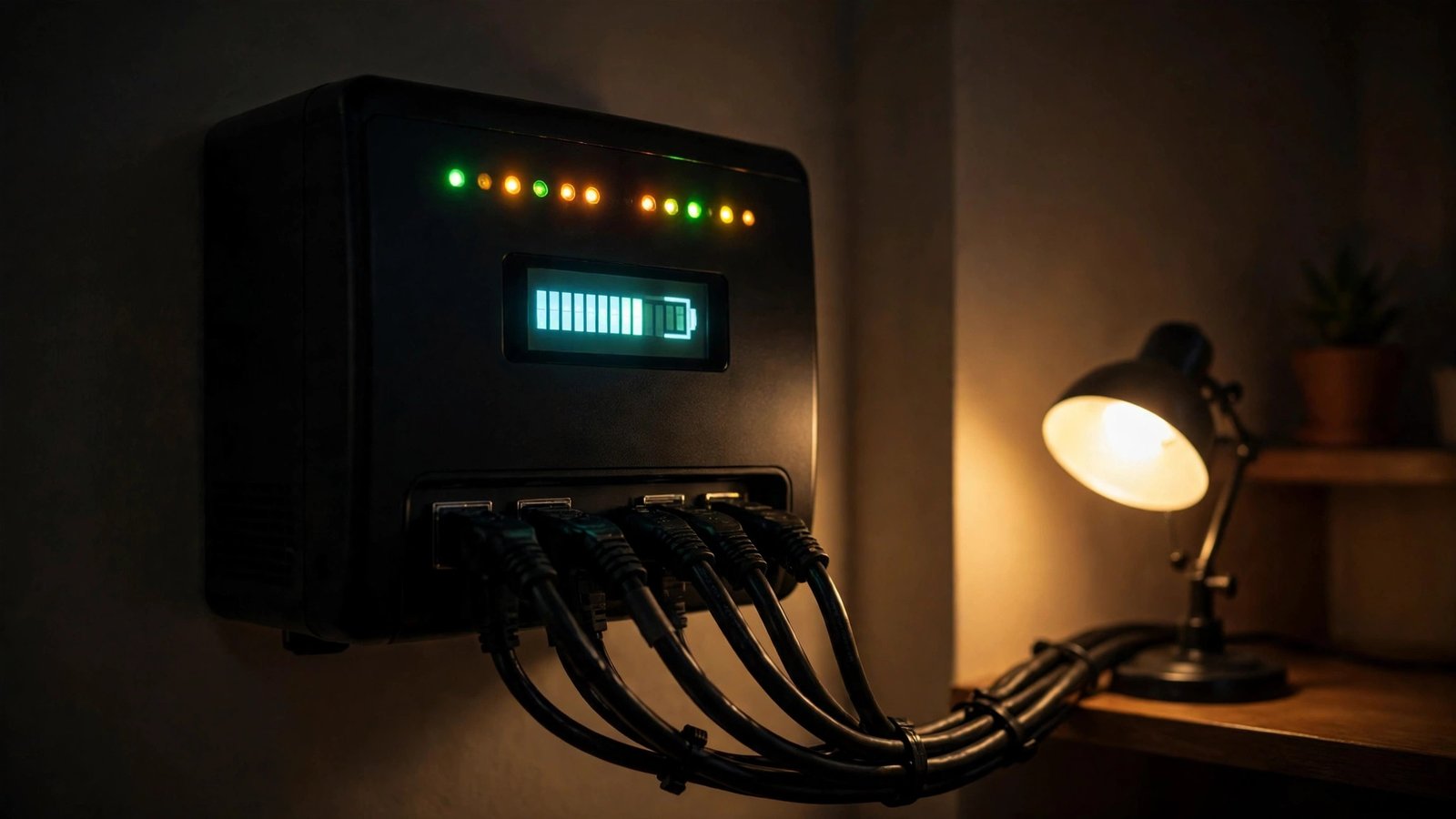
An online UPS, also called a double-conversion UPS, works differently: it converts mains power to DC and back to AC all the time, so your devices always run on clean, stable power from the battery circuit. There is no switchover at all — the output never breaks, even for a millisecond. That makes it the choice for servers and any office where a split-second break can corrupt data or damage hardware.
The price is higher, and the unit uses more electricity because the conversion runs non-stop. Online UPS units also run warmer and need good ventilation. For a home it is usually more than you need, but for a small office running a server and several workstations it is the only type that gives true zero-break backup. Check the battery runtime at your actual load, not the headline figure.
- Pros: Zero switchover time, clean stable output, pure sine wave as standard, best protection for servers and sensitive gear.
- Cons: Highest prices, uses more electricity, runs warm and needs ventilation.
UPS with Built-in Battery for Small Setups
A UPS with a built-in battery is a single sealed box: the inverter, charger and battery all live inside one case, and you plug it in and switch it on. There is no separate battery to wire up, no acid to top up, and nothing to install. For a student, a freelancer or a small shop counter, that simplicity is the whole point.
The trade-off is runtime: a small built-in battery usually lasts twenty minutes to about an hour at a light load. That is enough to finish a call, save a document and shut down gracefully, but it will not carry a family through a two-hour evening cut. When the built-in battery wears out, usually after two to three years, replacing it can cost a large share of the price of a new unit, so check the replacement cost before you buy.
- Pros: Plug-and-play setup, compact and tidy, no battery maintenance, good for routers and laptops.
- Cons: Short backup time, battery replacement can be costly, cannot be expanded with extra batteries.
UPS and External Battery Setups for Long Backup
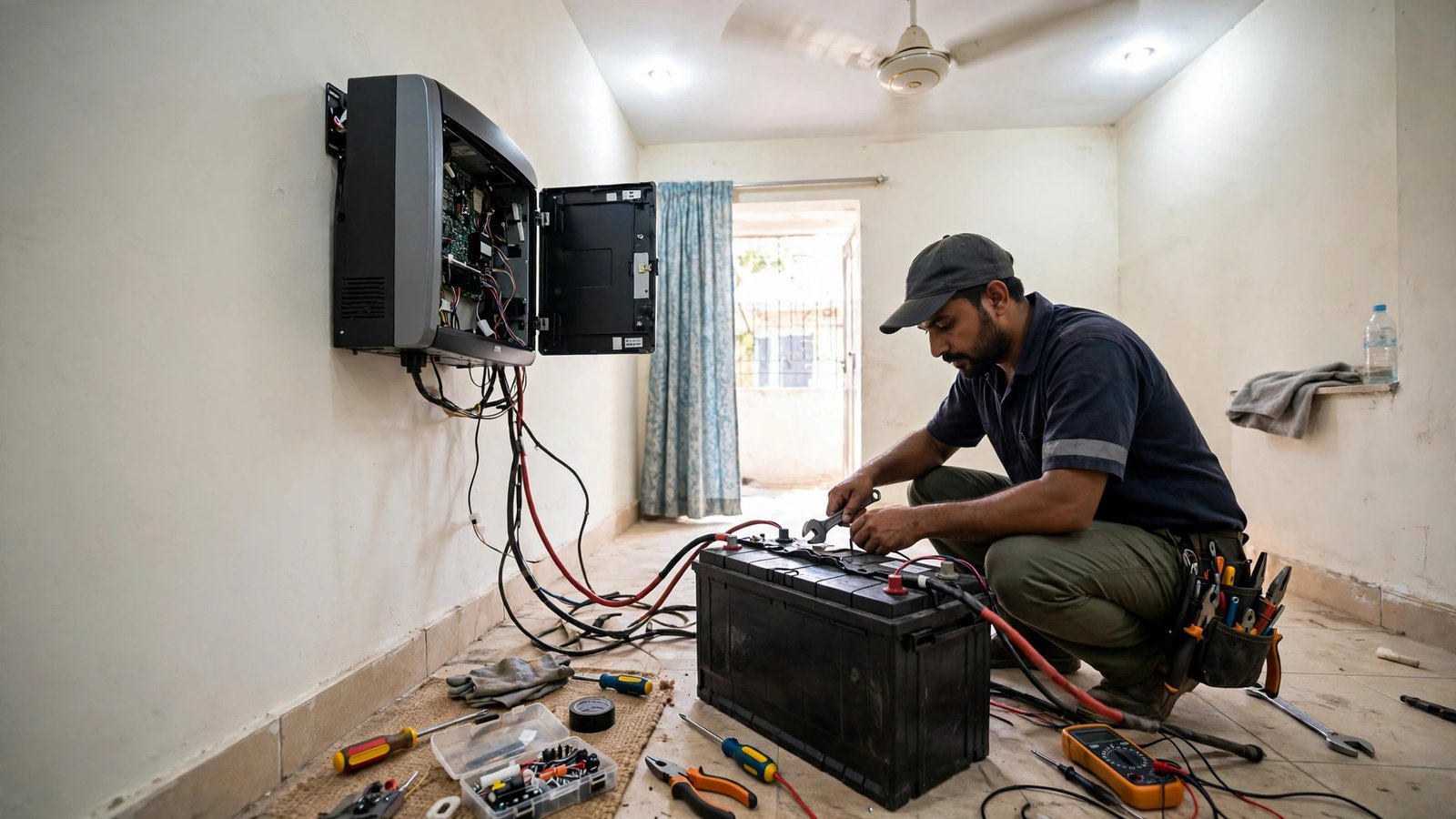
Pairing a UPS with one or two external batteries is the classic Pakistani setup for long load shedding. The UPS unit itself is often just an inverter-charger, and the backup time comes from the batteries you connect to it — a single 100 Ah battery, or two for a 24-volt system. With a moderate load of fans and lights, it can run for several hours, which is why you will find it in homes, shops, clinics and small offices across the country.
The battery is where the money goes, and where most mistakes happen. Flooded lead-acid batteries are the cheapest and the most common, but they need distilled water top-ups and a ventilated spot because they release gas while charging. Sealed and lithium batteries cost more but need almost no upkeep and last longer. Match the battery voltage to the UPS — a 12-volt UPS takes one battery, a 24-volt UPS takes two in series — and never mix an old battery with a new one.
- Pros: Longest backup times, batteries can be sized to your needs, proven setup with local technicians everywhere.
- Cons: Batteries need space and ventilation, flooded batteries need water top-ups, total cost is higher once batteries are added.
Solar-Ready Hybrid UPS and Inverters
A solar-ready hybrid UPS, often sold as a hybrid inverter, is a UPS that can also charge from solar panels. During the day it runs your load from the panels, tops up the batteries from the sun, and only draws from the grid when it has to. For homes facing long daytime cuts, it trims the electricity bill and keeps the batteries full without depending on the grid.
Hybrid inverters cost more up front, and the real cost includes panels, wiring and installation by someone who knows the work. A badly installed solar setup can damage the inverter or the batteries, so the installer matters as much as the brand. Check the solar input rating, which decides how many panels you can connect, and make sure the unit supports your battery type. For a home adding panels in stages, a hybrid unit bought today saves buying a second inverter later.
- Pros: Runs on solar power during the day, lowers electricity bills, one unit handles UPS and solar, ready for future panel upgrades.
- Cons: Higher upfront cost, needs professional installation, panels and wiring add to the total.
Price Guide: What a UPS Costs in Pakistan
Prices for a UPS in Pakistan typically range from around Rs 18,000 to Rs 60,000 (check the seller for the current price). At the lower end, roughly Rs 18,000 to Rs 28,000, sit compact line-interactive units and small built-in-battery models — enough for a router, a laptop and a few lights. The middle band, around Rs 28,000 to Rs 45,000, covers larger line-interactive units and UPS-plus-battery setups with a single external battery, the range most family homes buy into.
Above Rs 45,000, towards Rs 60,000, sit online UPS units and solar-ready hybrid inverters, before the cost of extra batteries and solar panels. The VA rating, the battery type and pure sine wave output move the price most — lithium costs far more than lead-acid, and pure sine wave costs more but runs motors safely.
Buying Tips for Pakistani Buyers
Start by adding up the watts of everything you want to keep running — a ceiling fan is roughly 70 to 80 watts, an LED bulb 10 to 15 watts, a router under 15 watts and a laptop around 60 watts. Add about 25 percent headroom, then match the total to the UPS rating: as a rough guide, a 1000 VA UPS typically supports around 600 watts. Buying too small is the most common mistake, and it shows up as a UPS that beeps and shuts down minutes into a cut.
Choose pure sine wave output if you plan to run a fan, a fridge or any motor, because a modified sine wave makes motors hum, run hot and wear out faster. Ask about the battery warranty separately from the unit warranty — the two are often different, and a one-year battery warranty on a battery that should last three years is a warning sign. Buy from an authorised dealer or a seller who gives a written warranty and has a service centre in your city, keep the receipt, and test the backup time in the first week by switching off the mains and timing how long your actual load runs.
Frequently Asked Questions
What size UPS do I need for my home in Pakistan?
Add up the watts of everything you want to keep running, then add about 25 percent headroom. For a typical home setup — two fans, three LED lights, a router and a laptop charger — the load is around 250 to 300 watts, and a 1000 VA UPS with a single external battery covers it with room to spare. For a shop or office, add up each device and buy one size up.
How long will a UPS run during load shedding?
It depends on the battery and the load. A compact UPS with a built-in battery usually gives 20 to 60 minutes at a light load. A UPS with a single 100 Ah external battery can run fans and lights for two to four hours, while two batteries stretch that further.
Lead-acid or lithium battery — which is better for a UPS?
Lead-acid is cheaper and available everywhere in Pakistan, but the flooded type needs distilled water top-ups and usually lasts two to four years. Lithium costs much more but lasts longer, charges faster and needs no maintenance. For most homes, lead-acid is the practical pick.
Can a UPS run a fridge or an air conditioner?
A fridge can run on a large pure sine wave UPS with a big battery bank, but the compressor’s starting surge means the UPS must be sized for that surge. An air conditioner is not practical on a home UPS — it draws far more power than a battery setup can supply for any useful length of time.
What should I check in the warranty before buying a UPS?
Check three things: the warranty period on the UPS unit, the separate warranty on the battery, and where service happens — a dealer with a workshop in your city is worth more than a longer warranty from a seller with no service setup. Keep the receipt and the warranty card safe.
Conclusion
The best UPS in Pakistan is the one sized to your real load, matched to the batteries you are willing to maintain, and bought from a seller who will honour the warranty. Work out your watts, pick pure sine wave for motors, and test the backup time in the first week. That one careful purchase turns load shedding from a daily disruption into a short pause.
For more buying guides on trending products across Pakistan, visit the product feed at https://trendz.pk/.