Best Electric Chopper in Pakistan (2026): Price Guide & Buying Tips
Chopping onions for salan, crushing green chillies for chutney, and mincing meat for shami kebab — a Pakistani kitchen runs on chopping, and doing it by hand takes time every day. Tears from the onions and a knife that needs sharpening: it all adds up when you cook for a joint family. The best electric chopper in Pakistan does this work in seconds — a quick pulse and the onions are diced, the chillies are crushed, and the meat is minced, ready for the pan. Prices are typically around Rs 2,500–12,000 (check the seller for the current price).
Here are the five types most Pakistani kitchens buy and what each one does well. Prices are approximate — confirm the current price with the seller.
Quick Picks
- Budget pick: A compact single-blade chopper, for a small kitchen and daily onion, chilli, and herb chopping.
- Everyday pick: A 2-in-1 chopper with an extra bowl, for a family that chops vegetables in the morning and prepares meat or chutney later in the day.
- Family pick: A large-capacity chopper, for joint families and big batches of salan, kebab mix, and salad.
- Meat pick: A meat mincer chopper, for fresh keema, shami kebab, and seekh kebab at home.
- Premium pick: A multi-function chopper, for chopping, mincing, whisking, and slicing in one machine.
Budget Pick: The Compact Single-Blade Chopper
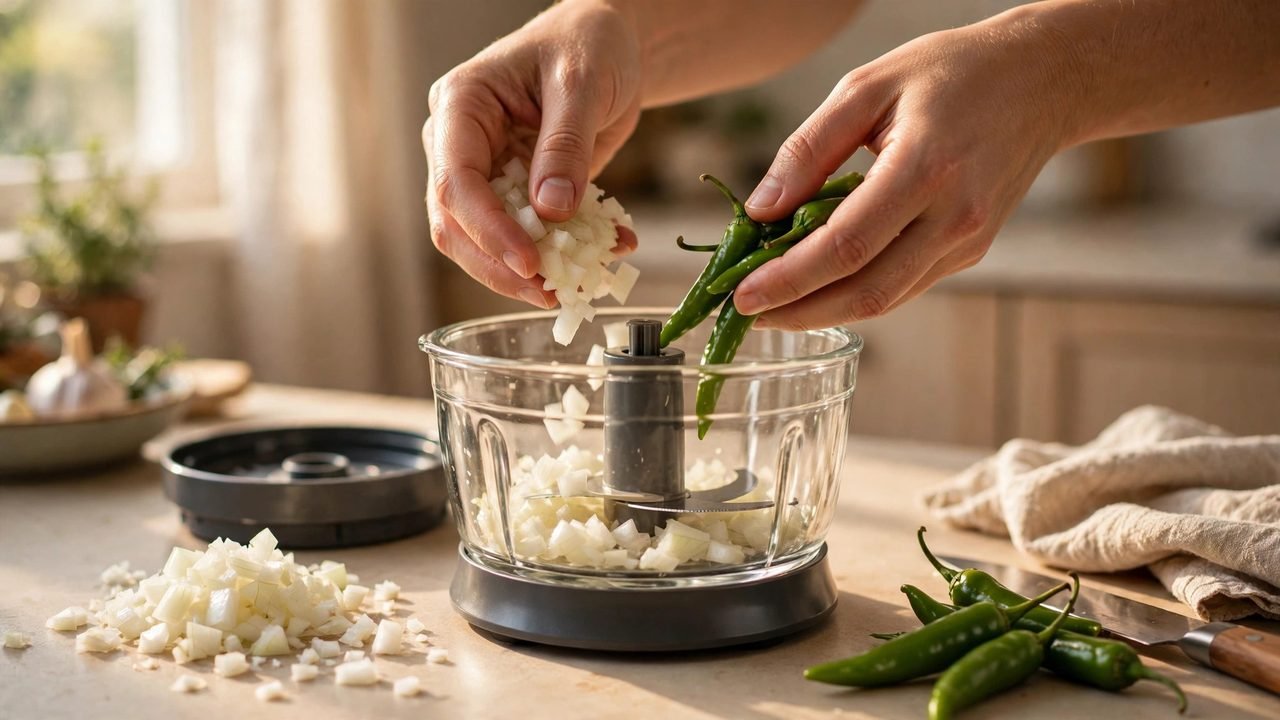
A compact single-blade chopper is a small glass or plastic bowl with stainless steel blades and a motor head on top. You drop in an onion or a handful of green chillies, press the button for a few seconds, and it is done. Most models hold half a litre to one litre, enough for one meal’s worth of chopping in a small household.
This is the type most Pakistani kitchens should start with. The daily job is the same everywhere: one or two onions for the salan, a few green chillies, some garlic, and dhania. A compact chopper handles all of that in under a minute, and it takes up so little space that it fits on a crowded counter or inside a cupboard when the cooking is done. The lid also keeps the onion fumes in while the blades do the work.
- Pros: Cheapest option, small enough for a crowded counter, chops onions and chillies in seconds, easy to wash.
- Cons: Small bowl means chopping in batches for a big family, one blade speed only, not strong enough for hard jobs like mincing meat.
A compact single-blade electric chopper is typically around Rs 2,500–4,500 (check the seller for the current price).
Everyday Pick: The 2-in-1 Chopper with an Extra Bowl
A 2-in-1 chopper comes with two bowls — usually a small one and a larger one. Use one bowl for vegetables and the other for meat, so the flavours never mix and you do not have to stop and wash halfway through cooking.
This pick suits a busy family kitchen. The morning starts with chopping onions and tomatoes for breakfast, then later the same machine minces meat for kebab or crushes nuts for a dessert. With two bowls you can prep lunch and dinner without washing in between. The larger bowl, usually around 1.5 to 2 litres, is big enough for a family-size batch of salad or chutney in one go.
- Pros: Two bowls keep veg and meat separate, larger bowl handles family-size batches, extra attachments add value, good balance of price and size.
- Cons: Costs more than a basic model, two bowls take more cupboard space, some models share one motor so heavy use needs rest breaks.
A 2-in-1 electric chopper with an extra bowl is typically around Rs 4,000–7,000 (check the seller for the current price).
Family Pick: The Large-Capacity Chopper
A large-capacity chopper has a bowl of 2 litres or more and a stronger motor, built for kitchens that cook in big quantities. In a joint family, one salan needs four or five onions, a whole bunch of dhania, and a pile of tomatoes — a small chopper would need three or four rounds, but a large one does it in a single batch.
This is the right pick when the cooking is for eight or ten people, or when you prepare food in bulk — a big batch of shami kebab mix on the weekend, or a full tray of salad for a dawat. The stronger motor matters too: a full bowl puts more load on the blades, and a weak motor will strain and heat up.
- Pros: Chops a whole family meal in one batch, strong motor handles big loads, wide bowl fits whole vegetables, saves time on dawat and bulk cooking.
- Cons: Bulky on the counter and in the cupboard, heavier to lift and wash, costs more than a compact model.
A large-capacity electric chopper is typically around Rs 5,000–9,000 (check the seller for the current price).
Meat Pick: The Meat Mincer Chopper
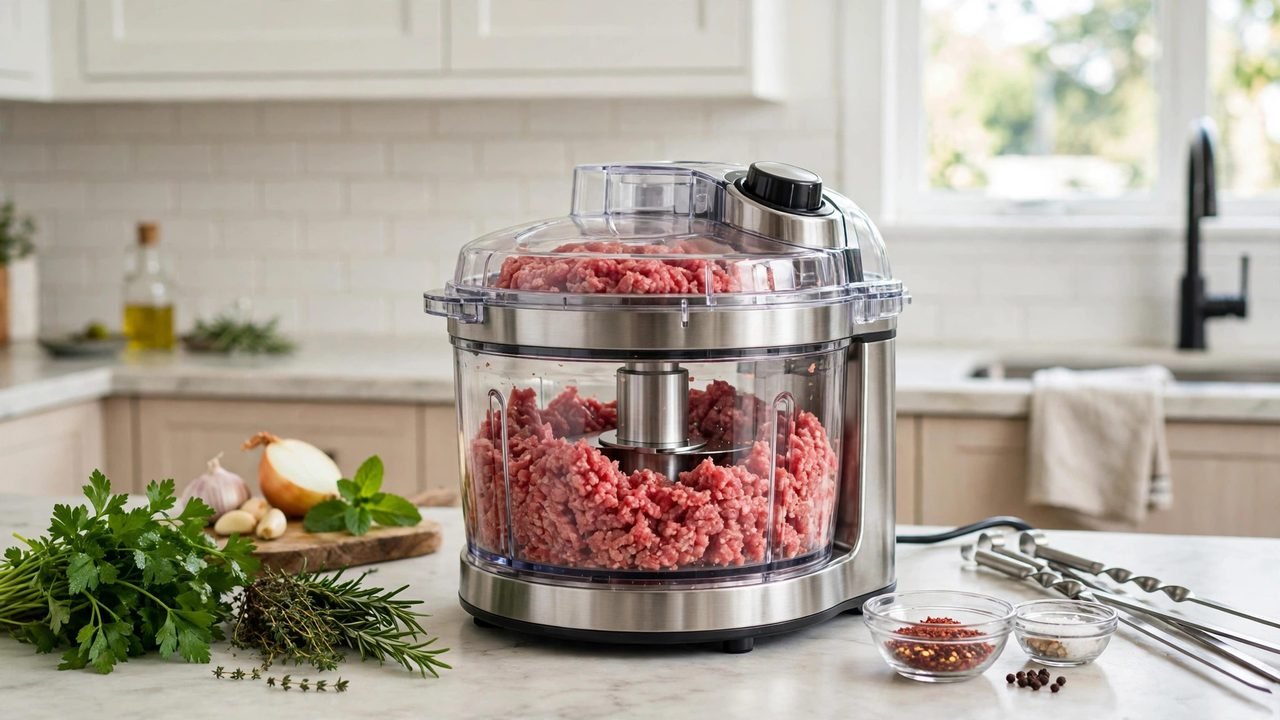
A meat mincer chopper is built for one job and does it properly: turning boneless meat into fresh keema at home. It has a stronger motor and tougher blades than a vegetable chopper, and it can handle chicken, beef, and mutton in small pieces. Fresh keema made at home tastes better than shop-bought mince, and you know exactly what went into it.
This pick is for homes that make kebab, kofta, and keema dishes often. Shami, seekh, and chapli kebab all start with good mince, and the texture matters: too fine and the kebab turns pasty, too coarse and it falls apart. A meat chopper lets you control that with short pulses. Most models also chop vegetables well, so the machine still earns its place on the counter on days when there is no meat to mince.
- Pros: Makes fresh keema at home, stronger motor and tougher blades, pulse control gives the right kebab texture, also chops vegetables.
- Cons: Needs more power than a vegetable chopper, must be cleaned well after meat use, not the best choice if you rarely cook meat.
A meat mincer electric chopper is typically around Rs 6,000–10,000 (check the seller for the current price).
Premium Pick: The Multi-Function Chopper
A multi-function chopper is the all-in-one machine. Along with the standard chopping blades, it comes with extra attachments — often a slicer disc, a whisk, and sometimes a grater — so one machine replaces several small gadgets. Chop onions, slice cucumbers for salad, whisk eggs for an omelette, and grate carrots for gajar ka halwa, all without pulling out a different tool each time.
This pick suits a kitchen where cooking is a daily habit, not just a chore. If you make chutneys, salads, kebabs, and desserts in the same week, the attachments save time and cupboard space. Premium models also tend to have better build quality: a glass bowl instead of plastic, a stronger motor with two or three speeds, and a lid lock that stops the blades when the lid is off.
- Pros: Several jobs in one machine, extra attachments for slicing and whisking, glass bowl and better build quality, multiple speeds for fine control.
- Cons: Highest price in this guide, more parts to wash and store, attachments you never use are wasted money.
A premium multi-function electric chopper is typically around Rs 8,000–12,000 (check the seller for the current price).
Electric Chopper Prices in Pakistan
Prices follow the bowl size, the motor power, and the number of attachments in the box. Most buyers land in the middle of the Rs 2,500–12,000 range (check the seller for the current price).
- Rs 2,500–4,500: Compact single-blade choppers. Good for small kitchens and daily onion and chilli chopping.
- Rs 4,000–7,000: 2-in-1 choppers with an extra bowl. The sweet spot for most families: separate bowls for veg and meat.
- Rs 5,000–9,000: Large-capacity choppers. Best for joint families and dawat prep.
- Rs 6,000–10,000: Meat mincer choppers. Best for fresh keema and kebab at home.
- Rs 8,000–12,000: Premium multi-function choppers. Best for kitchens that want it all in one machine.
Buying Tips
Start with the size of your household, because it decides the bowl. A couple or a small family manages fine with a half-litre to one-litre bowl. A family of five or six needs at least 1.5 litres, and a joint family should look at 2 litres or more — otherwise you will spend your time chopping in batches, which defeats the purpose of the machine.
Check the motor power. A 200 to 300 watt motor handles onions, tomatoes, and herbs easily. For meat, nuts, and hard vegetables like carrots, look for 400 watts or more. A weak motor strains, heats up, and wears out faster when pushed beyond soft vegetables.
Choose a glass bowl if your budget allows. Glass does not stain from turmeric and chillies the way plastic does, and it does not pick up smells from garlic and onions. Plastic bowls are lighter and cheaper, but they scratch and stain over time.
Think about load shedding. A chopper only runs when there is power, so during a power cut it is useless no matter how good it is. Keep a sharp knife and board handy for those hours, and use short pulses — they give you control over the texture anyway.
Check the blades and the safety lock. Stainless steel blades stay sharp longer and do not rust. A safety lock that stops the blades when the lid is removed is worth having, especially in a house with children.
Finally, buy from a seller you can return to. Electric choppers are available on Daraz and in official brand stores — compare prices across sellers before buying. Check the warranty before you pay: a one-year warranty from the brand or an authorised seller is the minimum to accept, and keep the receipt and the box until the warranty ends.
Frequently Asked Questions
Can an electric chopper mince meat for kebab?
Yes, if the motor is strong enough. A meat mincer chopper with 400 watts or more handles boneless chicken, beef, and mutton well. Use short pulses and stop before the meat turns into a paste — a few seconds at a time gives the coarse texture that holds a kebab together. Cut the meat into small cubes first.
What size chopper is best for a Pakistani family?
It depends on how many people you cook for. A 0.5 to 1 litre bowl suits a small family of two to four people. A 1.5 to 2 litre bowl suits a family of five or six. A joint family of eight or more should look at 2 litres or above, so one batch covers the whole meal.
Does an electric chopper work during load shedding?
No. It needs mains power, so it will not run during a power cut. A UPS can power a small chopper for a few minutes, but most families keep a knife and board ready as a backup. Plan your chopping for when the power is on.
Glass bowl or plastic bowl — which is better?
Glass is better for a Pakistani kitchen: it does not stain from haldi and red chillies, it does not hold the smell of garlic and onions, and it lasts longer. Plastic is lighter and cheaper, but it scratches and stains over time — so if you chop turmeric and chillies often, glass is worth the extra cost.
How do I clean an electric chopper after mincing meat?
Wash the bowl and blades with hot water and dish soap right after use, before the meat dries on. Dry the blades fully to stop rust, and never put the motor head under water — wipe it with a damp cloth. For garlic or onion smells, wash with a little lemon juice, then rinse and dry.
Conclusion
An electric chopper is one of the most useful small machines in a Pakistani kitchen — it turns the daily chore of chopping onions, chillies, and meat into a job that takes seconds. Pick the type that matches your kitchen: compact for a small household, 2-in-1 for everyday cooking, large-capacity for a joint family, a meat mincer for fresh keema and kebab, or multi-function if you want one machine that does it all. Choose a bowl big enough for your family and a motor strong enough for meat. For more trending picks and buying guides, visit the product feed at trendz.pk.