Best Wireless Charger in Pakistan (2026): Price Guide & Buying Tips
Introduction
Finding the best wireless charger in Pakistan is easier than it used to be, but the shelves are crowded with lookalike pads, stands and chargers. A wireless charger lets you charge a phone, earbuds or a smartwatch without a cable — place the device on the pad or stand and charging starts. Prices for a decent wireless charger in Pakistan typically range from around Rs 1,500 to Rs 8,000 (check the seller for the current price), depending on speed and whether it charges one device or three. This guide covers the five main types, their strengths and weaknesses, the price bands, and the practical details: wattage, adapters and safety.
Quick Picks
- Best for everyday use: A single-coil pad — simple and affordable, enough for overnight charging.
- Best for quick top-ups: A fast charger (10W or 15W) with a proper adapter.
- Best for three devices at once: A 3-in-1 station for phone, earbuds and watch from one socket.
- Best for desk and bedside: A stand holding the phone upright, so you can see notifications.
- Best for phones on the go: A magnetic charger that snaps onto the phone and works in the car or in a bag.
Single-Coil Charging Pads for Everyday Use
A single-coil pad is the simplest wireless charger you can buy, and for most people the most sensible one. It is a flat disc with one coil: place your phone in the centre and charging starts. These pads are the cheapest way into wireless charging, and they suit the most common habit — charging overnight.
The main limitation is speed: most deliver 5W or 7.5W, fine overnight but slow for quick top-ups. Placement matters too — with one coil, the phone must sit in the right spot or charging may stop. A non-slip ring helps. Buy a Qi-standard pad from a seller who will honour a warranty, because unbranded pads are the most likely to fail.
- Pros: Cheapest type; simple; compact; works with any Qi phone, earbuds or watch.
- Cons: Slow at 5W to 7.5W; phone must sit exactly in the centre; usually no adapter included.
Fast Wireless Chargers for Quick Top-Ups
A fast charger is for when you do not have all night. It delivers 10W or 15W instead of the usual 5W, cutting charging time noticeably. With load-shedding still part of daily life, it makes better use of the hours power is available.
The catch is that the charger alone is not enough: a 15W charger only reaches 15W with an adapter that can supply that power, and most fast chargers are sold without one. You need an 18W or higher Quick Charge or Power Delivery adapter from a known brand. Faster charging produces more heat, so a good charger has temperature control and slows down if the phone gets too hot. Match it to your phone: iPhones take up to 7.5W on standard Qi pads and 15W with MagSafe-style chargers, while many Samsung and Xiaomi phones accept 10W or 15W.
- Pros: Much faster than basic pads; makes good use of load-shedding windows.
- Cons: Needs an 18W or higher adapter, usually sold separately; runs hotter; costs more.
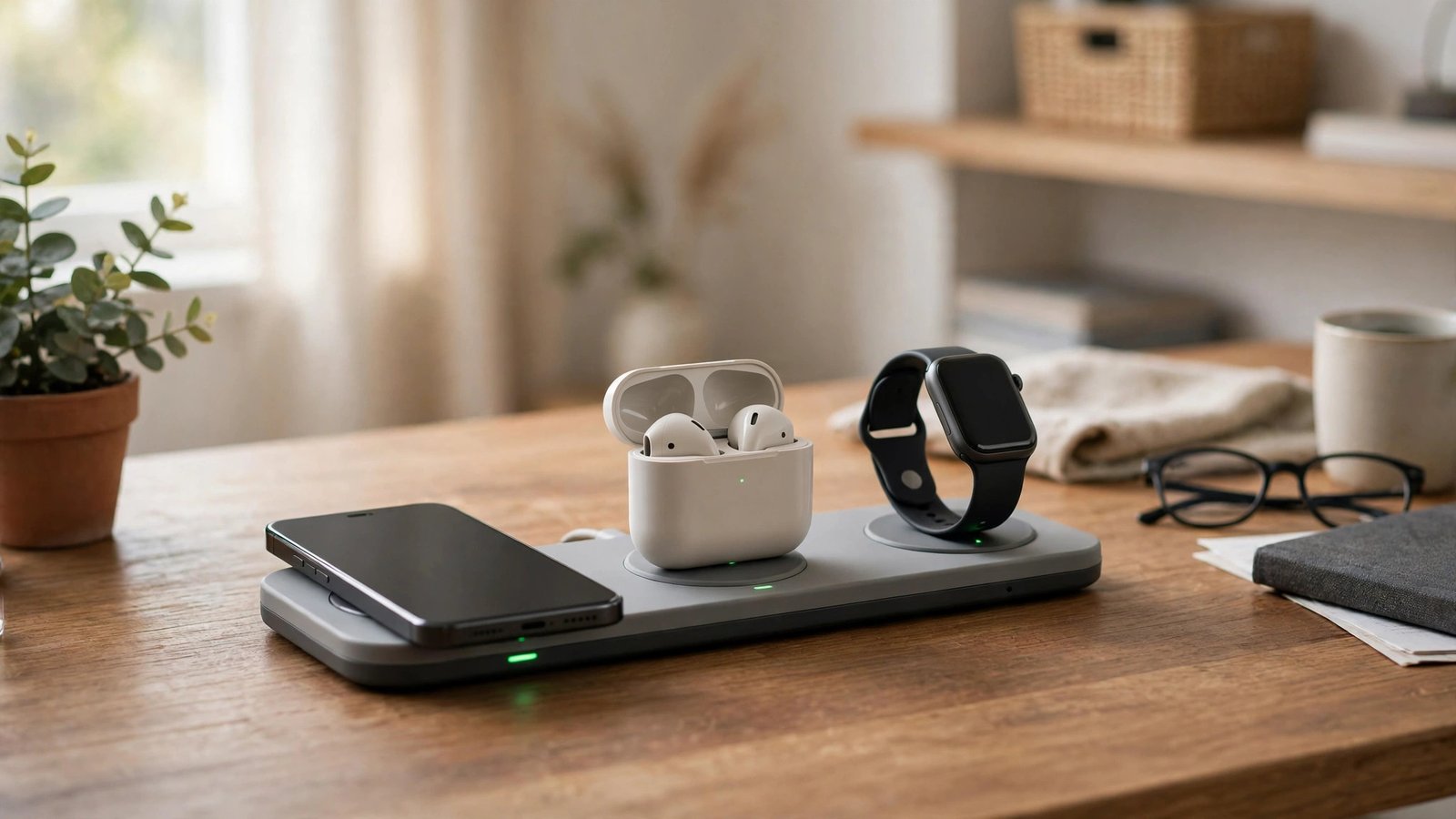
3-in-1 Charging Stations for Phone, Earbuds and Watch
A 3-in-1 station is one base that charges three devices at once: phone, earbuds and smartwatch. Instead of three cables and sockets, you have one station and one cable. Every device has a fixed place, so nothing gets lost or left uncharged.
Check compatibility first: the watch part of most 3-in-1 stations is made for one watch brand — usually Apple Watch or Samsung Galaxy Watch — and will not charge others. The earbud spot is a flat Qi pad, so it works with most earbuds. Wattage is shared, so the phone may charge slightly slower, a fair trade since a station is normally used overnight. A good one has a weighted base and a strong adapter.
- Pros: Charges three devices from one socket; keeps the desk tidy; good value.
- Cons: Watch charger usually works with one watch brand; phone may charge slower; quality varies.
Wireless Charging Stands for Desk and Bedside
A charging stand holds your phone upright while it charges, and that small change makes a real difference. On a desk, you can read messages or join a video call without picking the phone up. By the bed, the phone works as a clock and alarm display. Many stands have two coils, so the phone charges upright or sideways.
Stands suit people who use their phone while it charges, and the upright position helps with heat. The trade-off is that a stand is less stable than a flat pad if bumped, and a heavy phone in a thick case can slide off a weak grip. Look for a non-slip base and a small lip, and check the wattage: many stands are 10W, while cheaper 5W ones will feel slow.
- Pros: Phone stays visible and usable; works in portrait and landscape; better airflow; doubles as a bedside clock.
- Cons: Less stable if bumped; thick cases can slip; usually needs a separate adapter.
Magnetic Wireless Chargers for Phones on the Go
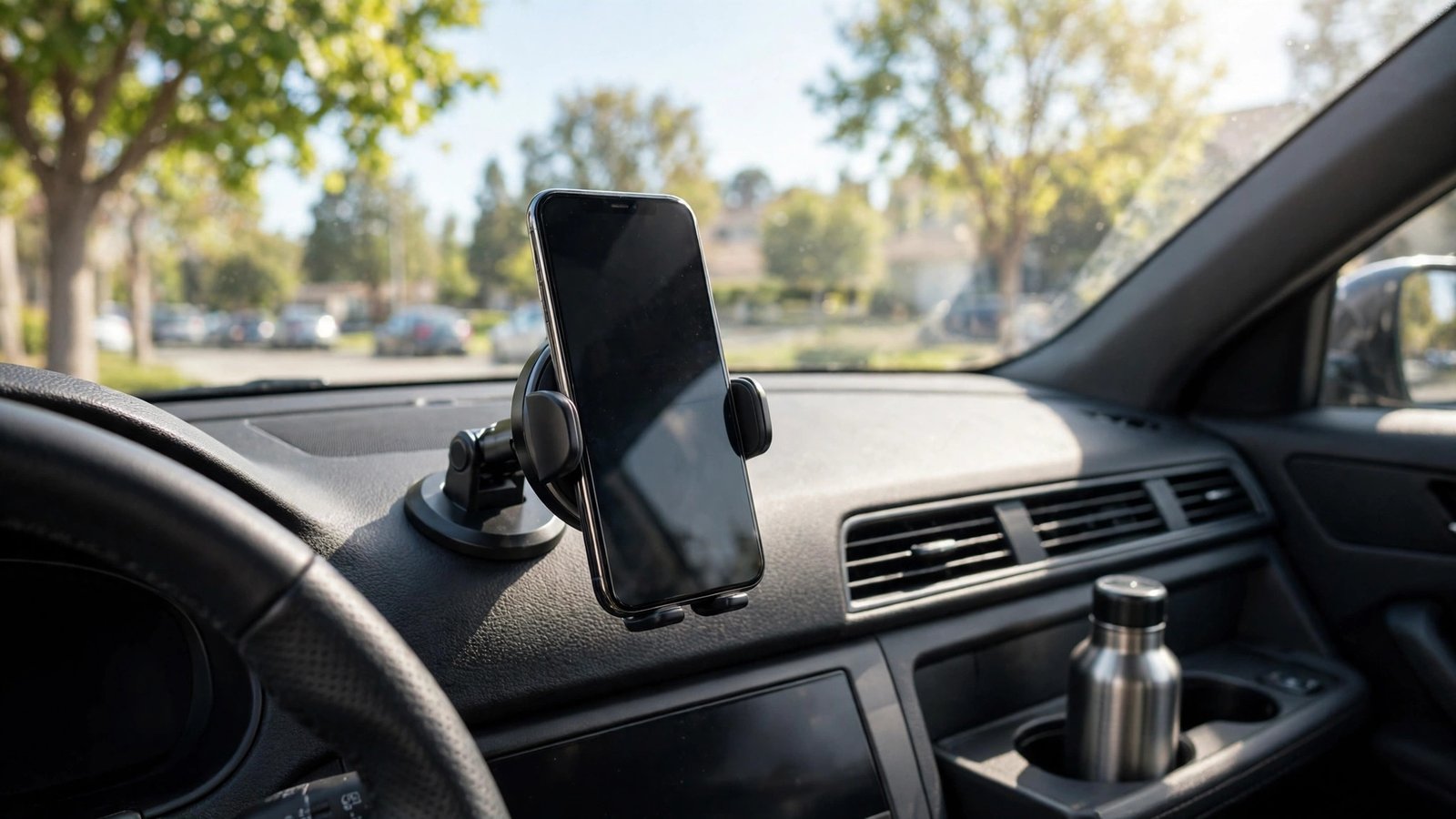
A magnetic wireless charger uses a ring of magnets to snap onto the back of the phone and hold itself in place while charging. Made popular by Apple’s MagSafe, similar chargers now exist for many Android phones through magnetic cases or adapter rings. The magnet solves the biggest annoyance of ordinary wireless charging: the phone sliding off the pad. Once it snaps on, it stays aligned.
These chargers are best away from a desk. In a car, one doubles as a phone holder, keeping the phone charged and visible for navigation. In a bag, a small magnetic power bank can top up the phone cable-free — just snap it on. Two things to know: the magnet only works if your phone or case has the matching magnetic ring, and magnetic chargers can run warm, so buy from a known brand with temperature protection. Cheap ones with weak magnets are a common complaint in Pakistani marketplaces.
- Pros: Snaps on and stays aligned; doubles as a car holder or power bank.
- Cons: Needs a MagSafe-compatible phone or a magnetic case; costs more; can run warm; cheap versions have weak magnets.
Price Guide: What a Wireless Charger Costs in Pakistan
Wireless charger prices in Pakistan typically range from around Rs 1,500 to Rs 8,000 (check the seller for the current price). At the entry level, around Rs 1,500 to Rs 3,000, you get a basic single-coil pad at 5W or 7.5W, usually without an adapter. These are fine for overnight charging, but do not expect fast speeds. This is also the band where copy products are most common, so buy from a seller you trust.
The mid range, around Rs 3,000 to Rs 5,000, is where most buyers should look: 10W fast chargers, decent stands, and simple 3-in-1 stations from known brands, with better build quality and temperature control. The premium range, around Rs 5,000 to Rs 8,000, covers 15W fast chargers, well-built 3-in-1 stations, and magnetic chargers with strong magnets — you are paying for speed, materials and certification. Whatever band you choose, remember the charger is not the whole cost: a good 18W or higher adapter adds to what you pay if not included. Seasonal sales on Daraz can bring prices down, but a very cheap premium charger is often a copy.
Buying Tips for Pakistani Buyers
Start with compatibility: your phone must support the Qi standard — most flagship and mid-range phones do, but budget phones often do not, so check your phone’s specifications first. The case matters too: charging works through most slim cases up to about 3 millimetres thick, but a very thick case, a metal plate or a wallet with cards inside will block it. If your case is thick, take it off or switch to a slimmer one.
Match the wattage to your phone: no point paying for a 15W charger if your phone only accepts 7.5W, and a 5W pad will feel slow if your phone can take 10W or 15W. Check the phone’s maximum wireless charging speed. Then buy the right wall adapter — most wireless chargers in Pakistan are sold without one: a 15W charger needs an adapter that can deliver at least 18W, and it should be a genuine adapter from a known brand, not a copy.
Heat and safety deserve attention. A wireless charger may stay plugged in all night, every night, so buy one with over-temperature protection and, where possible, Qi certification. Avoid unbranded chargers with no certification marks and no warranty — the most likely to overheat or fail. If a charger ever feels hot to the touch, unplug it. Place it on a hard, flat surface, not on a bed or under clothes. Buy from authorised dealers or reputable sellers — on Daraz, in markets like Hafeez Centre in Lahore or Saddar in Karachi. Check the seller’s ratings, ask about the warranty before paying — six months or a year is a good sign — and keep the receipt until you are sure the charger works.
Frequently Asked Questions
Which wireless charger is best in Pakistan? There is no single best charger — it depends on your phone and how you charge. For most people, a 10W fast charger from a known brand is the best all-round pick: quick enough for daytime top-ups and compatible with almost every Qi phone. If you own a phone, earbuds and a smartwatch, a 3-in-1 station is better value; overnight-only chargers will be happy with a basic pad.
How much does a wireless charger cost in Pakistan? A decent wireless charger in Pakistan typically costs around Rs 1,500 to Rs 8,000 (check the seller for the current price). Basic pads sit at the lower end, mid-range chargers and stands in the middle, and premium 15W chargers and 3-in-1 stations at the upper end. Remember to budget for a wall adapter if one is not included.
Does wireless charging work with a phone case on? Yes, as long as the case is slim — up to about 3 millimetres thick — and made of plastic or silicone. Charging will fail or slow down if the case is very thick, has a metal plate or a pop socket, or contains cards, because metal blocks the signal. If your phone is not charging, take the case off and try again.
Is wireless charging slower than wired charging? Yes, wireless charging is usually slower than wired charging. A wired charger can deliver 25W or more, while most wireless chargers deliver 5W to 15W. The gap matters most when you need a quick charge before leaving the house. Overnight, though, it does not matter — the phone has hours to reach full charge. Wireless charging is about convenience, not speed.
Where to buy a wireless charger in Pakistan? You can buy one from online stores such as Daraz, from mobile accessory shops in markets like Hafeez Centre in Lahore or Saddar in Karachi, or from authorised brand outlets. Online shopping gives you more choice, but check the seller’s ratings first. An authorised dealer costs a little more but gives you a genuine product and a proper warranty.
Conclusion
The best wireless charger in Pakistan is the one that fits your phone, your habits and your budget — not the most expensive one on the shelf. A basic pad is enough for overnight charging, a fast charger is worth it if you top up during the day, a 3-in-1 station suits anyone with a phone, earbuds and a watch, and a magnetic charger is best on the move. Prices typically range from around Rs 1,500 to Rs 8,000 (check the seller for the current price), so set your budget, check your phone’s speed, buy a proper adapter, and choose a certified charger from a trusted seller. For more trending product guides, browse the product feed at trendz.pk.