Best Water Purifier in Pakistan (2026): Price Guide & Buying Tips
Clean drinking water is a daily worry in Pakistan. Tap water in many cities carries dust, rust from old pipes, and germs that no family wants in a glass. Bottled water solves the problem but costs a fortune over a month, and the plastic waste piles up. That is why a home water purifier has become a standard appliance in Pakistani kitchens — buy it once, and every glass from the tap turns into safe drinking water. Choosing the best water purifier in Pakistan starts with knowing what is actually in your water, because the right filter for hard bore water is not the same as the right filter for city supply water. Prices for water purifiers in Pakistan are typically around Rs 10,000–60,000 (check the seller for the current price).
This guide covers the five main types sold in Pakistan, their prices, and the details that decide whether your purifier gives you clean water for years or becomes an expensive decoration under the sink.
Quick Picks
- Best for most homes: an RO water purifier that removes dissolved salts, heavy metals and germs in one system.
- Best for city supply water: a UV water purifier that kills germs without removing the minerals your body needs.
- Best for areas with no electricity: a gravity-based purifier that works without power and needs no installation.
- Best for whole-house protection: a whole-house filter at the main line that protects every tap, shower and washing machine.
- Best budget pick: a countertop or tap-mounted filter that improves taste and removes dust and rust at a low price.
RO Water Purifiers for Hard and Bore Water
An RO purifier — reverse osmosis — is the strongest filter you can buy for a home. Water is pushed through a fine membrane that blocks dissolved salts, heavy metals, arsenic and germs, leaving water that is clean enough for drinking, cooking and baby food. In areas where the water comes from a bore and tastes salty or leaves white marks on pots, RO is often the only filter that fixes the problem properly.
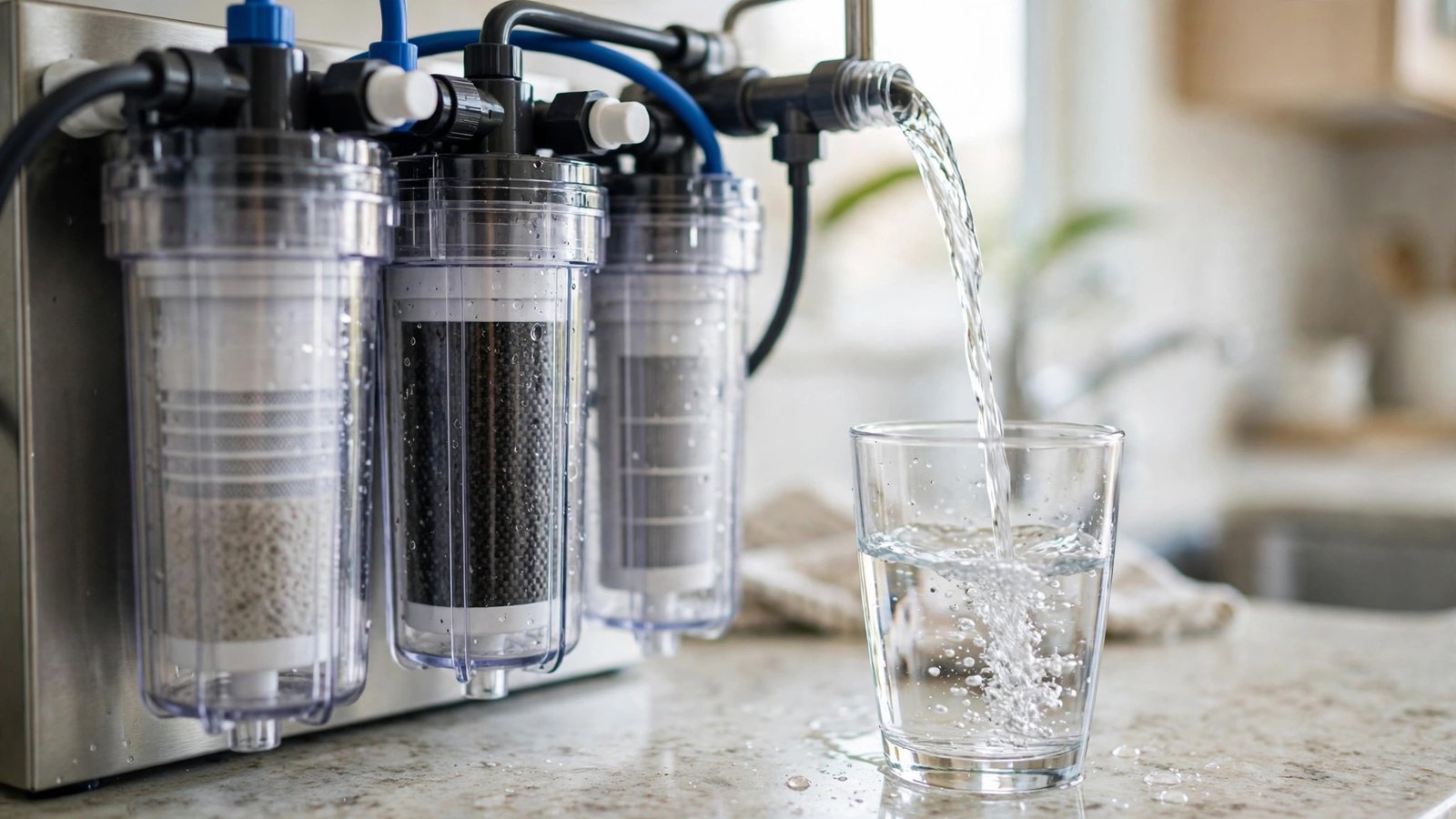
A typical home RO system has several stages: a sediment filter for dust, a carbon filter for smell and chlorine, the RO membrane itself, and a final polishing filter. Most models also have a storage tank of 8 to 12 litres, so you still have clean water during a power cut. The membrane needs replacing every one to two years, and the filters need changing every six to twelve months, depending on how dirty your water is.
RO water purifiers are typically around Rs 25,000–60,000 (check the seller for the current price). Before buying, get your water tested — a simple TDS test at the shop tells you how hard your water is, and whether you truly need RO or a cheaper filter would do.
- Pros: removes salts, metals and germs, fixes salty bore water, storage tank covers power cuts.
- Cons: highest price in this guide, wastes some water in the process, needs filter changes, removes some useful minerals too.
UV Water Purifiers for City Supply Water
A UV purifier uses ultraviolet light to kill bacteria and viruses in the water, without removing the minerals that make water taste normal. It is the right choice when your water comes from a city supply line and is already reasonably clear, but you do not trust it enough to drink straight from the tap. Many homes in Lahore, Islamabad and Karachi use UV purifiers for exactly this reason.
A UV system usually pairs the UV lamp with a sediment filter and a carbon filter, which catch dust, rust and bad smells before the water reaches the lamp. The lamp needs replacing about once a year, and the purifier needs electricity to run — if the power goes out, the UV light goes out with it, so the water is not being treated while the lights are off.
UV water purifiers are typically around Rs 15,000–35,000 (check the seller for the current price). Check that the lamp is a genuine branded part and not a cheap copy, because a weak lamp looks the same from outside but does not kill germs properly.
- Pros: kills germs without removing minerals, water keeps its natural taste, cheaper than RO, simple to maintain.
- Cons: does not remove salts or heavy metals, needs electricity, lamp must be replaced yearly.
Gravity-Based Purifiers for Areas Without Electricity
A gravity purifier needs no electricity, no water pressure and no installation. Water goes into the top chamber, drips slowly through a ceramic or carbon filter, and collects as clean water in the bottom chamber. It is the filter for homes in villages, for rented rooms where you cannot drill into the wall, and for areas where load shedding makes electric purifiers useless for hours at a time.
The flow is slow — a full chamber can take an hour or two to filter — so a gravity purifier suits a small family that fills it in the morning and uses it through the day. The filter candle needs cleaning every week or two with a soft brush, and replacing every six to twelve months. The capacity is usually 15 to 25 litres, which covers drinking and cooking for a small household.
Gravity-based purifiers are typically around Rs 10,000–20,000 (check the seller for the current price). Look for a model with a sturdy tap and a tight-fitting lid, because a loose tap is the most common leak on this type of purifier.
- Pros: works without electricity, no installation needed, very low running cost, easy to move.
- Cons: slow filtering, small capacity, does not remove dissolved salts, filter needs regular cleaning.
Whole-House Filters for Every Tap
A whole-house filter sits on the main water line where it enters your home, and cleans the water for every tap, shower and appliance. It stops sand, rust and dust before they reach the bathroom fittings, the washing machine and the kitchen purifier. For homes with hard bore water, a whole-house filter protects the pipes and the geyser from scale build-up, which saves expensive repairs later.
Most whole-house systems use a large sediment cartridge and a carbon cartridge, changed every three to six months. Some add a water softener stage for very hard water. The system needs a plumber to install it, and it needs space near the main line, usually on the ground floor or the roof tank inlet. It does not make water safe to drink on its own — it works best paired with a kitchen RO or UV purifier for drinking water.
Whole-house filters are typically around Rs 20,000–50,000 (check the seller for the current price). Ask the plumber to fit a bypass valve, so you can still get water in the house while the cartridges are being changed.
- Pros: protects every tap and appliance, stops scale in pipes and geysers, large cartridges last months.
- Cons: needs a plumber to install, does not purify drinking water alone, cartridges are large and cost more.
Countertop and Tap-Mounted Filters on a Budget
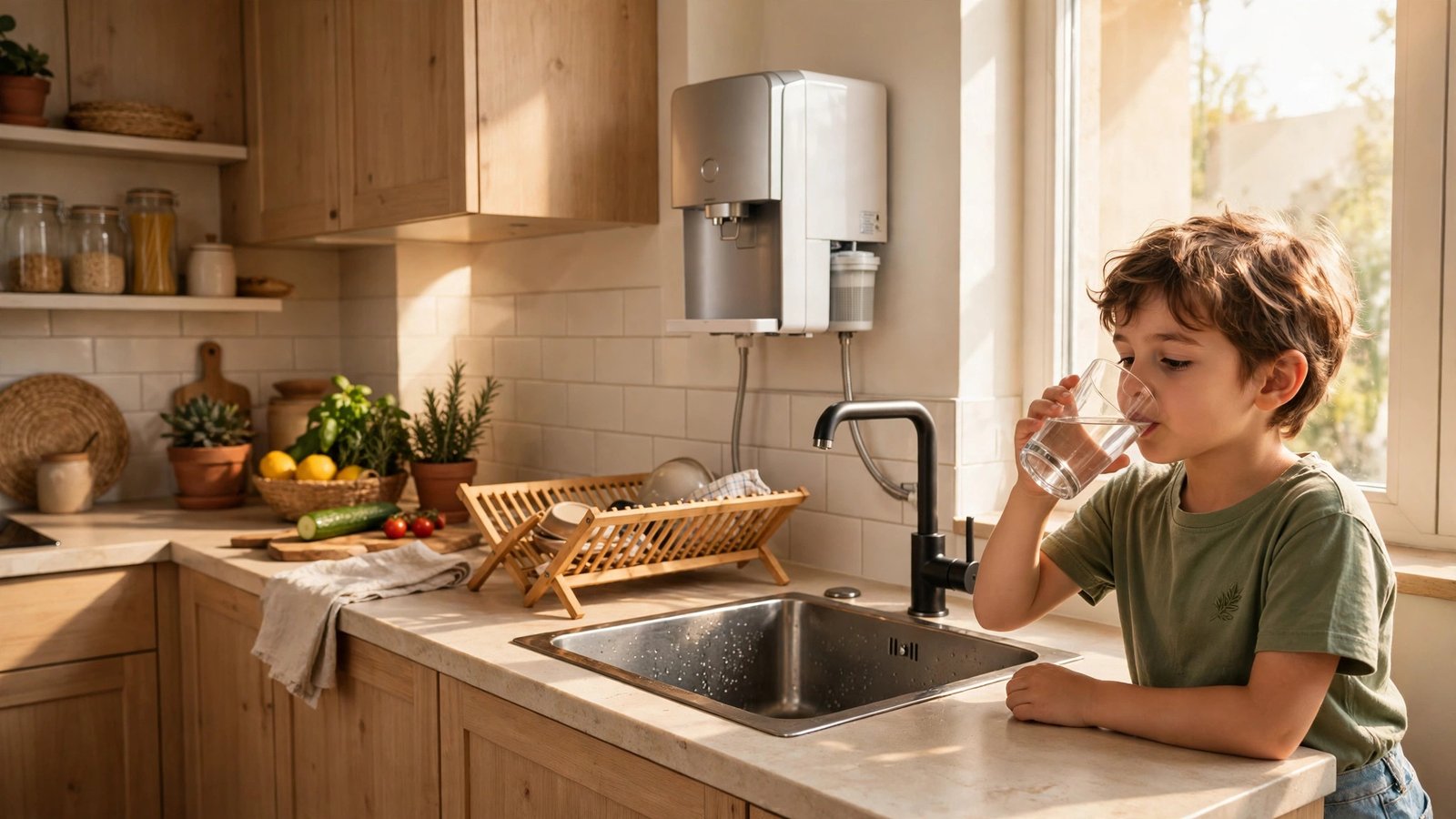
A countertop or tap-mounted filter is the cheapest way to improve your water. It screws onto the kitchen tap or sits on the counter next to the sink, and a small cartridge inside catches dust, rust and some chlorine. The water tastes better, looks clearer, and the filter costs little to buy and little to run.
The limits are real, though. A small cartridge cannot remove dissolved salts, heavy metals or most germs, so this type of filter is only right when your water is already fairly clean and you mainly want better taste and clarity. The cartridge is small, so it clogs faster than a big system — expect to change it every two to three months in a city with old pipes.
Countertop and tap-mounted filters are typically around Rs 10,000–18,000 (check the seller for the current price). Check that the fitting matches your tap before buying, because Pakistani kitchen taps come in several sizes and a wrong fitting means a trip back to the shop.
- Pros: cheapest option, installs in minutes, improves taste and clarity, very low running cost.
- Cons: does not remove salts or germs, small cartridge clogs fast, only suits fairly clean water.
Water Purifier Prices in Pakistan
Water purifier prices in Pakistan are typically around Rs 10,000–60,000 (check the seller for the current price). Countertop and gravity purifiers sit at the lower end, typically around Rs 10,000–20,000 (check the seller for the current price). UV purifiers follow, typically around Rs 15,000–35,000 (check the seller for the current price). Whole-house filters sit in the middle, typically around Rs 20,000–50,000 (check the seller for the current price). RO purifiers sit at the top, typically around Rs 25,000–60,000 (check the seller for the current price).
Prices move with the quality of the filters and the brand of the membrane. A cheap RO system with a poor membrane may cost less up front but gives worse water and needs parts sooner. Compare two or three sellers before you pay — a general store in your own neighbourhood, a water-filter shop in your city, and an online store such as Daraz — and keep the receipt.
Buying Tips
Test your water first. A simple TDS test and a look at the water in a clear glass tell you a lot. Salty or very hard water needs RO; clear city water with a bad smell needs UV plus carbon; muddy water needs a good sediment stage first.
Count the running cost, not just the price. A purifier is not a one-time purchase. Filters, membranes and UV lamps need replacing on a schedule, and those parts cost money every few months. Ask the seller for the price of each spare part and how often it needs changing before you buy.
Check the storage tank size. A tank of 8 to 12 litres covers a family through a power cut and through the slow filtering of an RO membrane. A smaller tank means waiting for water at dinner time, when everyone wants a glass at once.
Look for a proper warranty and local service. A written warranty of one year is normal in Pakistan. More important than the paper is the service: ask whether the seller’s own technician will come to your home for installation and for filter changes, and how much a visit costs.
Confirm the installation is included. Many sellers quote the purifier price without installation, then charge extra for pipes, fittings and the technician’s visit. Get the full price in writing, including installation, before you pay.
Buy from a seller you can return to. A water-filter shop, a general store, or a known online seller with a return policy all work. Ask the seller to test the water before and after installation so you can see the difference, and keep the box and the receipt.
Frequently Asked Questions
Do I need an RO purifier or is UV enough?
It depends on your water. If your water is salty, leaves white marks, or comes from a bore, you need RO. If your water comes from a city supply and is clear but you worry about germs, a UV purifier with a carbon filter is enough.
How often should I change the filters?
Sediment and carbon filters usually last six to twelve months, the RO membrane lasts one to two years, and a UV lamp lasts about a year. Dirty water wears filters out faster, so check them every few months and change them when the water flow slows down.
Does an RO purifier waste water?
Yes, an RO system sends some water to the drain while it filters. Newer systems waste less than older ones. You can collect the drain water in a bucket and use it for washing floors or watering plants instead of letting it run away.
Is RO water safe to drink every day?
Yes, RO water is safe to drink, and it is the standard choice for homes with salty or contaminated water. Some people prefer to keep a little mineral content in their water, and many RO systems now include a mineral cartridge for that reason.
Can I install a water purifier myself?
A countertop or gravity purifier, yes — it takes a few minutes. An RO or UV system under the sink, and any whole-house filter, should be installed by a trained technician, because a wrong connection can leak inside your kitchen wall for days before you notice.
Conclusion
The best water purifier in Pakistan is the one that matches your water, not the most expensive one in the shop. An RO purifier fixes salty bore water, a UV purifier protects a home on city supply, a gravity purifier works where there is no electricity, a whole-house filter guards every tap and appliance, and a countertop filter is enough when your water is already fairly clean. Prices are typically around Rs 10,000–60,000 (check the seller for the current price) — test your water first, count the running cost of filters, check the tank size, and insist on installation and a written warranty.
For more trending picks and buying guides for Pakistan, browse the product feed at trendz.pk.