Best Air Conditioner in Pakistan (2026): Price Guide & Buying Tips
Summers in Pakistan are long and harsh. From May to September, temperatures in Lahore, Karachi, Multan and Islamabad regularly cross 40 degrees, and even the nights stay warm enough to make sleep hard without cooling. A good air conditioner is no longer a luxury for most families — it is the appliance that decides whether the house is livable through the summer. That is why picking the best air conditioner in Pakistan deserves real thought before you spend a large amount of money. Prices for air conditioners in Pakistan are typically around Rs 90,000–250,000 (check the seller for the current price).
This guide covers the five main types of air conditioners sold in Pakistan, their prices, and the details that decide whether your AC cools the room well and keeps the electricity bill under control.
Quick Picks
- Best for a small bedroom: a 1 ton DC inverter AC that cools a small room fast and uses less electricity than older models.
- Best for a normal bedroom or lounge: a 1.5 ton DC inverter AC, the most common size in Pakistani homes, with a good balance of cooling and running cost.
- Best for a large room or hall: a 2 ton DC inverter AC that can cool a big lounge or a hall with several people in it.
- Best on a tight budget: a non-inverter split AC, cheaper to buy but heavier on the electricity bill over the summer.
- Best for rented homes: a portable air conditioner that needs no wall drilling and can move from room to room.
1 Ton DC Inverter AC
A 1 ton DC inverter AC is made for a small bedroom of about 100 to 140 square feet. It cools that size of room well and reaches the set temperature fast, because the inverter compressor adjusts its speed instead of switching fully on and off. Once the room is cool, it slows down and holds the temperature steady while using less power.
The main benefit is the electricity bill. A 1 ton inverter draws far less current than an old fixed-speed AC, and in a small room it spends most of its time running at low speed. For a family that runs the AC all night in summer, that saving adds up month after month.
One ton DC inverter ACs are typically around Rs 110,000–160,000 (check the seller for the current price). Confirm the compressor warranty in writing — four or five years is common — and ask whether the price includes installation, copper piping and a wall bracket, since those extras can add several thousand rupees.
- Pros: lowest running cost in this guide, cools a small bedroom fast, gentle on house wiring.
- Cons: too weak above 140 square feet, struggles with direct afternoon sun, installation often costs extra.
1.5 Ton DC Inverter AC
A 1.5 ton DC inverter AC is the size most Pakistani homes buy. It suits a normal bedroom or a small lounge of about 150 to 200 square feet, the most common room size in houses and flats across the country. It cools the room in a reasonable time and holds the temperature through the afternoon heat, while keeping the bill lower than a fixed-speed AC.
The inverter compressor speeds up when the room is hot and slows down once the target temperature is reached, so the AC does not keep switching on with a heavy starting current. Where load shedding still happens, that also means the AC restarts more smoothly when the power returns. Many 1.5 ton models now use R32 gas, which cools well and is kinder to the environment than the older R22 gas.
One point five ton DC inverter ACs are typically around Rs 140,000–210,000 (check the seller for the current price). Ask the seller to confirm the condenser is copper, not aluminium, because a copper condenser cools better, lasts longer and is easier to repair in Pakistan. Also check the service network in your city — a brand with a service centre nearby is worth more than a slightly cheaper brand with no local support.
- Pros: the right size for most Pakistani bedrooms and lounges, good cooling with lower running cost, R32 gas on most new models.
- Cons: a noticeable upfront price, installation and gas charging cost extra, needs a stable voltage where fluctuations are frequent.
2 Ton DC Inverter AC
A 2 ton DC inverter AC is built for large rooms: a big lounge, a hall, a master bedroom with a high ceiling, or a room where several people sit together. It covers roughly 200 to 300 square feet and keeps that space cool even when the outside temperature crosses 45 degrees. In a joint family home where the lounge is the centre of the house all evening, a 2 ton unit is often the only size that does the job properly.
The trade-off is power. A 2 ton AC draws more current than a smaller unit, so the house wiring, the meter load and the monthly bill all need to be ready for it. The inverter compressor helps — it slows down once the room is cool — but a large room still needs more cooling work than a small one. Before buying, have an electrician check that your wiring and circuit breaker can handle the load.
Two ton DC inverter ACs are typically around Rs 190,000–250,000 (check the seller for the current price). At this price, insist on a written compressor warranty of at least four years, and ask whether the installation team will vacuum the pipes properly before charging the gas — a rushed installation is the most common cause of weak cooling in a new AC.
- Pros: cools large rooms and halls properly, strong cooling even in peak summer heat, inverter keeps the bill lower than a fixed-speed 2 ton.
- Cons: the highest price in this guide, heavy on electricity and house wiring, needs a skilled installation team.
Non-Inverter Split AC (Budget Pick)
A non-inverter split AC, also called a fixed-speed AC, is the cheapest way to get a proper split air conditioner on the wall. It cools the room the same way as an inverter AC at first, but the compressor runs at one fixed speed and switches fully off once the room is cool, then switches fully on again when the temperature rises. That on-off cycle is simple and cheap to build, which is why the price is lower.
The catch is the electricity bill. Each time the compressor restarts, it draws a heavy starting current, and over a full summer the fixed-speed AC uses noticeably more units than an inverter AC of the same size. For a room that runs the AC only a few hours a day, the saving on the purchase price may still be worth it. For a bedroom where the AC runs all night, every night, the inverter model usually pays back the extra purchase cost within a couple of summers.
Non-inverter split ACs are typically around Rs 90,000–140,000 (check the seller for the current price). Check the energy rating on the label, confirm the condenser material, and remember that spare parts and repair are usually simple and cheap for these models, because the design has been around for decades and every AC technician knows it.
- Pros: lowest purchase price for a split AC, simple design any technician can repair, cheap spare parts.
- Cons: higher electricity bill than an inverter AC, temperature swings as the compressor switches on and off, noisy restarts at night.
Portable Air Conditioner
A portable air conditioner is a single box on wheels that you can move from room to room. It needs no drilling into the wall and no outdoor unit mounted outside, so it suits rented homes, flats where the landlord does not allow a split AC, and rooms where a wall installation is not possible. You place it near a window, run the exhaust hose out through the window, and plug it in.
Portable units are weaker than a split AC of the same stated tonnage, because the exhaust hose leaks some heat back into the room and the whole machine sits inside the space it is trying to cool. A portable AC suits a small room of about 100 to 150 square feet, and it works best as a personal cooler for one or two people rather than as a whole-room solution. It is also noisier than a split AC, since the compressor sits in the room with you.
Portable air conditioners are typically around Rs 90,000–150,000 (check the seller for the current price). Before buying, check how the window hose kit fits your window type — sliding windows in Pakistani flats often need a small adjustment — and ask about water drainage, because many portable units need a drain hose or a tray emptied regularly in humid weather.
- Pros: no wall drilling or outdoor unit, moves between rooms, good for rented homes.
- Cons: weaker cooling than a split AC, noisy in the room, needs a window for the exhaust hose.
Air Conditioner Prices in Pakistan
Air conditioner prices in Pakistan are typically around Rs 90,000–250,000 (check the seller for the current price). Non-inverter split ACs sit at the lower end, typically around Rs 90,000–140,000 (check the seller for the current price). Portable air conditioners overlap that range, typically around Rs 90,000–150,000 (check the seller for the current price). One ton DC inverter ACs sit in the middle, typically around Rs 110,000–160,000 (check the seller for the current price). One point five ton DC inverter ACs cost more for the extra cooling, typically around Rs 140,000–210,000 (check the seller for the current price). Two ton DC inverter ACs sit at the top, typically around Rs 190,000–250,000 (check the seller for the current price).
Prices move with the season. In April and May, when the heat arrives and demand rises, prices often climb and good models can go out of stock. Buying in winter, when demand is low, can save money — and shops are more willing to include free installation. Compare two or three sellers before you pay — an electronics market, an online store such as Daraz, and an official brand store — and always keep the receipt and the warranty card.
Buying Tips
Match the tonnage to your room size. A 1 ton AC suits about 100 to 140 square feet, a 1.5 ton suits about 150 to 200 square feet, and a 2 ton suits about 200 to 300 square feet. A room with direct afternoon sun, a tin roof or a top floor needs more cooling than a shaded ground-floor room of the same size. Measure your room before you go to the shop.
Check the energy rating and the inverter. An inverter compressor is the single biggest factor in your monthly bill. Look for the energy efficiency rating on the label and ask the seller to explain the star rating in plain words. A cheaper AC with a poor rating will cost you more in electricity within the first two summers than the amount you saved at the shop.
Insist on a copper condenser. Copper cools better, resists corrosion, and is far easier to repair than aluminium when a leak appears. Ask the seller directly whether the condenser is copper, and check the box or the product sheet rather than taking a verbal promise.
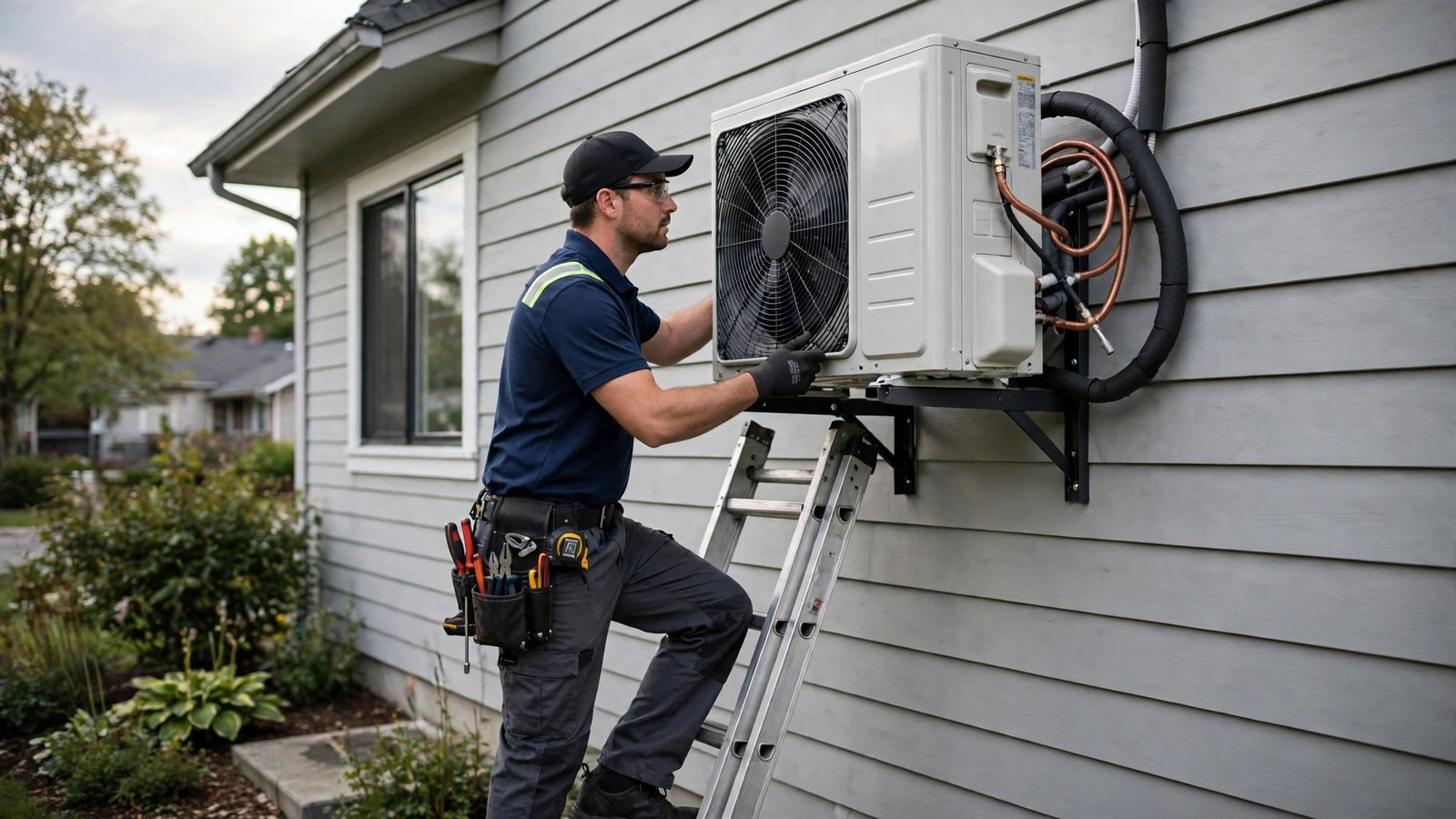
Count the installation and gas-charging costs. The price on the box is rarely the full price. Installation, copper piping, a wall bracket, a drain pipe and gas charging are often charged separately, and together they can add Rs 10,000 to Rs 20,000 to the bill. Ask for the full installed price in writing before you pay.
Think about voltage and stabilisers. Many areas in Pakistan have voltage that swings up and down, and a low voltage can damage a compressor over time. Some inverter ACs handle a wide voltage range on their own; others need a separate stabiliser. Ask whether the model you are buying has built-in voltage protection.
Check the service network and warranty before you buy. A written warranty of one year on the whole unit and four or five years on the compressor is normal in Pakistan for a branded AC. Confirm that the brand has a service centre in your city, and ask how long a repair visit usually takes in peak summer.
Plan for load shedding and UPS or solar. An inverter AC can run on a good solar setup or a strong UPS, but a small home UPS will not carry a 1.5 ton AC for long. If you plan to run the AC on solar, check the wattage the AC draws at full speed and match it to your inverter and battery capacity. Never plug an AC into a small UPS.

Frequently Asked Questions
Which air conditioner is best for a Pakistani home?
For most homes, a 1.5 ton DC inverter AC with a copper condenser and R32 gas is the best balance of cooling, running cost and price, because it suits a normal bedroom or lounge and keeps the electricity bill lower than a fixed-speed AC. A small bedroom can manage with a 1 ton inverter, and a large lounge or hall needs a 2 ton inverter.
How much electricity does an inverter AC use?
A 1.5 ton inverter AC typically draws about 1,000 to 1,500 watts at full speed when the room is hot, then drops to a few hundred watts once the room is cool and the compressor slows down. The actual monthly units depend on how many hours it runs and how hot the weather is.
What is the difference between an inverter AC and a non-inverter AC?
An inverter AC changes the compressor speed to hold a steady temperature, so it runs quietly and uses less electricity. A non-inverter AC switches its compressor fully on and off, which is cheaper to buy but uses more power and makes the room temperature swing up and down through the night.
How often should an AC be serviced in Pakistan?
A basic service once a year, before the summer season, is enough for most homes: cleaning the filters, washing the indoor unit, and checking the gas pressure. In dusty areas, clean the filters yourself every two or three weeks during summer, because a clogged filter is the most common cause of weak cooling.
Can an air conditioner run on a UPS or solar in Pakistan?
An inverter AC can run on a solar setup with a strong enough inverter and battery bank, and some homes do this successfully. A small home UPS, however, will usually not carry a 1.5 ton AC, because the starting load is too high and the battery drains in minutes. Check the AC wattage against your solar inverter capacity before relying on it during load shedding.
Conclusion
The best air conditioner in Pakistan is the one that matches your room size, your electricity budget and your summers. A 1 ton inverter cools a small bedroom cheaply, a 1.5 ton inverter suits most Pakistani bedrooms and lounges, a 2 ton inverter handles a large hall, a non-inverter split AC is the cheapest way in, and a portable AC is the answer for a rented home. Prices are typically around Rs 90,000–250,000 (check the seller for the current price) — measure your room, insist on a copper condenser, get the full installed price in writing, and buy the inverter model your bill can live with for years.
For more trending picks and buying guides for Pakistan, browse the product feed at trendz.pk.