Best Coffee Maker in Pakistan (2026): Price Guide & Buying Tips
Introduction
Finding the best coffee maker in Pakistan in 2026 is less about buying the most expensive machine and more about matching it to how you actually drink coffee. A family that wants a big pot before breakfast, a student brewing one mug, and an office running through pot after pot all need very different machines, and prices typically range from around Rs 8,000 to Rs 60,000 (check the seller for the current price).
Coffee culture has grown fast across Pakistan. Cafes have opened in every big city, and more homes now brew their own coffee instead of paying cafe prices every day. A homemade cup costs a small fraction of a cafe cup, and you control the strength, milk and sugar.
The catch is that the wrong machine wastes money. A cheap drip machine with a thin glass carafe can crack within months, an espresso machine with no local warranty is useless when its pump fails, and a pod machine locks you into pods that cost more per cup than the coffee itself. This guide covers the five main types sold in Pakistan and explains brewing methods, capacity, cleaning and running costs.
Quick Picks
- Best for families and offices: A drip coffee maker with a large carafe.
- Best for one or two cups: A French press or pour-over brewer.
- Best for cafe-style coffee at home: A pump espresso machine.
- Best for speed and convenience: A pod or capsule coffee maker.
- Best all-rounder: A bean-to-cup machine with a built-in grinder.
Drip Coffee Makers for Families and Offices
A drip coffee maker is the simplest and most common type in Pakistani homes and offices, and the right place to start for most buyers. Pour water into the tank, add ground coffee to the filter, press a button, and a full pot is ready in a few minutes. Most models brew 6 to 12 cups at once, which suits a family breakfast table or a small office, and the hot plate keeps it warm.
Drip coffee is smooth and easy to drink, but not the strongest brew. These machines use gravity and hot water rather than pressure, so the cup tastes milder than espresso, and the hot plate turns coffee bitter if the pot sits for an hour. A glass carafe breaks easily, while a steel thermal carafe keeps coffee hot longer and survives a knock.
- Pros: Brews a large pot at once, very simple to use, lowest cost per cup, filters and parts easy to find locally.
- Cons: Coffee tastes milder than espresso, glass carafes break easily, coffee on the hot plate turns bitter, takes up counter space.
French Press and Pour-Over Brewers
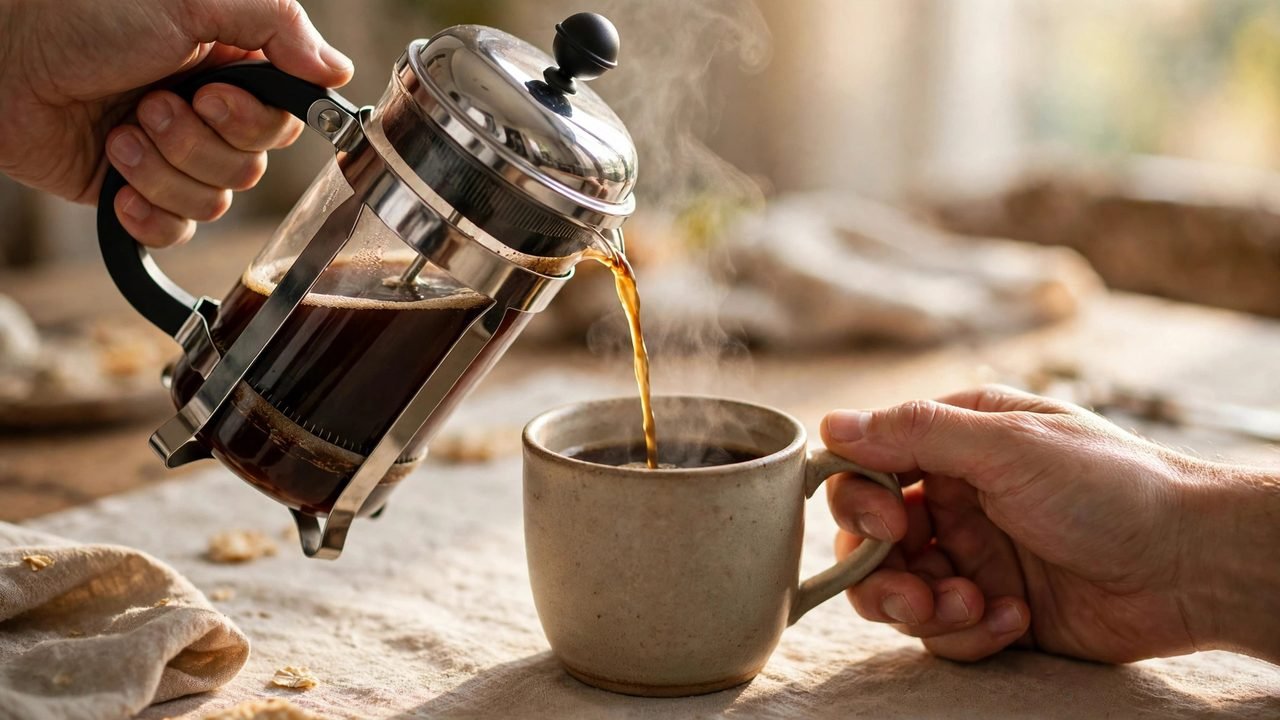
A French press or pour-over brewer is the cheapest way to make good coffee at home, and it needs no electricity. A French press is a jug with a mesh plunger: add coarse ground coffee and hot water, wait four minutes, press down and pour. A pour-over is a cone over a mug or jug: pour hot water slowly over the grounds and the coffee drips into the cup.
Coffee from these brewers tastes rich and full because the grounds stay in the water longer, and you control the grind, the water temperature and the waiting time. The trade-off is that you brew one or two cups at a time, and the method needs practice: water too hot or grounds too fine make the cup bitter, while water too cool leaves it weak and sour.
- Pros: Cheapest way to make good coffee, needs no electricity, full control over strength and flavour, easy to clean.
- Cons: Brews only one or two cups at a time, needs practice to get right, French press coffee can have fine sediment, no keep-warm function.
Espresso Machines for Cafe-Style Coffee
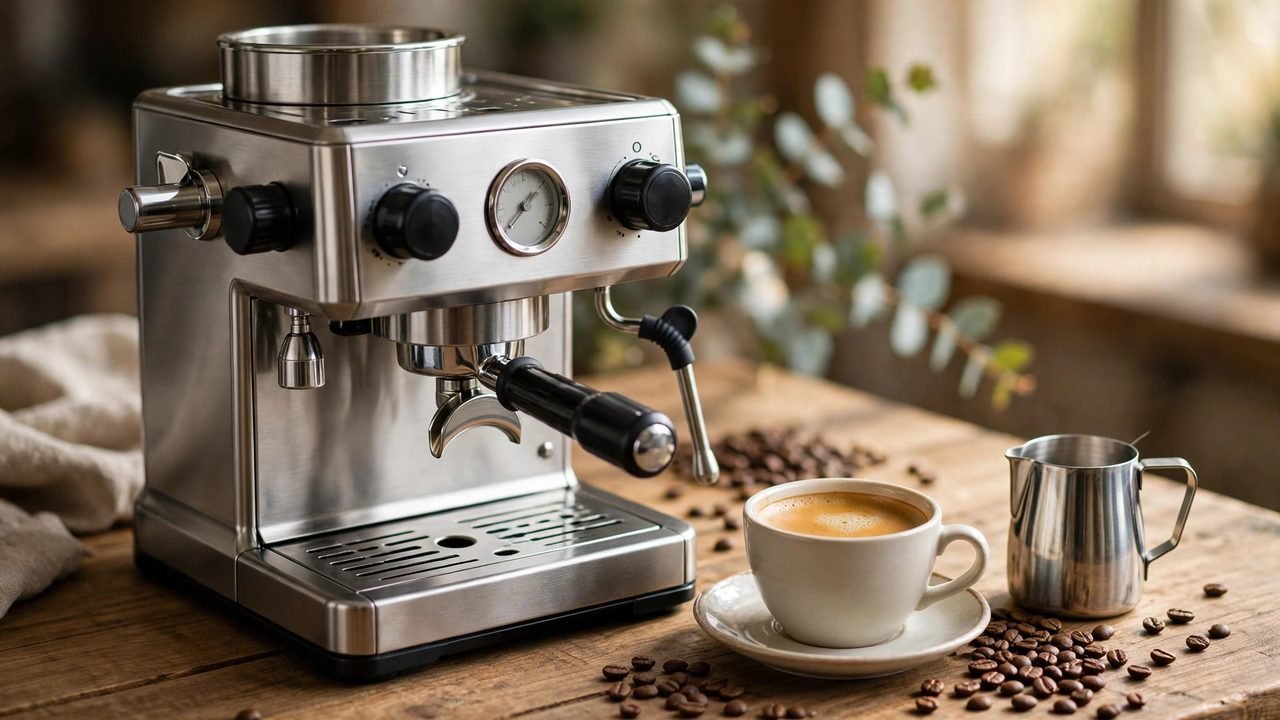
An espresso machine is for anyone who wants cafe-style coffee at home — a short, strong shot with golden crema, the base for lattes and cappuccinos. A pump pushes hot water through fine grounds at high pressure, pulling out oils and flavour a drip machine cannot reach. Most home models have a steam wand for frothing milk, so you can make cappuccinos at home.
Espresso machines need more care than any other type. The grind must be fine and even, the coffee tamped firmly, and the machine cleaned often or the taste turns sour and the pump clogs. They also cost more to run: a good grinder matters as much as the machine, and fresh beans cost more than pre-ground. For a household drinking two or three milk coffees a day, the savings against cafe prices add up fast.
- Pros: Real cafe-style espresso at home, lattes and cappuccinos with the steam wand, strong rich flavour, cheaper than daily cafe visits.
- Cons: Costs more than other types, needs a good grinder and fresh beans, daily cleaning is a must, takes practice to get right.
Pod and Capsule Coffee Makers
A pod or capsule coffee maker is the fastest route to a cup: pop in a pod, press a button, and one cup is ready in under a minute. No measuring, no grinding and almost no cleaning, which suits busy mornings and offices where everyone wants a different drink. Many models offer several cup sizes and pod flavours, from plain black coffee to milky drinks.
The convenience comes with a running cost many overlook. Each pod costs far more per cup than ground coffee, so a household drinking four cups a day spends more on pods in a year than on the machine. Pods also need a steady local supply: check that pods for your machine are easy to order in Pakistan, because a machine with no pods on the shelf is just a decoration.
- Pros: Fastest single cup, almost no cleaning, consistent taste every time, many flavours and drink sizes to choose from.
- Cons: Highest cost per cup, pods must be bought again and again, supply in Pakistan can be patchy, limited control over strength.
Bean-to-Cup Automatic Machines
A bean-to-cup machine does the whole job by itself: it grinds fresh beans, brews the coffee and, on many models, froths the milk at one press. You get the freshness of grinding your own beans with the ease of a pod machine, and the coffee tastes better because the beans were ground seconds before brewing. For a household that wants good coffee every morning without barista skills, this is the easiest way to get it.
These machines are the most expensive type here and the most demanding to look after. The grinder and milk system need regular cleaning, the machine needs descaling on schedule, and a repair outside warranty can cost a large share of its price. They are also heavy and take up a good stretch of counter, so measure your space first.
- Pros: Fresh ground beans in every cup, one-button brewing, built-in milk frothing on many models, best taste for the least effort.
- Cons: Highest purchase price, needs regular cleaning and descaling, heavy and bulky, repairs can be costly.
Price Guide: What a Coffee Maker Costs in Pakistan
Prices for a coffee maker in Pakistan typically range from Rs 8,000 to Rs 60,000 (check the seller for the current price). At the lower end, roughly Rs 8,000 to Rs 15,000, sit manual brewers such as French presses and pour-over sets, along with basic drip coffee makers. The middle band, around Rs 15,000 to Rs 35,000, is where most buyers should look: better drip machines with thermal carafes, pod machines and entry-level pump espresso machines.
Above Rs 35,000, towards Rs 60,000, sit stronger espresso machines with steam wands and bean-to-cup machines with built-in grinders. Three things move the price most: the brewing method, the build quality of the pump and heating element, and extras such as a grinder, a milk frother or timers. Coffee itself is an ongoing cost, so keep budget aside for beans, filters and descaling solution.
Buying Tips for Pakistani Buyers
Start with how many cups you drink, not the machine’s looks. One mug each in the morning suits a small drip machine or a French press, and a family of six needs a 10 to 12 cup carafe. Lattes and cappuccinos need an espresso machine or a bean-to-cup machine with a milk frother.
Plan for load-shedding before you buy. Electric coffee makers stop when the power goes, so a French press or pour-over brewer is the smart backup — all you need is hot water from a gas stove. Run an electric machine on a stable supply and avoid cheap extension boards, because voltage swings can damage the heating element.
Water quality matters more than most buyers realise. Much of Pakistan has hard water, and its minerals build up scale inside the machine, which flattens the taste and can block the pump. Descale regularly with descaling solution or diluted vinegar, and use filtered water where you can. Clean the carafe and filter basket after every use, and wash the milk frother straight after each use.
Buy from a seller who tests the machine in front of you and gives a written warranty — the pump, heating element and grinder are the parts that fail, so ask what it covers. Check that spare parts, filters and descaling supplies are available locally. Beans and grounds are now sold in Pakistan in supermarkets, specialty coffee shops and online, so check your preferred beans or pods are easy to buy again.
Frequently Asked Questions
Which coffee maker is best for home use in Pakistan? For most homes, a drip coffee maker is the best starting point: it brews a full pot at once, it is simple to use, and each cup costs little. If you drink milky cafe-style coffee every day, a pump espresso machine with a steam wand is better, and for one or two cups a French press gives great coffee for little money.
How much does a coffee maker cost in Pakistan? Prices typically range from around Rs 8,000 to Rs 60,000 (check the seller for the current price). Manual brewers and basic drip machines sit at the lower end, espresso and bean-to-cup machines at the higher end. Count the running cost too: beans, filters and pods add up.
Drip machine or French press — which makes better coffee? A French press usually makes a richer, fuller cup because the grounds stay in the water longer, and you control the strength with the waiting time. A drip machine wins on convenience: it brews a bigger pot and keeps it warm. Pick the French press for taste, the drip machine for a busy household.
Can I use a coffee maker during load-shedding? Electric coffee makers need power, so they stop working during an outage. A French press or pour-over brewer works without electricity as long as you can heat water on a gas stove. Run an electric machine on a stable supply and protect it from voltage swings with a stabiliser or UPS.
Where should I buy a coffee maker in Pakistan? Buy from a reputable seller — an authorised dealer, a well-rated seller on Daraz, or a specialist appliance shop — who tests the machine and gives a written warranty. Check the seller’s ratings first, and confirm that filters, spare parts and your beans or pods are available locally. Avoid grey-market deals with no warranty.
Conclusion
The best coffee maker in Pakistan is the one that matches how you drink coffee — a drip machine for the family table, a French press for one rich cup, an espresso machine for lattes, a pod machine for fast mornings, or a bean-to-cup machine for fresh coffee. Set your budget from the ranges in this guide, test the machine before you pay, and plan for load-shedding and hard water from the start.
For more buying guides on trending products across Pakistan, visit the product feed at https://trendz.pk/.