Best Dash Cam in Pakistan (2026): Price Guide & Buying Tips
If you drive in Lahore, Karachi, Islamabad or any busy Pakistani city, you know how fast a small scrape can turn into a long argument. A dash cam records what really happened, and that clip can settle a dispute or support an insurance claim. Finding the best dash cam in Pakistan is about matching the camera to your roads, your car and your budget. Prices for dash cams in Pakistan are typically around Rs 8,000–35,000 (check the seller for the current price).
Pakistani roads are hard on electronics: summer heat inside a parked car can cross 60°C, dust coats windscreens within days, and sudden motorway rain cuts visibility fast. This guide covers the five main types sold in Pakistan, what each costs, and the practical details that decide whether your camera records when you need it.
Quick Picks
- Best for daily city driving: a basic single front dash cam with 1080p and loop recording.
- Best for complete cover: a dual front-and-rear dash cam, so a rear-end collision is on video too.
- Best for night driving: a night-vision dash cam for dimly lit streets.
- Best for a clean dashboard: a mirror dash cam that replaces your rear-view mirror.
- Best for tech lovers: a Wi-Fi dash cam with app and GPS.
Basic Single Front Dash Cams for Daily City Driving
A basic single front dash cam is the most popular choice in Pakistan. It mounts behind the rear-view mirror, points at the road ahead, and records in a continuous loop, overwriting the oldest footage when the card fills up. Most models record in 1080p and start automatically when you switch the ignition on.
The strength of a basic model is how little it asks of you — no second camera to wire, no app to set up. Look for a wide-angle lens of around 140 degrees, which covers the full width of a typical road.
Budget models are typically around Rs 8,000–15,000 (check the seller for the current price). Ask whether the camera uses a capacitor instead of a lithium battery, since capacitors handle parked-car heat far better.
- Pros: affordable, easy to install, reliable for everyday city driving, low power use.
- Cons: no rear cover, basic night performance, small screens can be hard to read in sunlight.
Dual Front-and-Rear Dash Cams
A dual dash cam adds a second camera for the rear window, and that extra view changes what the footage can prove. In Pakistan, rear-end collisions at traffic signals and bumps while reversing in a crowded parking lot are common. With a rear camera, you have a record of the car that hit you from behind.
Fitting a dual system takes more effort, because a cable must run from the front unit to the rear window, usually tucked along the headliner and door seals. Most car accessory shops in Pakistan will do this for a modest fitting fee, and a neat job is worth paying for.
Dual systems are typically around Rs 15,000–28,000 (check the seller for the current price). Check that the rear mount suits your car: a hatchback rear window is nearly vertical and easy, while a sedan with a sloping rear glass needs an adjustable bracket. For ride-hailing drivers, the rear view is worth it.
- Pros: front and rear cover, stronger evidence after a rear-end hit, useful for parking disputes.
- Cons: higher price, longer installation, extra cable to route neatly, rear video quality can be lower.
Dash Cams with Night Vision for Low-Light Roads
Much of the driving that needs a camera happens after dark: a trip home from a wedding at midnight, a late shift, or a long drive on an unlit stretch of the GT Road. A dash cam with night vision uses a larger sensor, a wider aperture and better processing to pull detail out of dark scenes.
Night vision is not magic, and honest sellers will tell you that. No dash cam at this price reads a plate in total darkness, and oncoming high beams will still wash out part of the frame. What a good night camera does is keep the picture usable: less noise, clearer edges, steadier exposure. If you drive after 9 pm, this feature justifies the extra cost.
Models with proper night vision are typically around Rs 18,000–32,000 (check the seller for the current price). Before you buy, ask the shop to show you sample night footage from the actual model, not a demo video from the brand’s website. A large sensor beats a high megapixel count at night.
- Pros: much clearer night footage, better plate readability after dark, steadier exposure in mixed light.
- Cons: costs more than a basic camera, still limited in total darkness, can be oversold by sellers.
Mirror Dash Cams That Replace the Rear-View Mirror
A mirror dash cam is a wide screen that clips over or replaces your car’s existing rear-view mirror. It works as a normal mirror when off and a dash cam display when on, with the front camera built in and an optional rear camera for reversing. For drivers who dislike a small black box stuck to the windscreen, this is the neatest option on the market.
A 9- or 10-inch display makes it easy to check the angle, review a clip at a checkpoint, or use the rear camera as a reversing aid.
Mirror dash cams are typically around Rs 16,000–35,000 (check the seller for the current price). Before buying, check the fit: measure your mirror and confirm the clip holds firmly, since a heavy unit that slips on a bumpy road is dangerous. Also test the mirror in daylight — a cheap screen can wash out the reflection.
- Pros: clean look, large screen, doubles as a reversing aid, hides the camera in plain sight.
- Cons: heavier than a normal mirror, screen glare in bright sun, fit varies by car model.
Wi-Fi Dash Cams with Phone App and GPS
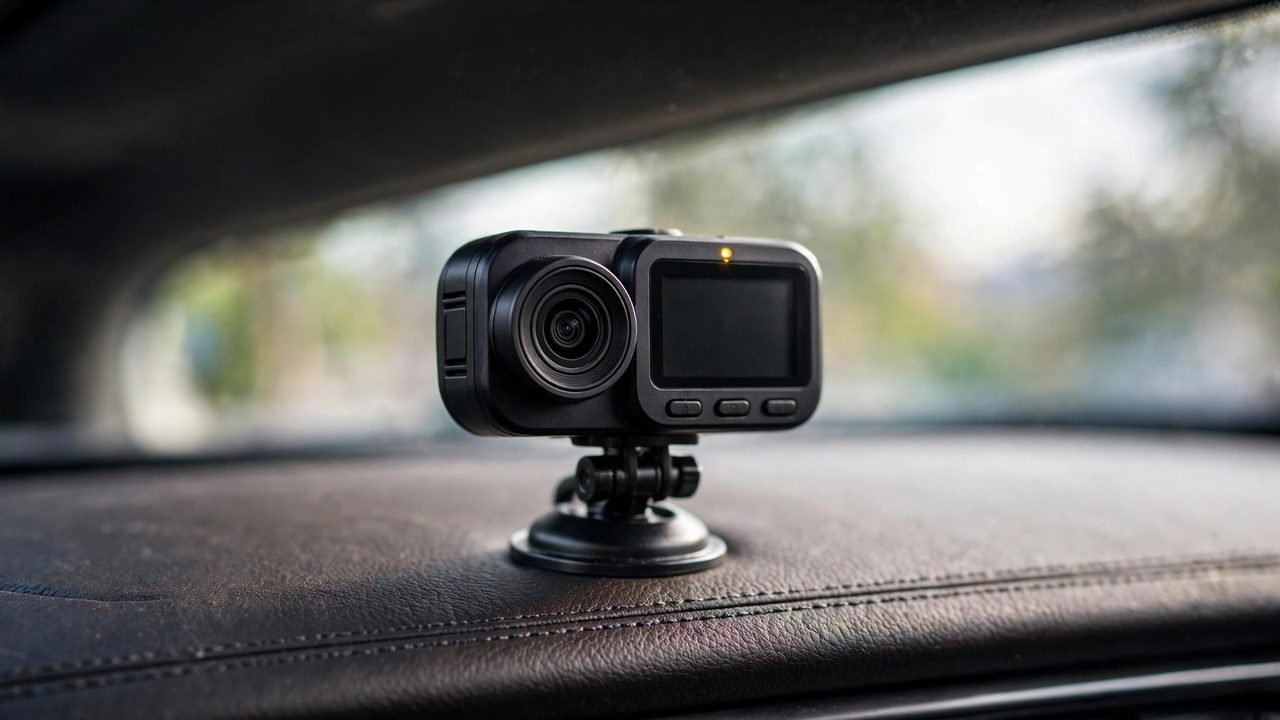
A Wi-Fi dash cam connects to your phone, so you can watch live video, download clips and change settings without taking the memory card out of the camera. A phone download lets you send a clip to your insurer or a traffic police officer within minutes of an incident.
The GPS adds a second layer of evidence. It stamps your speed and location onto the video and plots your route on a map. Some apps alert you to a parking impact, with a hardwired supply.
Wi-Fi and GPS models are typically around Rs 20,000–35,000 (check the seller for the current price). Two cautions apply. First, test the app before you commit: some budget apps are slow, crash often or ask for odd permissions. Second, Wi-Fi transfers can be slow for long clips, so a high-speed memory card still matters.
- Pros: clips on your phone in seconds, GPS speed and route log, easy settings and updates.
- Cons: app quality varies by brand, slower transfer for long clips, higher price.
Dash Cam Price in Pakistan
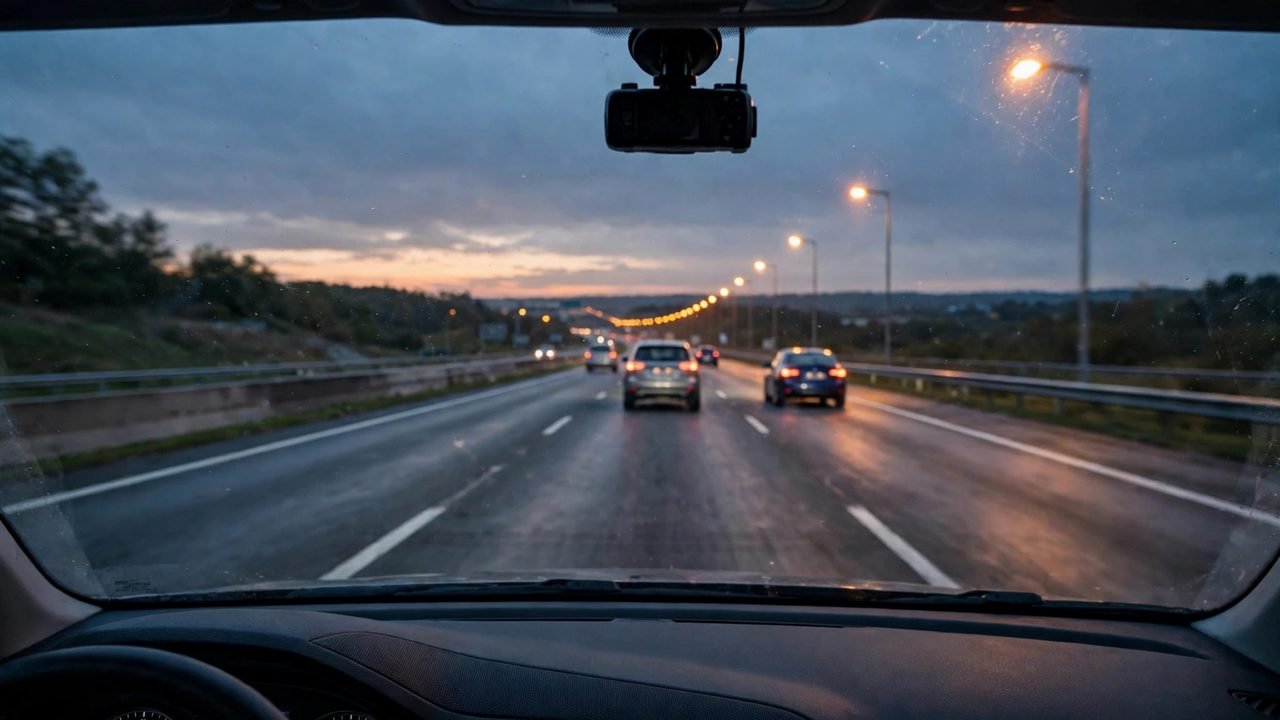
Dash cam prices in Pakistan are typically around Rs 8,000–35,000 (check the seller for the current price). The market mixes imported brands, local labels and unbranded units. Basic models sit at the lower end, dual and night-vision in the middle, Wi-Fi and GPS at the top. As a rough guide, expect basic models at typically around Rs 8,000–15,000 (check the seller for the current price), mid-range dual and night-vision models at typically around Rs 15,000–28,000 (check the seller for the current price), and full-featured Wi-Fi, GPS and mirror models at typically around Rs 20,000–35,000 (check the seller for the current price).
Prices move with the dollar rate, so check two or three sellers before you pay. Local markets such as Hall Road in Lahore or Saddar in Karachi often match online prices once fitting is included. A camera well below Rs 8,000 is often unbranded, with a weak sensor and no support. Ask for a written warranty — six months to a year is normal — and keep the receipt.
Buying Tips
Choose the right memory card. A dash cam writes to its card constantly, which wears out ordinary cards fast. Buy a high-endurance microSD card from a known brand, at least 64GB. Format the card in the camera itself and reformat it every month or two. Avoid suspiciously cheap cards — fake-capacity cards fail exactly when you need the footage.
Understand loop recording. Loop recording splits video into short clips and deletes the oldest when the card is full. Check that the camera locks the clip on a sudden impact. This is the G-sensor: test it with a firm tap on the dashboard after installation, and lower its sensitivity if it locks a clip at every speed breaker.
Think about parking mode. Parking mode records a clip if someone bumps your parked car, but only with a hardwire kit that cuts power before the battery drains. A camera in a socket that switches off with the ignition cannot record while parked. Ask an auto electrician to fit a hardwire kit if you park on the street.
Check heat resistance. A windscreen camera in a Pakistani summer lives in brutal heat. Capacitor-based cameras handle this far better than battery-based ones, which can swell or stop working after a hot season. Use a windscreen shade and pick a model rated for at least 60°C.
Get the installation right. Aim the camera so the horizon sits mid-frame and the bonnet is just visible. Route the power cable along the headliner so it never dangles near the airbag. If tucking cables is not your thing, a shop will do a clean install in under an hour.
Frequently Asked Questions
Is a dash cam legal in Pakistan?
Yes, recording video of public roads from your own car is legal in Pakistan. A dash cam films what any driver can already see from the windscreen. Many drivers switch the microphone off.
Do I need a rear camera as well?
It depends on how and where you drive. For short city trips, a front camera covers the most likely incidents. If you drive on the motorway, park on the street, or work as a ride-hailing driver, a rear camera is worth it.
How much storage do I need?
A 64GB high-endurance card holds roughly four to six hours of 1080p footage. A slow or fake card will drop frames or corrupt clips, so buy a genuine card from a trusted seller.
Can a dash cam drain my car battery?
A dash cam running only while you drive uses very little power and will not drain a healthy battery. The risk comes from parking mode, which draws power while the car is off. A hardwire kit with a voltage cut-off stops the camera before the battery drops too low.
Will a dash cam help with an insurance claim in Pakistan?
It can help a great deal, because it replaces conflicting stories with a short video. Insurers and traffic police in Pakistan increasingly accept dash cam footage as supporting evidence, though approval still depends on the policy terms and the facts.
Conclusion
The best dash cam in Pakistan is the one that keeps recording on your roads, in your heat, and at the hours you drive. A basic front camera covers most city drivers; a dual setup adds rear protection; night vision or Wi-Fi with GPS is worth it if you drive late or need clips on your phone. Prices are typically around Rs 8,000–35,000 (check the seller for the current price) — set your budget, compare sellers, and insist on a written warranty.
Pick the type that matches your driving and test it on a real trip — day and night — in the first week. For more trending picks and buying guides for Pakistan, browse the product feed at trendz.pk.