Best Food Processor in Pakistan (2026): Price Guide & Buying Tips
A good food processor takes over the most boring part of Pakistani cooking: chopping onions for salan, grinding green chillies for chutney, kneading roti dough after a long day. All of it goes faster when a machine does the repetitive work. The best food processor in Pakistan is not the one with the longest list of attachments. It is the one that matches your family size, handles dough without straining, and survives daily use. Prices for a food processor in Pakistan are typically around Rs 8,000–35,000 (check the seller for the current price).
This guide covers the five types most Pakistani homes actually buy, what each one does well, and what to watch out for. Every price here is an approximate range, not a shop quote. Use the ranges to set your budget, then confirm the current price with the seller before you pay.
Quick Picks
- Budget pick: A compact 1.5-litre chopper-style processor for small families, basic chopping and chutney work.
- Family pick: A 2.5 to 3-litre full-size processor with slicing and grating discs, for a household of five or six.
- Dough pick: A higher-wattage machine with a plastic dough blade, built for regular roti and paratha dough.
- Compact pick: A small, easy-to-store processor for kitchens with limited counter space and light daily use.
- Premium pick: A large-capacity, multi-attachment processor with a heavy-duty motor and a longer warranty.
Budget Pick: The Compact Chopper-Style Processor
For a small family or a single person, a compact chopper-style processor is often all you need — usually a bowl of around 1 to 1.5 litres and a single stainless-steel blade. They chop onions in seconds, mince garlic and ginger, grind green chillies for chutney, and blend small batches of masala paste. They are light, easy to wash, and cheap enough that replacing one after a few years does not hurt.
The real strength of a budget processor is how often you will actually use it. A big machine stays in the cupboard because it is heavy to lift and slow to clean. A small one lives on the counter, ready for a quick onion chop before making daal or a handful of chillies for raita.
- Pros: Low price, light and easy to store, quick to clean, good for onions, chillies and chutney.
- Cons: Small bowl, weaker motor, not suited to dough, few or no extra discs, spare parts can be hard to find.
A budget chopper-style food processor is typically around Rs 8,000–14,000 (check the seller for the current price).
Family Pick: The Full-Size Everyday Processor
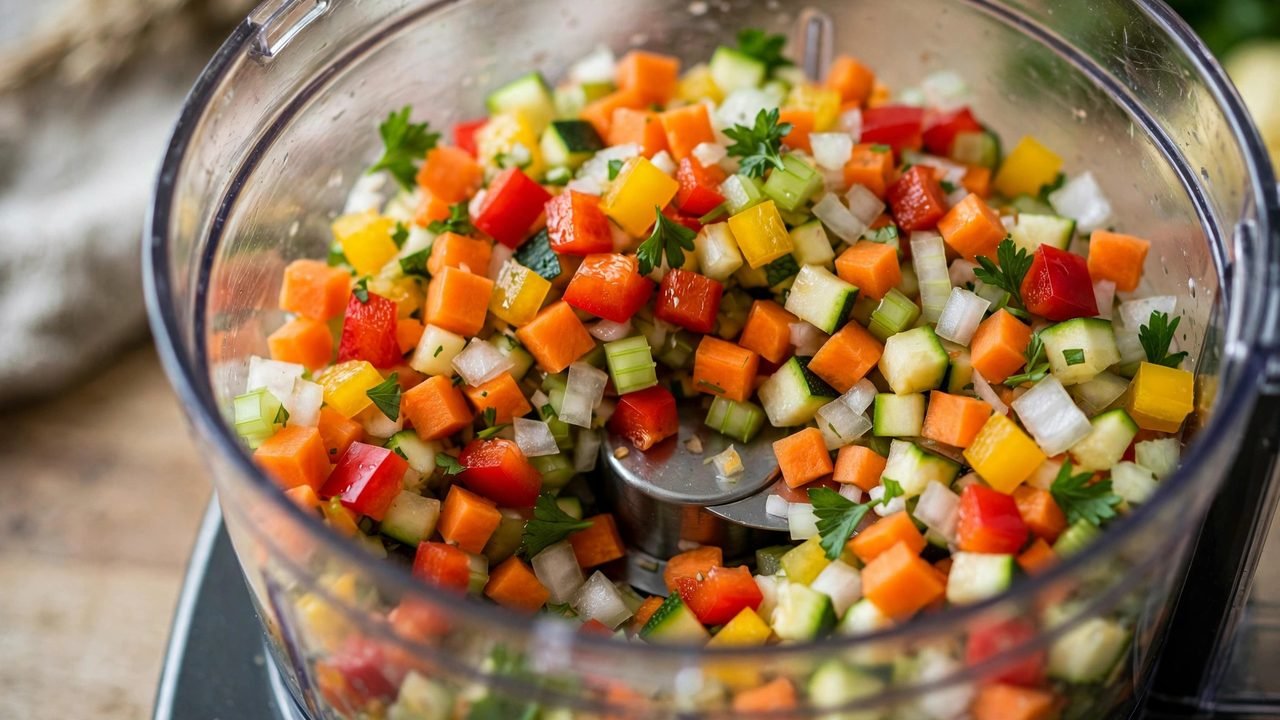
Most Pakistani families of five or six do best with a full-size processor in the 2.5 to 3-litre range. The bowl is big enough to chop onions for a full pot of salan in one go, and the machine usually ships with slicing and grating discs alongside the main blade. One machine handles chopping, slicing potatoes for pakoras, grating carrots for gajar ka halwa, and shredding cabbage for salads.
Motor power in this class is usually 600 to 800 watts, enough for daily chopping and for small batches of dough if you work in short bursts and let the motor rest between them. Look for at least two speed settings and a pulse button, which gives you control over texture so onions come out chopped rather than turned into paste.
- Pros: Bowl fits a family-sized batch, slicing and grating discs included, strong enough for daily use, pulse control for better texture.
- Cons: Takes up more counter space, heavier to lift and wash, mid-range motors still need rest breaks on dough, extra discs need storage space.
A full-size family food processor is typically around Rs 15,000–25,000 (check the seller for the current price).
Dough Pick: The Processor Built for Roti Dough
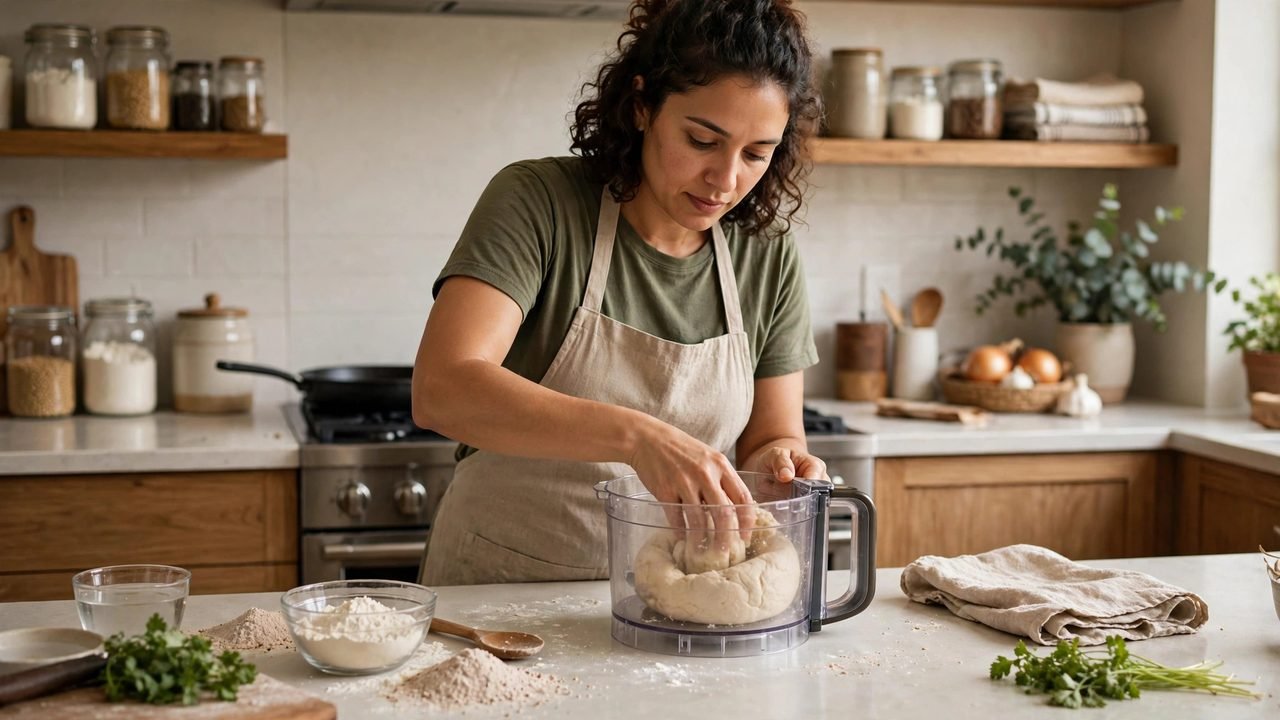
If your household makes fresh roti or paratha dough every day, buy the processor for the dough first and the chopping second. Kneading by hand takes time and effort, and a machine that handles it well changes the daily routine. A dough-capable processor needs a motor of 800 watts or more, a plastic dough blade rather than the sharp metal chopping blade, and a bowl of at least 2.5 litres so the dough has room to turn.
The test is simple: add atta and water, run the machine in short bursts, and watch whether the dough forms a smooth ball without the motor slowing or smelling hot. A good machine does this in under a minute. A weak one labours and cuts out on its thermal safety switch — if that trips every time you make dough, the machine is underpowered.
- Pros: Kneads roti dough in under a minute, saves daily hand-kneading time, strong motor handles heavy loads, good for large families.
- Cons: Higher price, heavier and louder than smaller models, dough blade is a separate part to keep track of, motor needs cooling breaks on big batches.
A dough-capable food processor is typically around Rs 20,000–30,000 (check the seller for the current price).
Compact Pick: The Small Kitchen Processor
Not every kitchen has room for a full-size machine. In a small flat, a hostel room, or a kitchen where the counter already holds a microwave and an electric kettle, a compact processor earns its place by being small, light and simple. These models usually have a bowl of 1 to 1.5 litres and a single blade, with maybe one grating disc. They chop, mince and blend small amounts, and they fit in a cupboard shelf without a struggle.
The compact pick suits a couple, a student, or a small family that cooks in smaller batches — chutney, a few onions, small amounts of ground spices, or a quick lassi for two. It is also the easiest type to clean, because there are fewer parts and the bowl is small enough to wash in a small sink.
- Pros: Fits small kitchens, light and easy to store, simple to use and clean, low price.
- Cons: Small bowl limits batch size, not suited to dough or large families, weaker motor, few attachments.
A compact small-kitchen food processor is typically around Rs 8,000–13,000 (check the seller for the current price).
Premium Pick: The Large Multi-Attachment Processor
At the top of the range sit the large multi-attachment processors, with bowls of 3 litres or more, motors of 900 watts and above, and a full set of discs and blades: slicing, grating, shredding, a dough blade, and sometimes a citrus juicer or a blender jar. These are for homes that cook a lot, entertain often, or want one machine to replace several small gadgets.
The premium difference is not just power. It is build quality: thicker plastic bowls, metal drive parts, a heavier base that does not walk across the counter, and a motor that runs quieter and cooler. A good premium machine can chop, slice, grate and knead in a single cooking session without long cooling breaks — worth it for a joint family or a kitchen that runs all day.
- Pros: Largest capacity, strongest motor, full attachment set, best build quality, handles long cooking sessions.
- Cons: Highest price, heavy and bulky, needs storage space for discs, premium price is wasted if you only chop onions.
A premium multi-attachment food processor is typically around Rs 28,000–35,000 (check the seller for the current price).
Food Processor Price Guide in Pakistan
Food processor prices in Pakistan mostly follow size, motor power and brand support. Prices for a food processor in Pakistan are typically around Rs 8,000–35,000 (check the seller for the current price), and most buyers land somewhere in the middle of that range.
- Rs 8,000–14,000: Compact choppers and budget processors. Good for chopping, mincing and chutney in small households. Expect a 1 to 1.5-litre bowl, a 300 to 500 watt motor, and few attachments.
- Rs 15,000–25,000: Full-size family processors. The sweet spot for most homes: a 2.5 to 3-litre bowl, 600 to 800 watts, slicing and grating discs, and a pulse button.
- Rs 20,000–30,000: Dough-capable machines. Higher-wattage motors with a dough blade, suited to daily roti dough and larger families.
- Rs 28,000–35,000: Premium multi-attachment processors. Large bowls, 900 watts or more, full disc sets and longer warranties.
Prices change with the exchange rate and sale seasons, so treat these bands as a budgeting guide rather than a quote. Always ask whether the price includes the full attachment set, and whether the warranty is from the brand or the shop, before you pay.
Buying Tips
Start with bowl size. Match it to the people you cook for: 1 to 1.5 litres for one or two people, 2.5 to 3 litres for a family of five or six, and 3 litres or more for a joint family. A bowl that is too small forces you to work in batches, which defeats the purpose of the machine.
Next, check the motor. As a rule, look for at least 600 watts for family use and 800 watts or more if you plan to knead dough. A pulse button and two speed settings give you control over texture, which is what stops onions turning into paste.
Look closely at the blades and discs. The main steel blade should feel sharp and firmly fixed, and the slicing and grating discs should be metal, not thin plastic. Check that the dough blade is included if you need it, and count the attachments in the box against the list on the packaging.
Think about cleaning, safety and spare parts before you buy. A wide bowl opening, removable blades and a lid lock that cuts the motor when opened make a real difference in daily use. Ask the seller which parts are available — bowls, lids, blades, drive couplings — and how long the motor warranty lasts. A one-year motor warranty is the minimum.
Finally, remember load-shedding and voltage. Repeated voltage drops can strain a motor, so if your area has frequent fluctuation, a stabiliser or a machine with built-in overload protection is a sensible precaution. Never run the machine on an extension board shared with a heavy appliance like an iron.
Frequently Asked Questions
Which food processor is best for making roti dough in Pakistan?
A machine with a motor of 800 watts or more and a plastic dough blade works best for roti dough. The bowl should be at least 2.5 litres so the dough can turn freely. Add atta and water gradually and run the motor in short bursts, letting it rest between batches so it does not overheat.
What size food processor do I need for a family of six?
A 2.5 to 3-litre bowl is the right size for a family of six. It holds enough onions for a full pot of salan in one batch and handles grating and slicing for family meals. Smaller bowls force you to work in batches, which takes away the time the machine is meant to save.
Can a food processor chop onions without turning them into paste?
Yes, if you use the pulse button. Short pulses of one or two seconds, with the lid on, chop onions evenly. Holding the button down continuously is what turns them into paste. Cut large onions into quarters first and do not overfill the bowl.
How long does a food processor last in a Pakistani home?
With daily use and basic care, a decent food processor lasts several years. The parts that wear out first are the bowl, the lid lock and the drive coupling. Cleaning the parts after every use and letting the motor cool between heavy batches all extend its life.
Is it better to buy a food processor from Daraz or a local shop?
Both can work. Daraz and official brand stores list the full attachment set clearly, while a local shop lets you check the bowl, blades and lid lock in your hands before paying. Either way, confirm the price, the warranty card and spare-part availability first.
Conclusion
A food processor earns its place in a Pakistani kitchen by taking over the daily chopping, grinding and kneading that eats up cooking time. Pick the size that fits your family, a motor strong enough for the work you actually do, and a seller who will stand behind the warranty. For more trending picks and buying guides, visit the product feed at trendz.pk.