Best Inverter in Pakistan (2026): Price Guide & Buying Tips
Introduction
Finding the best inverter in Pakistan starts with one simple question: what do you need to keep running when the power goes out? Load-shedding is still part of daily life in many Pakistani cities and towns. A good inverter keeps your fans, lights, and fridge running.
An inverter takes the DC power stored in a battery and turns it into the AC power your home appliances use. It charges the battery while power is available, then switches over in a fraction of a second when the power cuts.
Inverters in Pakistan typically cost around Rs 25,000 to Rs 150,000 (check the seller for the current price), depending on capacity, sine wave type, and whether a battery or solar support is included. This guide covers the five main types, their costs, and how to size one for your home.
Quick Picks
- Best for tight budgets: A modified sine wave inverter, cheap and fine for fans, lights, and phone charging.
- Best for sensitive electronics: A pure sine wave inverter, the safe choice for LED TVs, computers, and modern fridges.
- Best for long-term savings: A hybrid solar inverter, which pairs with solar panels to cut your bill.
- Best for whole-home backup: A UPS-style home inverter, wired in so every room keeps its lights and fans.
- Best for long outages: A high-capacity inverter and battery combo, built for hours of load-shedding.
Modified Sine Wave Inverters for Tight Budgets
A modified sine wave inverter is the cheapest way into home backup power in Pakistan. It produces a stepped, approximate version of grid power. Simple appliances such as ceiling fans, tube lights, and phone chargers run on it without any trouble.
For a two-hour outage, one with a single battery keeps a couple of fans and a few lights going at the lowest cost. For a small flat, a 700 to 1,000 VA model with one 100 Ah battery is a good start. The catch is that some lights flicker, some fans hum, and sensitive electronics can run hot. A modern fridge, laptop, or desktop computer should not run on one for long stretches.
- Pros: Lowest purchase price of any inverter type; widely available in local markets; simple to install and maintain.
- Cons: Not safe for sensitive electronics like computers and modern fridges; can make some fans hum and some lights flicker.
Pure Sine Wave Inverters for Sensitive Electronics
A pure sine wave inverter produces clean power that closely matches what comes from the grid. That makes it the safest choice for modern home electronics. LED TVs, laptops, desktop computers, Wi-Fi routers, and modern inverter fridges all run smoothly on it, with no humming or flickering.
Pure sine wave inverters cost more than modified sine wave models, but the gap has narrowed in recent years. A 1,000 to 2,000 VA model covers most urban homes: fans, lights, a TV, a router, and a fridge together through a typical outage. Many models also charge the battery better, helping it last longer. Look for a display showing battery level and load, overload protection, and a warranty from an authorised dealer.
- Pros: Safe for TVs, computers, and modern fridges; clean power with no humming or flickering.
- Cons: Costs more than a modified sine wave inverter of the same size; still needs a good battery for useful backup time.
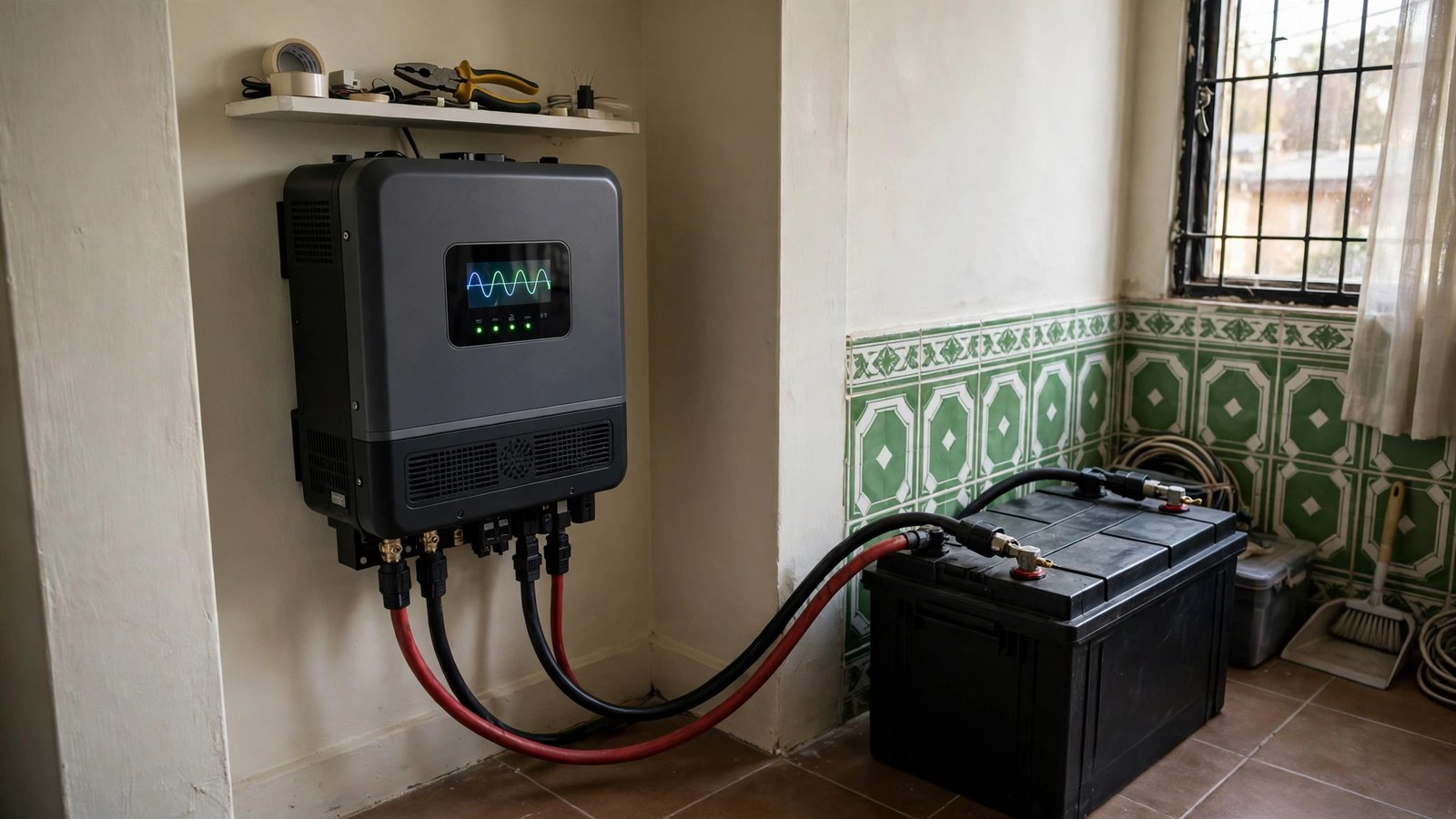
Hybrid Solar Inverters for Long-Term Savings
A hybrid solar inverter is the choice for homeowners who want backup power and lower electricity bills at the same time. Unlike a basic inverter, which only charges from the grid, a hybrid inverter can also charge from solar panels on your roof. By day, panels power the house and charge the battery. At night or during an outage, the battery takes over.
Sizes run from around 1.5 kVA for a small home up to 5 kVA and beyond. The most common setup pairs a 3 kVA or 5 kVA inverter with four to six panels, expandable later. That runs fans, lights, a fridge, a TV, and a water motor. The upfront cost is higher, because you buy the inverter, panels, and often larger batteries together. Before buying, get a site survey, check your roof has enough unshaded space, and confirm each part’s warranty.
- Pros: Cuts monthly bills with solar power; provides backup during load-shedding; expandable with more panels.
- Cons: Highest upfront cost of any inverter type; needs roof space and a proper installation; savings depend on sunlight and correct sizing.
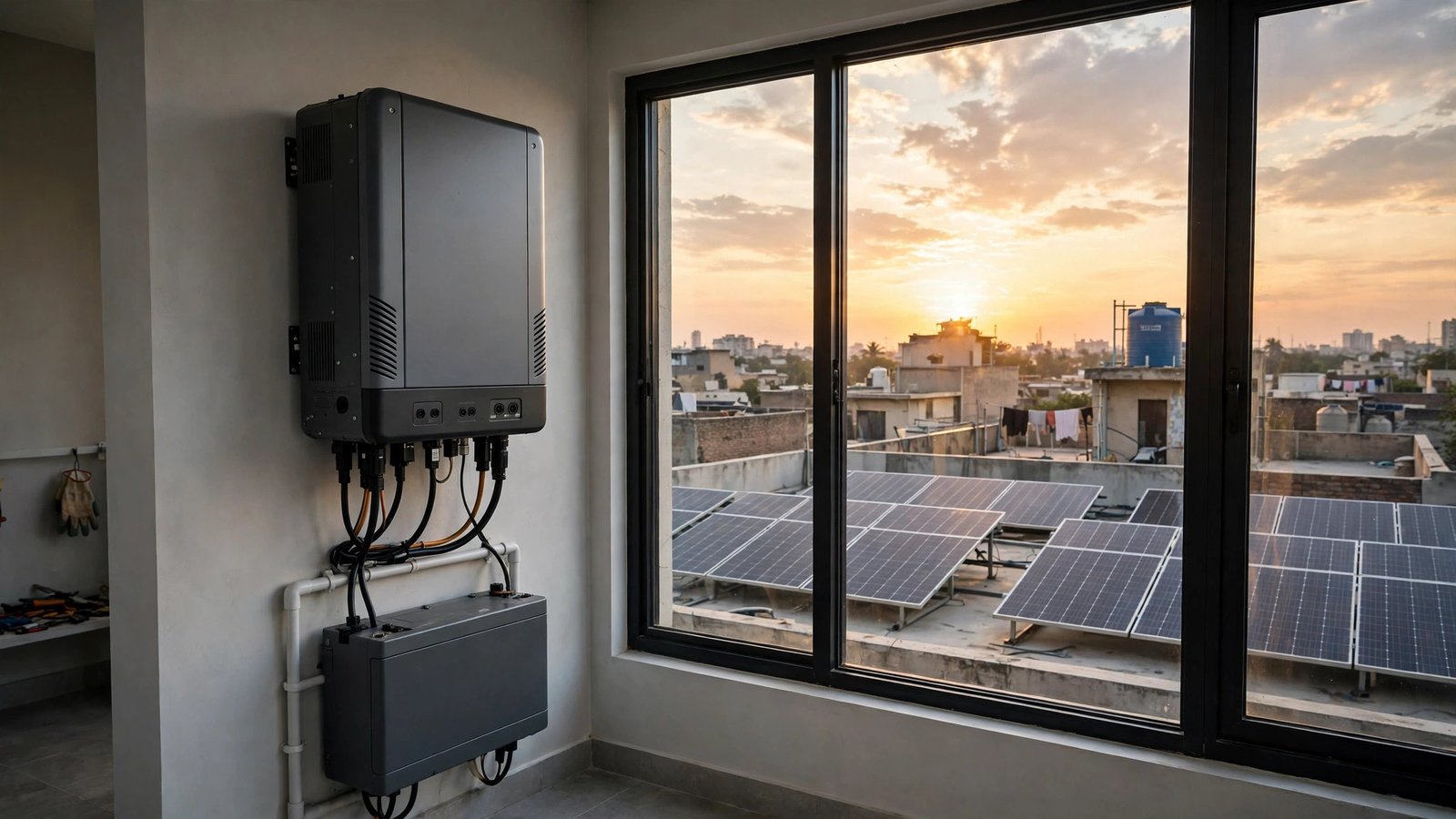
UPS-Style Home Inverters for Whole-Home Backup
A UPS-style home inverter is wired directly into your house wiring, so when the power cuts, the lights and fans in every room switch to battery power automatically. There is no extension cord, no moving plugs around, and no single room left dark. An electrician connects it to a circuit covering fans, lights, and a few sockets.
This setup suits families who want backup power to feel invisible. Switchover takes milliseconds, so a TV keeps playing and a computer keeps running. Most are pure sine wave models from 1,000 to 3,000 VA, paired with one or two batteries. A single battery gives roughly two to three hours for a typical load, while two batteries stretch that to four or five hours. Wiring should always be done by a qualified electrician, who should label the inverter sockets.
- Pros: Whole-home coverage with automatic switchover; no extension cords or moving plugs; protects computers and TVs from sudden shutdowns.
- Cons: Needs professional wiring, which adds to the cost; heavy loads must be kept off the inverter circuit; installation mistakes can cause recurring faults.
High-Capacity Inverter and Battery Combos
Some homes face outages lasting four, six, or even eight hours, which a small inverter and single battery cannot cover. A high-capacity inverter and battery combo is built for exactly this situation: a 3 kVA or 5 kVA inverter paired with two or four large batteries. It stores enough energy to run fans, lights, a fridge, and a TV through a long evening.
The key is matching the battery bank to the load. Each 100 Ah battery stores about one unit of electricity, and a home running three fans, five lights, a fridge, and a TV uses roughly 400 to 600 watts. Multiply your total load in watts by the backup hours you need to see how many batteries the job takes. A good dealer will do this calculation with you. Lead-acid tubular batteries are the commonest and cheapest in Pakistan, but need regular water top-ups. Lithium batteries cost far more upfront but last longer and charge faster.
- Pros: Longest backup time for areas with extended load-shedding; runs a fridge, TV, and multiple fans together; can be built up by adding batteries.
- Cons: Bulky and heavy, needs dedicated floor space; batteries are a major part of the total cost; lead-acid batteries need regular maintenance.
Price Guide: What an Inverter Costs in Pakistan
Inverters in Pakistan typically cost around Rs 25,000 to Rs 150,000 (check the seller for the current price), and where a setup falls depends on a few clear factors. The entry band, roughly Rs 25,000 to Rs 50,000, covers basic modified sine wave inverters in the 700 to 1,000 VA range, usually bought with a single battery for a small flat or a couple of rooms.
The mid band, roughly Rs 50,000 to Rs 90,000, covers pure sine wave inverters in the 1,000 to 2,000 VA range, often with a better battery, and UPS-style home inverters with proper wiring. This is the sweet spot for most urban households: a TV, a fridge, and several fans, with clean power that protects your electronics. The premium band, roughly Rs 90,000 to Rs 150,000, covers larger pure sine wave inverters, high-capacity combos, and entry-level hybrid solar inverters. Price moves most with capacity in VA or watts, sine wave type, battery size and chemistry, and solar support.
Buying Tips for Pakistani Buyers
Start by calculating your load in watts. List what must keep running: a ceiling fan uses around 75 watts, a tube light 40 watts, an LED TV 100 watts, a fridge 150 watts when running, and a router 10 watts. Add them up, then add a 20 percent safety margin. If your total comes to 600 watts, look for an inverter rated at 800 VA or above. Buying too small is the most common mistake: it shows up when the fridge compressor kicks in and the inverter trips.
Next, size the battery for the backup hours you need. A single 100 Ah battery gives roughly two hours for fans and lights, less with a fridge and TV. If outages in your area last four hours, plan for two batteries. Ask the dealer to show the calculation, not just promise a figure. Choose pure sine wave for a fridge, TV, or computer: the extra cost pays for itself if it saves one control board.
Check the warranty in writing: its length, coverage, and the nearest service centre. Buy from authorised dealers or well-known markets, and keep the receipt and warranty card safe. Finally, take safety seriously: put the inverter and batteries in a ventilated space, away from sunlight and bedrooms. Get wiring done by a qualified electrician, use cables thick enough for the load, and check battery water monthly for lead-acid batteries.
Frequently Asked Questions
Which inverter is best for home use in Pakistan? For most Pakistani homes, a pure sine wave inverter in the 1,000 to 2,000 VA range with one or two batteries is the best all-round choice. It runs fans, lights, a TV, a router, and a fridge safely. On a tight budget, modified sine wave covers fans and lights. Homes with long outages need a larger capacity and bigger battery bank.
How much does an inverter cost in Pakistan? Inverters in Pakistan typically cost around Rs 25,000 to Rs 150,000 (check the seller for the current price). Basic modified sine wave sits near the lower end, pure sine wave with a good battery in the middle, and high-capacity or hybrid solar near the upper end. The final price depends on capacity, sine wave type, battery size, and panels, so always get a full quote covering inverter, battery, wiring, and installation.
How long does an inverter run during load-shedding? Backup time depends on battery bank size and total load. A single 100 Ah battery running two fans and a few lights will usually last around two hours. With a fridge and TV added, the same battery may last closer to one hour. Two batteries roughly double that, and four can carry a typical home through four to six hours.
Pure sine wave or modified sine wave — which should I choose? Choose pure sine wave for a fridge, TV, computer, or any appliance with an electronic control board: clean power protects those devices and runs them quietly. Choose modified sine wave only on a tight budget with a load limited to fans, lights, and phone chargers. The price gap has narrowed, so for most buyers pure sine wave is the better long-term buy.
Where to buy an inverter in Pakistan? Buy from authorised dealers of reputable brands, or well-known electronics markets in Lahore, Karachi, and Islamabad. Online marketplaces like Daraz also list inverters, but check the seller’s ratings, confirm warranty terms before ordering, and prefer sellers offering installation support. Wherever you buy, ask for a written warranty, a receipt, and a full quote.
Conclusion
The best inverter in Pakistan matches your home, your load, and your budget, not the biggest unit in the shop. For most homes, a pure sine wave inverter with one or two batteries hits the sweet spot: clean power for TV and fridge, and enough backup for a typical outage. If money is tight, modified sine wave covers the basics; for long outages, a high-capacity combo or hybrid solar inverter is the step up.
Work out your load in watts, size the battery for the hours you need, buy from an authorised dealer, and get wiring done by a qualified electrician. For more trending products, price guides, and buying advice for Pakistani homes, browse the product feed at trendz.pk.