Best Room Heater in Pakistan (2026): Price Guide & Winter Buying Tips
If winter shopping is on your mind, the first question you probably have is about the room heater price in Pakistan — because there is a big gap between a basic Rs 4,000 halogen heater and a Rs 30,000 oil-filled radiator, and both sit on shop shelves under the same “room heater” label. Knowing what each type costs, and what it costs to run, will save you from a purchase that either warms nothing or shocks your electricity bill.
From December to February, Lahore and Peshawar nights dip toward freezing, Islamabad’s dampness seeps into the bones, and Quetta stays below zero for weeks. A good room heater is close to a necessity for bedrooms and study rooms. Match the heater type to your room and budget — and buy before the December rush pushes prices up.
Quick Picks: Which Heater Should You Buy?
- Tight budget, quick warmth: A small halogen or quartz heater. Cheapest to buy and heats fast; dries the air, suits small spaces only.
- Bedrooms and overnight use: An oil-filled radiator. Silent, steady heat, and the safest type for sleeping rooms.
- Small rooms, fast whole-room heat: A fan or blower heater. Quick to warm a 10×12 ft room, but noisy and costly to run for hours.
- Modern look, wall mounting: A convection panel heater. Sleek and quiet, good for offices and lounges.
- Biggest caution: All electric heaters pull serious wattage — the bigger the heater, the bigger the electricity bill.
Oil-Filled Radiator Heaters: Best for Bedrooms
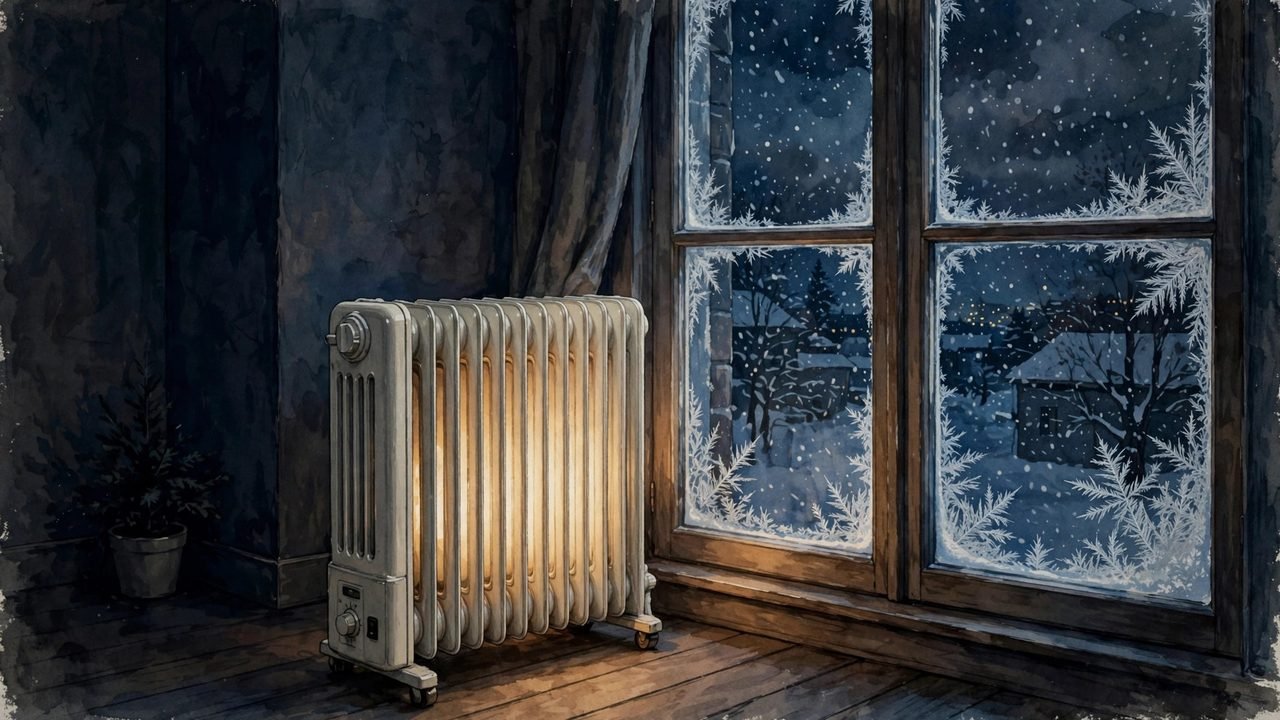
Oil-filled radiators look like old-fashioned central heating radiators on wheels. An electric element heats oil sealed inside the fins, and the room warms through slow, steady radiation. They take 10–15 minutes to start giving off real warmth, but hold heat even after you switch them off.
Most Pakistani families pick this type for bedrooms. Oil radiators are nearly silent, they do not glow or dry the air like halogen heaters, and better models come with an adjustable thermostat and tip-over protection. Many have a timer, so the heater can switch off a few hours after you fall asleep.
Pros:
- Silent operation — nothing to disturb sleep.
- Steady, even warmth; no harsh hot spots.
- Safer surface temperature than glowing-element heaters.
- Thermostat and timer on most mid-range models.
Cons:
- Slow to start; plan for a 10–15 minute warm-up.
- Heavy and bulky — not fun to carry between rooms daily.
- Costs more upfront than other electric types.
Halogen and Quartz Heaters: The Budget Favourite
Walk into any electronics market in Lahore, Rawalpindi, or Karachi in November and the shelves are stacked with halogen and quartz heaters. Glowing elements radiate instant heat — switch one on and you feel warmth within seconds. They are the cheapest electric heaters in Pakistan, which is exactly why they sell in such numbers.
They suit a spot under the study table, a corner of the lounge, or taking the edge off a chilly evening. Elements come in 2-rod, 3-rod, or 4-rod layouts, and most models let you switch on only one or two rods to save power.
The trade-offs are real. Heating is directional — stand two feet to the side and you will barely feel it. The bright orange glow bothers light sleepers, and the elements dry the air. Exposed hot elements need distance from children, pets, and curtains.
Pros:
- Cheapest room heaters in Pakistan; easy to find everywhere.
- Instant heat — no waiting.
- Lightweight and easy to move room to room.
- Rod-wise switches let you control power use.
Cons:
- Heats only what is directly in front of it.
- Bright glow can disturb sleep; dries the air.
- Hot exposed elements need distance from fabrics, kids, and pets.
Fan and Blower Heaters: Fast Warm Air for Small Rooms
Fan heaters — boxy little units with a fan blowing air over a hot coil — are the fastest way to warm a small room. They circulate warm air through the whole space, so a 10×12 ft bedroom or home office feels uniformly warmer in minutes. Many double as a cool-air fan in summer, a nice bonus for the price.
The catch is noise and running cost. Most draw 1,000–2,000 watts and run constantly, so a 2 kW unit left on for hours a day will add noticeably to your electricity bill. They also tend to smell faintly of dust for the first few minutes each winter after months in storage — that burn-off smell is normal.
Pros:
- Heats a whole small room quickly and evenly.
- Compact, light, and cheap after halogen heaters.
- Many models double as a summer fan.
Cons:
- Fan noise can irritate in a quiet bedroom.
- High running cost at 1–2 kW if used for long hours.
- Dusty smell on first use each season.
Convection Panel Heaters: The Sleek Modern Option
Convection panel heaters are slim, flat panels mounted on a wall or standing on legs — popular in offices, rental apartments, and newer homes where people want heating that looks modern. They warm air that rises past the panel, creating a natural convection current that heats the room quietly and evenly.
They sit between fan heaters and oil radiators: quieter than a fan heater, faster than an oil radiator, and slim enough to tuck against a wall. Buy models with a digital thermostat — a panel heater without one just runs at full power and eats electricity. They cost more than halogen or fan heaters and are harder to find in smaller cities; Daraz and official brand stores are the easiest route.
Pros:
- Quiet, even heating with a slim modern design.
- Wall-mountable — keeps the floor clear and safe from kids.
- Good for offices, lounges, and rented apartments.
Cons:
- Slower than fan heaters to warm a cold room.
- Thermostat models cost more; cheap ones waste power.
- Less widely available in smaller cities.
Room Heater Price in Pakistan: Type-by-Type Price Range Guidance
Prices move with the season — heaters get pricier in December and January — and vary by brand and city. Brands like Anex, Westpoint, Super Asia, and Dawlance are widely sold across Pakistan with proper warranty cards at official dealers. Treat these ranges as a guide and always confirm before paying.
- Halogen/quartz heaters: typically around Rs 3,500–8,000 (check the seller for the current price). Rod-type heaters from local brands sit at the lower end; quartz models from known brands cost more.
- Fan/blower heaters: typically around Rs 4,000–10,000 (check the seller for the current price). Basic plastic-body units are cheapest; sturdier models with a thermostat and ceramic element cost more.
- Oil-filled radiators: typically around Rs 14,000–35,000 (check the seller for the current price), depending on fin count (7, 9, 11, or 13) and features like a timer and digital thermostat.
- Convection panel heaters: typically around Rs 12,000–28,000 (check the seller for the current price), with digital-thermostat models at the upper end.
Room heater prices also shift by city: Lahore, Karachi, and Islamabad usually have the best selection and sharpest competition, while Quetta and smaller northern towns may have fewer brands and slightly higher prices. Buying in October or early November is the cheapest time — once the December rush starts, popular models sell out and the remaining stock rarely comes discounted.
One more honest note: gas heaters are common where piped gas is available, but gas heaters need proper ventilation to be used safely, and winter gas availability is unreliable in many cities. For most urban households, electric heaters are the simpler, more dependable option — you just pay for the electricity instead.
Buying Tips: Wattage, Room Size, Safety, and Where to Buy
Match wattage to room size. As a rough rule, a 1,000-watt heater suits a room up to about 100 sq ft, 1,500 watts handles a standard 10×12 ft bedroom, and large lounges need 2,000 watts or more. Too big wastes money; too small leaves you cold.
Budget for the electricity bill, not just the purchase. A 2,000-watt heater running 6 hours a day uses about 12 units of electricity daily — multiply that by your per-unit tariff and the winter days, and you see the real cost. Heaters with a thermostat are worth the extra money because they cycle on and off instead of running at full blast. On a tight budget, heat only the bedroom at night.
Safety features are worth paying for. Look for tip-over protection, an adjustable thermostat, overheat protection, and cool-touch housing if you have children. Keep every heater at least a metre from curtains, bedding, sofas, and anything flammable. Never drape clothes over a heater to dry them — a common cause of winter house fires. And never leave a glowing halogen heater running while the family sleeps; an oil-filled radiator with a thermostat is the far safer overnight choice.
Keep the air fresh. Electric heaters do not burn gas, so there is no carbon-monoxide risk as with gas heaters — but a sealed room with the heater running all night still gets stuffy. Leave a window cracked slightly, and never use a gas heater in a closed room.
Buy where the warranty is honoured. Daraz’s official brand stores, company outlets, and authorised dealers give you a proper warranty card and a genuine product. Cheaper unbranded listings leave you with nobody to call if the element dies in week three.

Frequently Asked Questions
What is the room heater price in Pakistan this winter?
Halogen and quartz heaters typically run around Rs 3,500–8,000, fan heaters around Rs 4,000–10,000, convection panels around Rs 12,000–28,000, and oil-filled radiators around Rs 14,000–35,000. Always check the seller for the current price — prices climb in December and January when demand peaks.
Which type of room heater is best for a bedroom?
An oil-filled radiator is the best bedroom choice for most people: silent, steady heat through the night, does not dry the air badly, and models with a thermostat and timer can switch themselves off after you fall asleep. Halogen heaters are too bright and too directional for sleeping rooms.
Do room heaters increase the electricity bill a lot?
Yes — this is the biggest cost of any electric heater. A 2,000-watt heater running six hours a day consumes about 12 units of electricity daily. Over a month of cold weather that adds up, depending on your tariff. Use a thermostat, heat only the rooms you are in, and switch the heater off when leaving the room.
Oil heater vs halogen heater — which one should I buy?
Buy an oil-filled radiator for overnight bedroom heating and lower running costs over time; buy a halogen heater for something cheap and instant for a study corner or short evening use. They solve different problems — the oil radiator wins on comfort and safety, the halogen wins on price and speed.
Is a gas heater better than an electric heater in Pakistan?
Gas heaters are cheaper to run where piped gas is available, but winter gas pressure drops badly in many cities, and gas heaters must be used with proper ventilation because of the carbon-monoxide risk. For most urban families, an electric heater is more dependable — the trade-off is a higher electricity bill.
Conclusion
For bedrooms, an oil-filled radiator from a reliable brand is worth the higher price; for quick spot warmth on a budget, a halogen heater does the job; for fast whole-room heating, a fan heater; and for a quiet modern look, a convection panel. Whatever you choose, check the seller for the current price, buy before December, and never compromise on safety features.
To compare options and see what is trending this winter, visit the Trendz.pk product feed — it tracks what’s gaining attention in Pakistan’s market, including winter home appliances, so you can shop with a sense of what other buyers are choosing.