Best Water Dispenser in Pakistan (2026): Price Guide & Buying Tips
Introduction
Finding the best water dispenser in Pakistan in 2026 is simpler than it looks, once you know what actually differs between models. Almost every dispenser in the market does the same basic job — it holds a 19-litre bottle and gives you cold water, hot water, or both at the push of a lever. The real differences are in cooling speed, heating power, build quality, electricity use and the extras like a fridge cabinet or a child safety lock.
A water dispenser is one of those appliances that quietly becomes part of daily life. In a Pakistani home it serves the family all day: cold water in the summer heat, hot water for tea in winter, and a glass for guests without a trip to the kitchen. Offices, shops, clinics and schools rely on them too, because a dispenser is cheaper and simpler than a fridge full of bottles or a kettle that is always on.
The mistake most buyers make is choosing on looks alone. A shiny dispenser with weak cooling will frustrate a family every summer afternoon, and a cheap model with thin insulation will run its compressor all day and push up the electricity bill. This guide walks through the five main types of water dispenser sold in Pakistan, what each one costs, and how to pick one that suits your home.
Quick Picks
- Best for most homes: A top-loading hot and cold dispenser.
- Best for easy bottle changes: A bottom-loading dispenser.
- Best for tea lovers: A hot and cold dispenser with fast heating.
- Best for small kitchens: A dispenser with a fridge cabinet.
- Best value overall: A basic top-loading dispenser with a child lock.
Top-Loading Dispensers for Everyday Homes
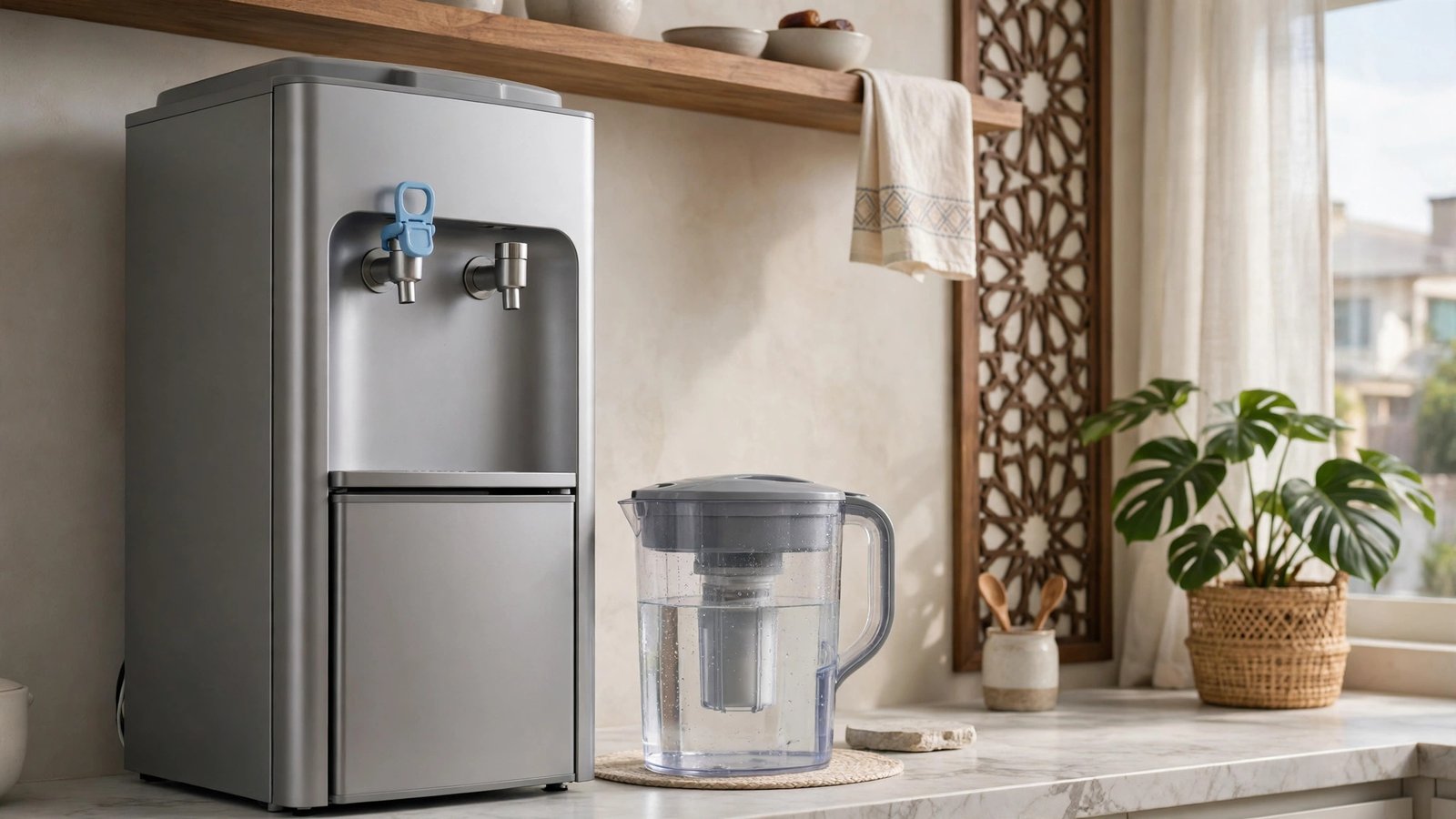
A top-loading dispenser is the classic design you see in most Pakistani homes: the 19-litre bottle sits upside down on top, and gravity feeds the water down into the hot and cold tanks. It is the cheapest type, the simplest to understand, and the easiest to repair — any technician in your city will know it inside out. If the bottle runs out, you lift a new one on top and you are done.
The one real drawback is the lifting. A full 19-litre bottle weighs about 19 kilograms, and hauling it up to shoulder height is hard for older family members and awkward for anyone with a bad back. Spills happen too, especially when the bottle neck misses the seat. For a young family where someone can lift the bottle easily, none of this matters much. For a home with elderly parents, it is worth thinking about before you buy.
- Pros: Lowest prices, simple and reliable design, easy to repair anywhere, wide choice of models.
- Cons: Heavy bottle lifting, occasional spills when loading, takes up vertical space.
Bottom-Loading Dispensers for Easy Bottle Changes
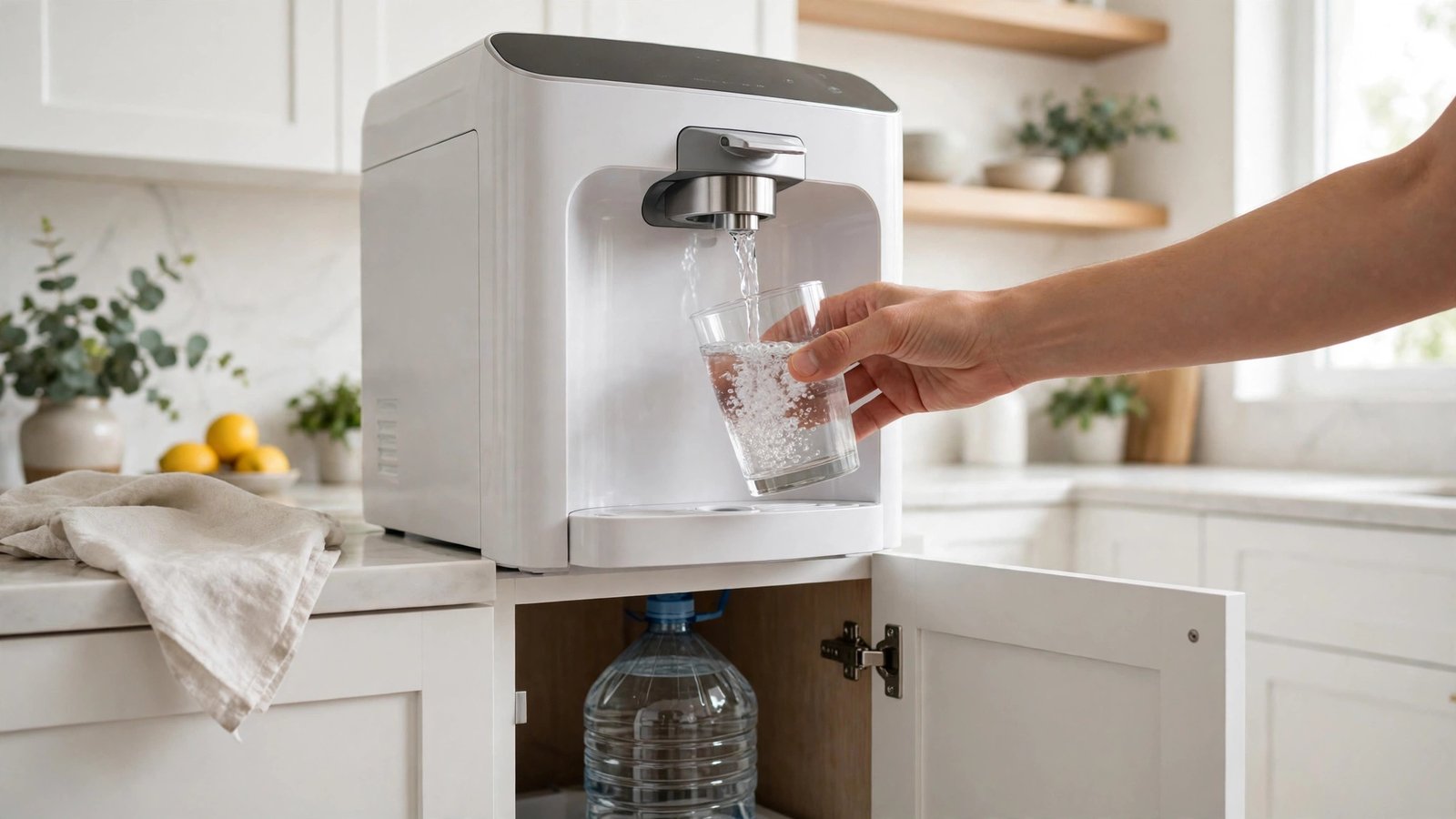
A bottom-loading dispenser hides the bottle inside a cabinet at the base, and a small pump draws the water up into the tanks. Changing the bottle means sliding it into the cabinet at floor level — no lifting, no spills, no wrestling a heavy bottle above your shoulders. For homes with elderly parents, or anyone who struggles with weight, this is the single most useful feature a dispenser can have.
The trade-off is price and complexity. Bottom-loading models cost more, and the pump adds a part that can fail, so the dispenser needs a little more care than a gravity-fed top-loader. They also hide the water level, so you cannot see at a glance how much is left — some models add a low-water indicator light to fix that. For most families the extra cost is worth it for the daily ease, but a top-loader remains the better pick if budget is tight.
- Pros: No heavy lifting, no spills, neat look with the bottle hidden, easy for elderly users.
- Cons: Higher prices, pump can need repair, water level not visible at a glance.
Hot and Cold Dispensers for Tea and Cold Water
A hot and cold dispenser gives you both temperatures from one machine: chilled water for summer and near-boiling water for tea, coffee and instant noodles. The hot tank usually heats water to around 85 to 95 degrees, hot enough for a proper cup of chai, while the cold tank keeps water at a few degrees above freezing. For a household that drinks tea several times a day, this is the most useful kind of dispenser — it replaces the kettle for most of the day.
Two things decide how good a hot and cold model is: heating speed and insulation. A weak heater takes several minutes to reheat after a few cups, which is annoying at breakfast when everyone wants tea at once. Thin insulation makes the compressor and the heater switch on too often, which pushes up the electricity bill. Check the heating and cooling power in watts before you buy, and look for a model with a child safety lock on the hot tap.
- Pros: Hot water for tea and cold water in one machine, replaces the kettle for most of the day, suits offices and large families.
- Cons: Uses more electricity than cold-only models, weak heaters reheat slowly, needs a child lock for safety.
Dispensers with a Fridge Cabinet
A dispenser with a fridge cabinet adds a small chilled compartment below the water tanks, usually big enough for a few bottles, fruit or medicines that need to stay cool. In a small kitchen or a hostel room, it saves the cost and space of a separate mini fridge, and it keeps cold drinks within reach of the dispenser itself. Some models chill the cabinet with the same compressor that cools the water, while others have a separate small cooling unit.
The cabinet is small, so do not expect it to replace a real fridge — it holds a few items, not a week’s groceries. It also adds to the electricity use, and the cooling can be uneven if the cabinet is stuffed full. For a bedroom, a small office or a shop counter, though, the extra storage is genuinely handy, and the price jump over a standard dispenser is modest.
- Pros: Extra chilled storage in the same unit, saves space in small rooms, modest price jump.
- Cons: Small capacity, adds to electricity use, cooling can be uneven when full.
Dispensers with Built-in Filtration
A dispenser with built-in filtration adds a filter stage between the bottle and the tap, so the water passes through carbon or sediment filters before you drink it. The idea is extra peace of mind: the filter catches particles and improves taste, which matters in areas where the bottled water quality is uncertain. Some models add a UV lamp as a final stage.
Filtration is only as good as its upkeep. A filter that is never changed becomes worse than no filter at all, because trapped dirt and bacteria build up inside it. Before buying, check the cost of replacement filters and how often they need changing — usually every few months — and whether the filters are easy to find in your city. For homes using a trusted bottled water brand, a filtered dispenser adds little; for homes unsure about their water source, it is a sensible extra.
- Pros: Extra layer of water safety, better taste, useful where water quality is uncertain.
- Cons: Filters need regular replacement, replacement cost adds up, useless if filters are not changed.
Price Guide: What a Water Dispenser Costs in Pakistan
Prices for a water dispenser in Pakistan typically range from around Rs 12,000 to Rs 35,000 (check the seller for the current price). At the lower end, roughly Rs 12,000 to Rs 18,000, sit basic top-loading dispensers — enough for a family that needs cold water and occasional hot water. The middle band, around Rs 18,000 to Rs 25,000, covers better-built hot and cold models with faster heating, stronger cooling and a child safety lock, the range most homes should buy into.
Above Rs 25,000, towards Rs 35,000, sit bottom-loading dispensers, models with a fridge cabinet and dispensers with built-in filtration. Three things move the price most: the loading design, with bottom-loading costing more than top-loading; the cooling and heating power, which decides how fast the water chills and reheats; and the extras like a fridge cabinet, filtration or a steel body.
Buying Tips for Pakistani Buyers
Start with the bottle. Almost all dispensers in Pakistan take the standard 19-litre bottle, so check that your regular water supplier’s bottles fit the model you are buying — most do, but a quick check saves a return trip. Then check the cooling and heating power in watts: a stronger compressor chills water faster on a hot summer afternoon, and a stronger heater means the family is not waiting for tea.
Check the child safety lock on the hot tap in person, not just on the box — press it and see that a small child could not open it by accident. Look at the drip tray and the taps: cheap plastic taps crack within a year, while sturdier taps last the life of the machine. Ask about the warranty in writing, especially whether it covers the compressor, and buy from a seller with a service centre in your city. Finally, place the dispenser on a level floor with space behind it for air flow, and clean the drip tray and the bottle seat every week.
Frequently Asked Questions
Which water dispenser is best for home use in Pakistan?
A top-loading hot and cold dispenser suits most homes: it is affordable, easy to repair and gives both cold water in summer and hot water for tea. If someone in the family struggles with lifting a heavy bottle, a bottom-loading model is worth the extra cost for the daily ease.
How much electricity does a water dispenser use?
A typical dispenser uses a modest amount of electricity, roughly similar to a small fridge, because the compressor and heater switch on and off as needed. The exact use depends on the model, the room temperature and how often the taps are used. Models with thin insulation or a weak thermostat use more, so check the power ratings and buy a well-insulated model.
How often should I clean my water dispenser?
Clean the drip tray and the bottle seat every week, and give the tanks a proper clean every one to two months, following the manual. If the water starts to taste stale or the flow slows down, clean it right away. A dispenser that is never cleaned can affect the taste and quality of the water.
What bottle size fits a water dispenser in Pakistan?
Almost all dispensers sold in Pakistan take the standard 19-litre bottle used by local water suppliers. Check that your supplier’s bottle neck fits the dispenser’s seat before you buy, and keep a spare bottle at home so the family is never without water.
Do I need a child safety lock on the hot tap?
Yes, if there are small children in the house. The hot tap gives water close to boiling, and a child who presses it by accident can be badly scalded. A good safety lock needs a deliberate press-and-hold or a two-step action that a small child cannot do by chance. Test it in the shop before you pay.
Conclusion
The best water dispenser in Pakistan is the one that fits your family’s daily routine — a top-loader for most homes, a bottom-loader where lifting is hard, and a hot and cold model where tea is a daily habit. Set your budget from the ranges in this guide, check the child lock and the compressor warranty, and keep the drip tray clean. A careful purchase gives your family cold water in summer and hot water for tea for years.
For more buying guides on trending products across Pakistan, visit the product feed at https://trendz.pk/.