Best Washing Machine in Pakistan (2026): Price Guide & Buying Tips
A washing machine is one of those appliances that pays for itself in a Pakistani household within months, and finding the best washing machine in Pakistan in 2026 comes down to a handful of practical choices: your budget, your family size, your electricity bill, and the after-sales service available in your city. Unlike smaller appliances, a washing machine is a 7–10 year purchase, so picking the right type now saves real money and hassle later.
The Pakistani market in 2026 has four main options: budget twin-tub (semi-automatic) washers, fully automatic top-loaders, front-loaders, and smart inverter models. International brands like LG, Samsung, Haier, Dawlance, Kenwood and local names such as Super Asia and Orient all compete here, with models priced anywhere from under Rs 30,000 to well over Rs 150,000. This guide breaks down every option with realistic price ranges, honest pros and cons, and buying tips that actually matter for Pakistani homes. Note: prices below are approximate ranges — always check with the seller for the current price, since rates shift with promotions, the dollar, and the season.
Quick Picks
- Best overall: Fully automatic top-load washer (8–10 kg) — suits most Pakistani families, reasonably priced, easy to repair almost anywhere.
- Best budget: Twin-tub semi-automatic washer (7–9 kg) — cheapest to buy and cheapest to run, works even with low water pressure.
- Best for large families: 12–14 kg top-load automatic with an inverter motor — big drum, lower electricity draw.
- Best front-load: 8 kg front-load washer with inverter motor — best wash quality, gentlest on clothes, uses the least water.
- Best for low electricity bills: Any inverter-motor model (top-load or front-load) — cuts power use noticeably versus older conventional motors.
1. Twin-Tub Semi-Automatic Washers — Best Budget Pick
The twin-tub is the workhorse of Pakistani homes: one side washes, the other side spins clothes dry. You fill it with water manually (or via a hose), add detergent, move clothes over to the spinner yourself, and drain it when done. It needs your involvement, but it is simple, tough, and cheap to fix.
Pros:
- Lowest purchase price of any washing machine type in Pakistan.
- Very low electricity consumption — works fine on a small UPS or solar setup.
- No water-pressure requirement, since you fill it manually; ideal for areas with weak tap pressure.
- Parts are cheap and any local electrician can repair it.
Cons:
- Manual effort: filling, shifting clothes, draining.
- Uses more water than a front-loader because you judge the level yourself.
- Washes and spins less gently than automatic machines.
2. Fully Automatic Top-Loaders — Best Overall
Top-load automatic machines dominate the Pakistani market, and for good reason. You throw in the laundry, add detergent, press start, and the machine handles fill, wash, rinse, and spin on its own. Mid-range 8–10 kg top-loaders hit the sweet spot for most families: affordable, widely available, and serviceable in almost every city.
Pros:
- Fully hands-off operation — set and forget.
- Mid-range models are priced within reach of most middle-class families.
- Wide service network: spare parts and technicians are easy to find, even outside big cities.
- Cycle times are shorter than front-loaders.
Cons:
- Uses more water per cycle than a top-loader.
- Top-load agitators can be slightly harsher on delicate fabrics.
- Cheaper models with conventional motors draw more electricity.
3. Front-Load Washers — Best Wash Quality
Front-load machines are the premium choice. Clothes tumble through a small amount of water, which cleans more thoroughly, treats fabric gently, and uses far less water than a top-loader. Most front-loaders sold in Pakistan now come with inverter motors, making them surprisingly economical to run despite the higher purchase price.
Pros:
- Best cleaning performance and gentlest on clothes — shirts and uniforms last longer.
- Lowest water consumption per cycle, which matters where water is scarce or tank-fed.
- Inverter models are quiet and efficient.
Cons:
- Highest upfront price in the Pakistani market.
- Needs decent water pressure (most models want at least 0.3 bar) and a proper drainage setup.
- Longer wash cycles, typically 1–2 hours.
- Repairs and spare parts cost more than top-loaders; stick to brands with a strong local service network.
4. Inverter & Smart Models — Best for Electricity Bills
Inverter motors adjust their speed instead of running flat-out, cutting electricity use by a meaningful margin compared with conventional motors. Many 2026 models also add smart features — Wi-Fi control, wash-cycle apps, auto-dosing of detergent — though the motor is what actually saves money; treat smart features as a bonus, not the reason to buy.
Pros:
- Lower running costs, especially noticeable if you run the machine daily.
- Quieter operation — worth it in apartments.
- Often carry longer motor warranties (some brands offer up to 10 years on the inverter motor).
Cons:
- Higher purchase price than non-inverter equivalents.
- Smart features add cost without changing wash quality; app support can be patchy in Pakistan.
5. Washer-Dryer Combos — For Small Homes
Washer-dryer combos wash and then dry in the same drum, removing the need for a separate dryer or a long clothesline. They make sense in apartments where drying space is tight, but they are the most expensive option and the drying capacity is always smaller than the wash capacity — you will run two dry batches for one big wash load.
Pros:
- Two appliances in one footprint — good for small flats.
- Clothes come out ready to fold, useful in the humid monsoon months.
Cons:
- Premium price, roughly double a comparable washer-only model.
- Longer total cycle times and higher electricity use when drying.
- If the machine breaks down, you lose both washing and drying at once.
Washing Machine Prices in Pakistan
Here are realistic 2026 price ranges for the Pakistani market. Treat these as starting points — check the seller for the current price, since retailers run frequent promotions and prices move with exchange rates:
- Twin-tub semi-automatic (7–9 kg): typically around Rs 28,000–50,000 (check the seller for the current price). Local brands like Super Asia and Kenwood sit at the lower end.
- Fully automatic top-load (8–10 kg): typically around Rs 65,000–120,000 (check the seller for the current price). Inverter models start higher, usually from Rs 90,000 upward.
- Front-load (7–9 kg): typically around Rs 95,000–170,000 (check the seller for the current price). Models from LG, Samsung, Haier and Dawlance dominate this bracket.
- Washer-dryer combos: typically around Rs 150,000–220,000 (check the seller for the current price).
A practical rule: a decent family-size automatic washer costs roughly what a budget smartphone does, and the difference between a Rs 70,000 top-loader and a Rs 110,000 inverter model is usually recovered in electricity savings and fewer repairs over a few years of daily use.
Buying Tips for Pakistani Buyers
Match capacity to family size. A 7–8 kg machine handles a family of 3–4. A family of 5–6 should look at 9–10 kg, and joint families of 7+ need 12 kg or more. Buying too small means running two cycles a day; buying too big wastes water and electricity on half loads.
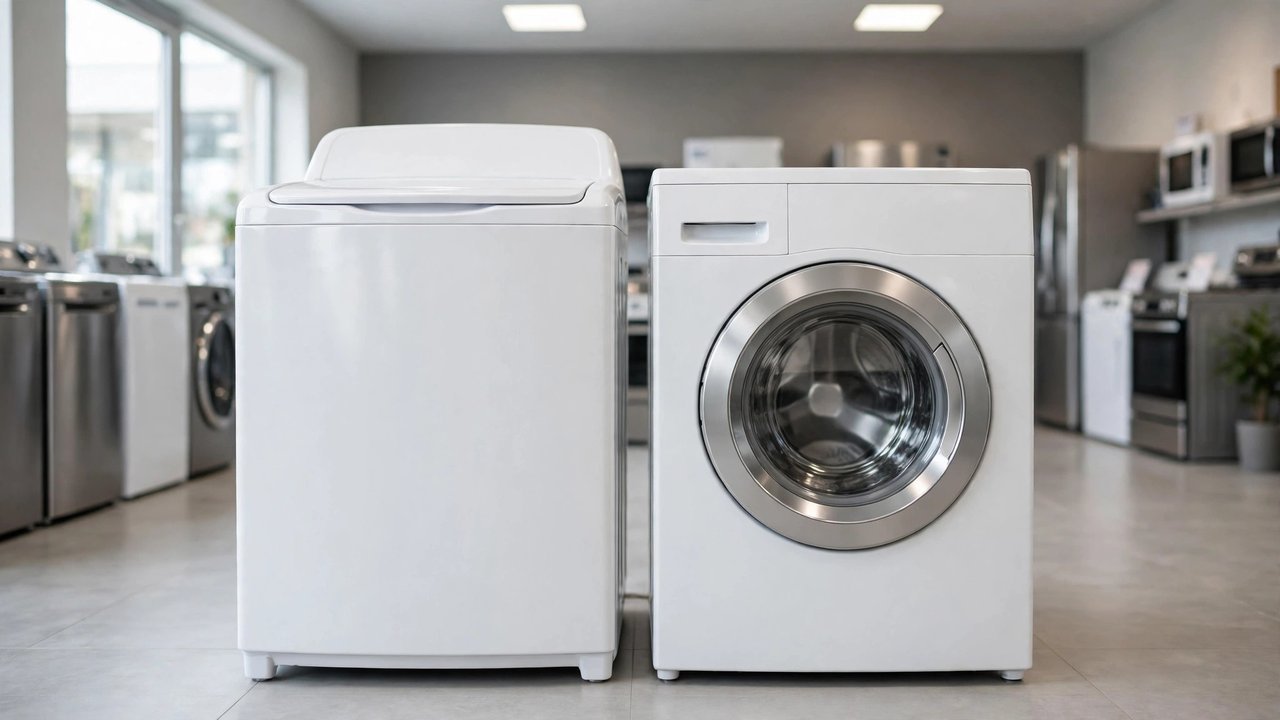
Top-load vs front-load: pick for your home, not the hype. If your water pressure is weak, you rent your place, or you want cheap repairs, a top-loader is the safer choice. If you have steady water pressure, own your home, and want the best wash with the least water, go front-load.
Take inverter motors seriously. Electricity is expensive, and a washing machine runs several times a week. An inverter model costs more upfront but draws noticeably less power and usually runs quieter. For daily-use machines, the premium pays for itself.
Check water pressure before buying a front-loader. Many front-loaders need at least 0.3 bar of inlet pressure to fill properly. If your area has weak pressure, you will need a pressure pump — factor that into the budget, or choose a top-loader or twin-tub instead.
Warranty and after-sales service matter more than features. Look for at least a 1-year comprehensive warranty, and check which brands actually have service centres in your city — not just in Karachi, Lahore, and Islamabad. A fancy model with no local technician becomes a liability the first time it faults.
Brand outlets vs online. Brand outlets and authorised dealers give you genuine warranty cards and free installation in most cities. Online marketplaces can be cheaper during sales, but buy only from official brand stores or highly rated sellers, and confirm the warranty is valid for Pakistan (some imported units carry no local warranty at all).
Measure your space. This sounds obvious, but front-loaders need clearance for the door swing and a level floor — an unbalanced machine on a tiled floor will walk across the room and damage itself. Measure the doorway too; a 12 kg machine does not fit through every bathroom door.
Frequently Asked Questions
Which type of washing machine saves the most electricity?
Front-loaders with inverter motors use the least electricity and the least water per cycle. Among top-loaders, inverter models are the next best. Twin-tubs draw very little power but need manual effort. Whatever type you choose, washing with cold water and full loads saves more than any motor technology.
What capacity do I need for a family of 5?
A 9–10 kg machine is the right size for a family of five in Pakistan — big enough for bedding and weekly bulk loads, without being oversized for daily clothes. Go for 12 kg if yours is a joint family or you wash blankets at home.
Is a front-load or top-load machine better for Pakistan?
For most Pakistani homes, a top-loader is the more practical pick: it tolerates low water pressure, costs less, and is easier to service. A front-loader is better if you have reliable water pressure and want superior cleaning with lower water use. Match the machine to your home’s realities.
Do washing machines need special installation?
Twin-tubs need nothing — just a tap and a drain. Automatic machines need a water inlet connection, a drain pipe, and a level, solid floor. Most brand outlets and dealers in Pakistan include free installation in major cities; confirm this before you pay.
How long is the warranty usually?
Most brands offer 1 year on the full machine, with longer coverage on the motor — commonly 5 to 10 years for inverter motors. Keep the warranty card and the purchase receipt; without them, service centres can refuse free repairs.
Conclusion
The best washing machine in Pakistan for most families in 2026 is a mid-range fully automatic top-loader in the 8–10 kg range — affordable, easy to service, and tolerant of Pakistan’s variable water pressure. If your budget stretches further, an inverter front-loader gives you the best wash quality and the lowest running costs. And if money is tight, a twin-tub will serve a family faithfully for years at a fraction of the price.
Prices and models change fast, so browse the latest trending picks in the product feed at trendz.pk before you buy — and always confirm the final price and warranty terms with the seller.