Best Microwave Oven in Pakistan (2026): Price Guide & Buying Tips
Best Microwave Oven in Pakistan (2026): Price Guide & Buying Tips
A microwave oven has become one of the most-used appliances in Pakistani kitchens. It reheats last night’s salan in two minutes, defrosts frozen chicken, and warms milk at 2 a.m. If you are shopping for one, the first question is almost always the same: what is the microwave oven price in Pakistan right now, and which type is actually worth your money? This guide answers both. Prices for microwave ovens in Pakistan range from Rs 18,000 to Rs 55,000. The right choice depends on how your household cooks, how much counter space you have, and whether you only want to reheat food or bake and grill as well.
Quick Picks
- Best overall: A 28–32 litre convection microwave oven — reheats, grills and bakes in one unit, and suits most families of 4–6 people.
- Best budget: A 20–23 litre solo microwave oven — the cheapest reliable way to reheat and defrost for a small household.
- Best for baking: A convection microwave with a grill rack and a preheat function — bakes cakes, roasts chicken and crisps parathas without a separate oven.
- Best for large families: A 32–42 litre convection model with a large turntable — fits a full dinner plate and a family-sized dish.
- Best compact: A 17–20 litre countertop solo microwave — a small footprint for apartments or kitchens with limited counter space.
Solo Microwave Ovens
A solo microwave is the simplest type you can buy. It uses microwaves only, so it reheats, defrosts and cooks basic food — but it cannot brown, crisp or bake. For most Pakistani homes, a solo oven handles the daily jobs: warming roti and salan, reheating rice, making popcorn, defrosting meat, and heating milk or tea. Solo ovens usually come in 17 to 25 litres at 700–1,000 watts.
Prices for solo microwave ovens in Pakistan are typically around Rs 18,000–28,000 (check the seller for the current price).
Pros: lowest price of any type; simple controls anyone can learn in a day; light and easy to move; uses less electricity for basic reheating.
Cons: cannot grill, brown or bake; no convection fan, so it cannot replace a baking oven; smaller models struggle with large family dishes.
Who should buy one: Students, bachelors, small families of 2–3 people, or anyone who mainly needs reheating and defrosting.
Grill Microwave Ovens
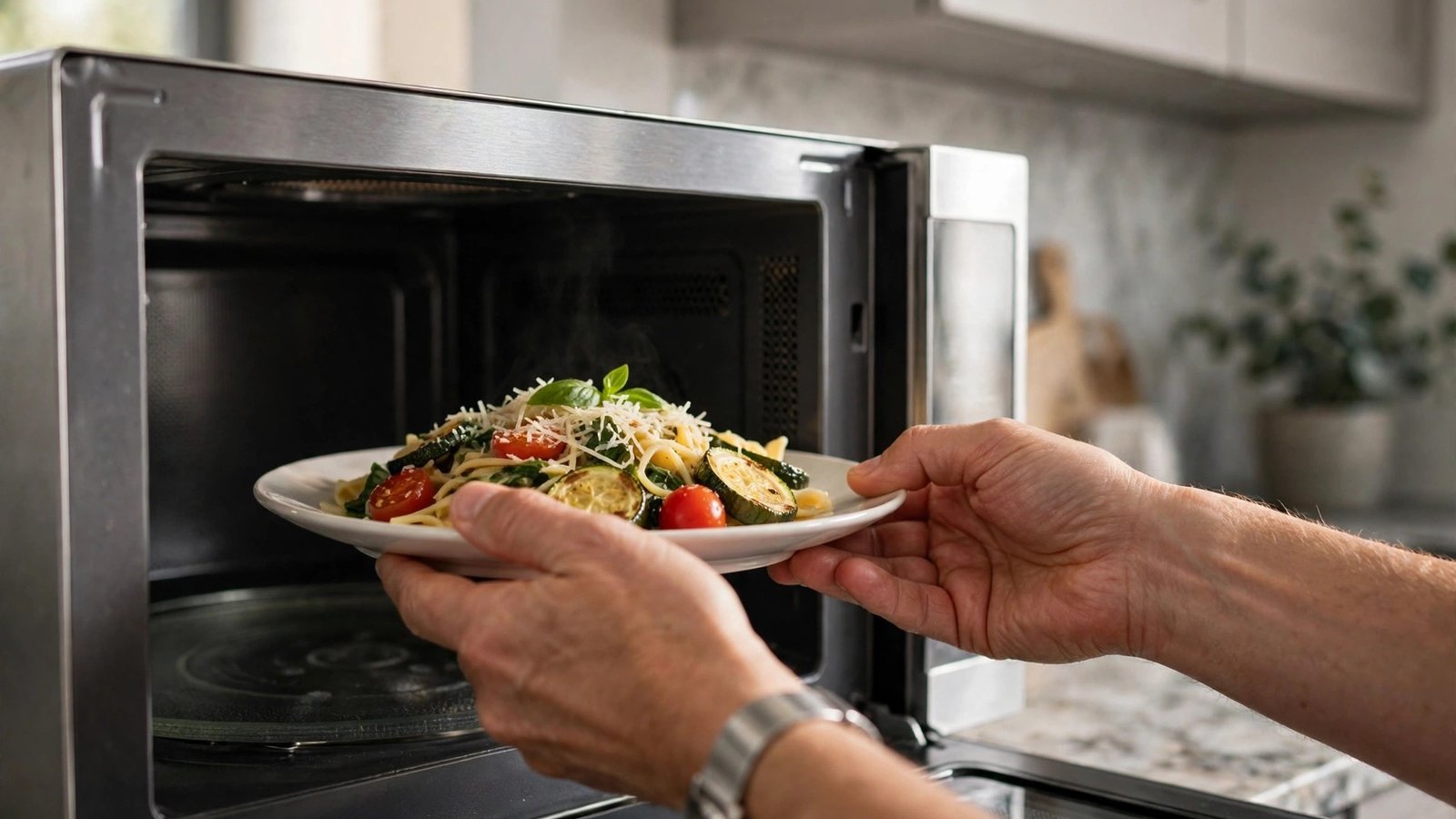
A grill microwave adds a heating element on top of the cavity, so it can brown and crisp food in a way a solo oven cannot. That matters for the dishes Pakistanis actually grill: seekh kebab, tikka pieces, grilled sandwiches, cheese toast and reheated parathas that need a crisp edge. The grill works on its own or combined with microwave power, which cuts cooking time compared with a traditional grill. Most are 23–30 litres and come with a metal grill rack.
Prices for grill microwave ovens in Pakistan are typically around Rs 25,000–38,000 (check the seller for the current price).
Pros: browns and crisps food properly; combination mode cooks faster than a conventional grill; still simple to operate; a good middle ground between solo and convection ovens.
Cons: cannot bake cakes or bread properly — there is no convection fan; the grill element needs cleaning after greasy food; costs more than a solo oven for a feature some households rarely use.
Who should buy one: Families who reheat a lot and also want to grill kebabs, crisp parathas or make toasted sandwiches.
Convection Microwave Ovens
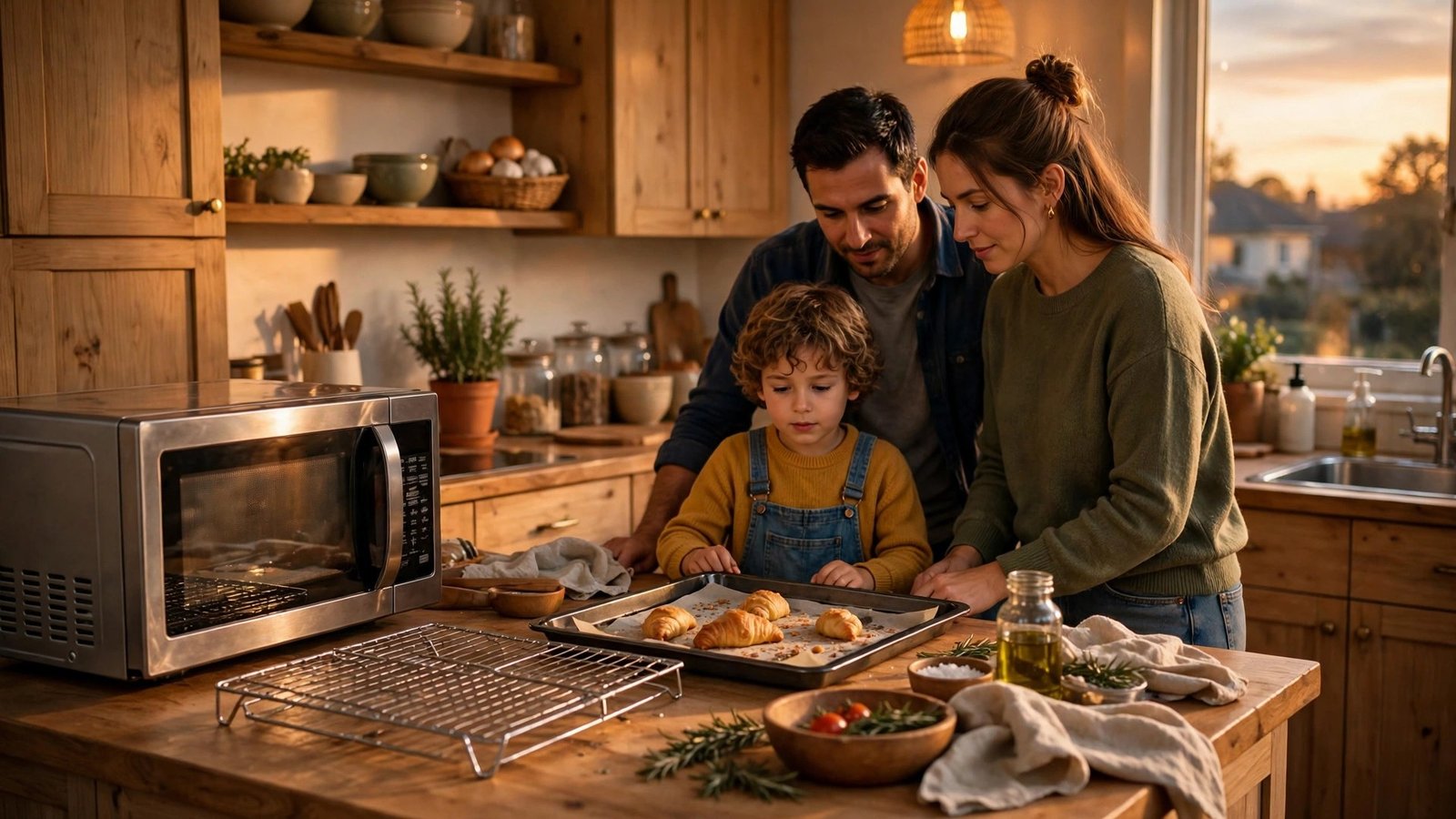
A convection microwave is the most capable type. It adds a fan and a heating element that circulate hot air around the cavity, so it can bake, roast and grill as well as microwave. That means one appliance can bake a cake, roast a chicken, crisp samosas and reheat biryani. For many Pakistani households it is the only oven they own. Convection models start around 23 litres and go up to 42 litres or more.
Prices for convection microwave ovens in Pakistan are typically around Rs 32,000–55,000 (check the seller for the current price).
Pros: one appliance that reheats, grills, bakes and roasts; bakes cakes and bread with even results; large capacity options suit joint families; preset auto-cook menus on many models.
Cons: highest price of the three main types; uses more electricity in convection mode; heavier and bulkier, so it needs a permanent spot; more features mean more buttons to learn.
Who should buy one: Families who bake at home, cook for 5 or more people, or want one appliance to cover reheating, grilling and baking instead of buying two or three separate machines.
Inverter Microwave Ovens
Inverter technology changes how a microwave delivers power. A standard microwave cycles its magnetron on and off at full power, so food sometimes heats unevenly — hot at the edges, cold in the middle. An inverter model delivers a steady, lower power level instead, so food heats more evenly and delicate items cook gently without drying out. Inverter ovens come in solo, grill and convection versions — it is an upgrade, not a separate category.
Prices for inverter microwave ovens in Pakistan are typically around Rs 30,000–50,000 (check the seller for the current price), depending on the model type.
Pros: heats food more evenly, with fewer cold spots; gentler on delicate food — better for defrosting meat and warming milk; quieter operation; slightly more energy-efficient at low power.
Cons: costs more than a standard microwave with the same capacity; the benefit is subtle for households that only reheat leftovers; repairs can be more expensive if the inverter board fails after the warranty ends.
Who should buy one: Anyone who defrosts meat often, heats baby food or milk, or has been annoyed by uneven reheating — and anyone who wants a quieter, more even-cooking machine for daily use.
Compact and Countertop Microwave Ovens
Not every kitchen has room for a 32-litre oven. Compact microwaves, usually 17–20 litres, are made for small counters, apartments, hostel rooms and office pantries. They are almost always solo models. A compact oven still does the core jobs — reheating, warming tea, defrosting — just in smaller quantities. Wattage is usually 700–800 watts, and the smaller turntable may not fit a large dinner plate — measure your plates before you buy.
Prices for compact microwave ovens in Pakistan are typically around Rs 18,000–24,000 (check the seller for the current price).
Pros: fits small kitchens, apartments, hostels and offices; light and portable; lowest power draw of any microwave type; simple controls and a small price tag.
Cons: small cavity cannot fit large plates or family-sized dishes; lower wattage means slower cooking and reheating; no grill or convection options in this size; limited auto-cook menus.
Who should buy one: Students, single professionals, office pantries, and small apartments where counter space is tight and the household only needs basic reheating.
Microwave Oven Price in Pakistan: What You Actually Pay
Prices for microwave ovens in Pakistan range from Rs 18,000 to Rs 55,000. That range covers everything from a basic 20-litre solo model to a large convection oven with inverter technology. Where a model sits inside that range depends on capacity, type, wattage and extra features like a steam-clean function. A rough rule: solo ovens sit at the lower end, grill ovens in the middle, and convection and inverter models at the upper end.
Prices also move with the season and the seller. Ramadan and Eid sales, Daraz shopping festivals and end-of-year clearances often bring genuine discounts, especially on older models being replaced by a newer range. Prices can differ between a brand’s official store, a large electronics market like Hall Road in Lahore or Saddar in Karachi, and an online marketplace. Check at least two sellers before you pay, and confirm whether delivery is included — a large convection oven is heavy.
Remember that the sticker price is not the whole cost. A microwave that runs on 1,200 watts adds to your electricity bill, especially if it is used several times a day. A model with a proper warranty saves money later if something goes wrong.
Buying Tips
Match the capacity to your household. A 20-litre oven is enough for 1–3 people; a family of 4–6 should look at 28–32 litres, and a joint family at 32 litres or more. Measure your largest plate before ordering online.
Check the wattage, but do not overpay for it. Higher wattage means faster cooking, but the gap between 900 and 1,200 watts matters less than the gap between solo and convection. For reheating only, 800–1,000 watts is plenty.
Think about load-shedding and voltage. Pakistani homes deal with voltage fluctuations and power cuts. A wide voltage range handles dips better, and a stabiliser protects the electronics. A simple dial restarts more gracefully than a touch panel that resets when the power drops.
Read the warranty before you pay. A one-year warranty is standard; some models offer two years or longer on the magnetron. More important is the service network — check for an authorised service centre in your city, and keep the warranty card and receipt safe.
Check the seller before you buy. On Daraz or any marketplace, buy from the brand’s official store or a seller with a long history and high ratings. In a physical shop, ask for a sealed box and check the serial number against the warranty card.
Look inside the cavity. A stainless steel cavity is easier to clean and lasts longer than a painted one. Check the turntable spins smoothly and the door closes firmly. Never put metal, foil or ordinary plastic inside — use only microwave-safe glass, ceramic or labelled plastic.
Frequently Asked Questions
What is the microwave oven price in Pakistan in 2026?
Prices for microwave ovens in Pakistan range from Rs 18,000 to Rs 55,000. Solo models are typically around Rs 18,000–28,000, grill models around Rs 25,000–38,000, and convection models around Rs 32,000–55,000. Always check the seller for the current price.
Which microwave oven is best for a Pakistani family?
A 28–32 litre convection microwave is the best all-round choice for most families of 4–6 — it reheats, grills and bakes in one unit. If the budget is tight, a 23–25 litre solo or grill model covers the daily jobs for much less.
Is a convection microwave worth it in Pakistan?
Yes, if you bake or roast at home — it replaces a separate baking oven for cakes and roast chicken, saving money and counter space. If you only reheat food, a solo or grill model is better value.
How many litres should a microwave be for a family of 5?
A 28–32 litre microwave fits a full dinner plate, a family-sized dish and a standard cake tin. A 20-litre model is too small — large plates will not turn properly on the turntable.
Can I use a microwave during load-shedding?
A microwave draws around 1,000 watts or more, so it does not run well on a small UPS or an inverter not rated for heavy loads. Use it when mains power is available.
Conclusion
The best microwave oven in Pakistan is the one that matches how your household actually cooks. A solo model is the cheapest way to get reliable reheating. A grill model adds crisping and kebabs. A convection model does everything, including baking, and is the best single appliance for a family that cooks at home. An inverter model heats more evenly, and a compact model fits where nothing else will. Whatever you choose, compare the price at two sellers, check the warranty and the service network in your city, and buy the capacity your family needs.
For more trending product guides, price ranges and buying advice for Pakistani shoppers, visit the product feed at https://trendz.pk/ — new guides are added regularly.