Best Electric Kettle in Pakistan (2026): Price Guide & Buying Tips
If you are checking the electric kettle price in Pakistan before buying one in 2026, you are already making the smart move — what looks like the same kettle in two different shops can be priced thousands of rupees apart. An electric kettle is one of those small appliances that earns its place in a Pakistani home fast: morning chai without firing up the gas stove, a quick cup of doodh patti for unexpected guests, office-desk tea, or midnight instant noodles. Most models boil a full pot in three to five minutes.
The tricky part is the choice: walk through Hall Road in Lahore or scroll Daraz, and you will find kettles priced anywhere from Rs 2,500 to Rs 8,000. This guide breaks down the main kettle types by material and features, with honest approximate price ranges, plain pros and cons, and practical buying tips for Pakistani homes — including voltage fluctuations, hard water, and warranty checks. Every price below is approximate, so always check the seller for the current price before you buy.
Quick Picks: The Best Electric Kettle in Pakistan at a Glance
- Best overall: Stainless steel electric kettle — typically around Rs 4,000–6,500. Durable, fast, odour-free — the right default for most households.
- Best budget: Plastic electric kettle — typically around Rs 2,500–4,000. The cheapest way to boil water; ideal for hostels and tight budgets.
- Best-looking: Glass electric kettle — typically around Rs 5,000–8,000. A glowing blue LED and visible water level — a pleasure to serve guests.
- Best for pour-over and careful chai: Gooseneck kettle — typically around Rs 5,000–8,000. A slow, controlled pour for pour-over coffee and careful chai.
- Best for temperature control: Thermostatic kettle — typically around Rs 6,500–8,000. Set exact temperatures for green tea, coffee, or baby formula.
1. Stainless Steel Electric Kettles (Typically Rs 4,000 – Rs 6,500)
The stainless steel kettle is the default recommendation for a reason: no plastic taste, and the steel body handles daily use without cracking, warping, or staining. A 1.7-litre steel kettle boils a full pot in about four minutes — six to seven cups of chai.
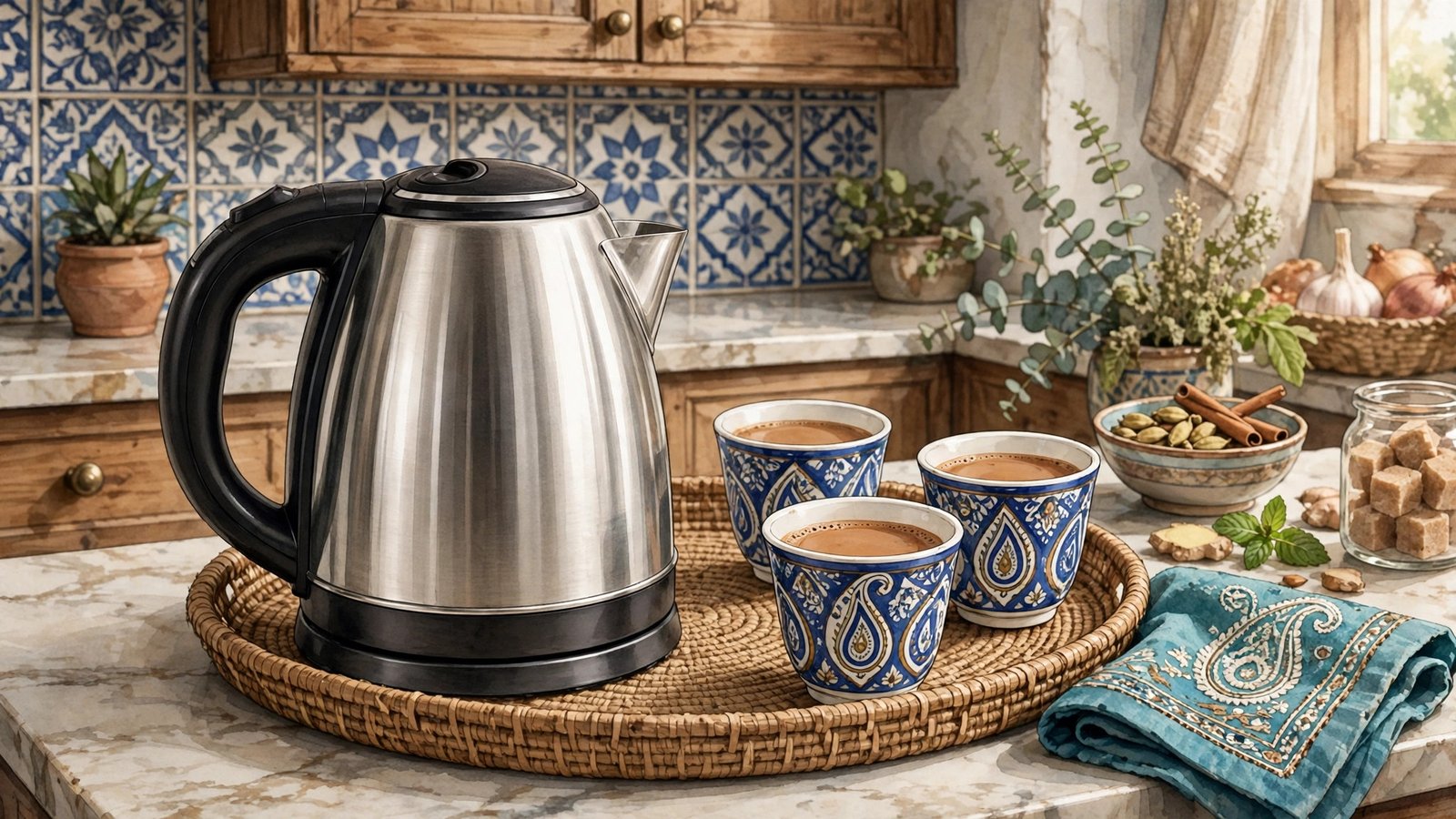
Most steel kettles in this bracket come with a cordless 360-degree base, which means you can lift the kettle and set it back down at any angle — genuinely handy when pouring into a teapot or multiple cups.
Pros:
- No plastic taste or smell, even when brand new
- Tough body that survives years of daily use and the occasional knock
- Cordless 360-degree base makes serving easy at any angle
- 1.5–1.8 litre models boil fast enough for a full family’s chai round
Cons:
- The outer body gets hot to the touch while boiling — keep children away
- Slightly heavier than plastic models, noticeable when full
- Cheap unbranded steel kettles can develop rust spots near the base if left wet
- Harder to see how much water is left without a water-level window
Who should buy one: Almost everyone. If you want one kettle that just works for years, start here.
2. Glass Electric Kettles (Typically Rs 5,000 – Rs 8,000)
Glass kettles are the showpieces: watch the water roll as it boils, most models light up with a blue LED, and the water-level marking is impossible to miss.
The glass itself is borosilicate — the same heat-resistant type used in lab and oven glass — but it is still glass. It can crack if knocked against a tap or dropped, and Pakistani kitchens with marble or concrete counters are not forgiving.
Pros:
- Watch the boil — the visible water level and rolling bubbles are genuinely satisfying
- Blue LED illumination looks premium on the counter, especially in the evening
- No metal taste; glass is neutral and easy to rinse clean
- Borosilicate glass handles heat well and does not stain from tea
Cons:
- Fragile — a hard knock on a marble counter or steel tap can crack it
- Limescale shows up fast on glass in hard-water areas, so it needs regular descaling
- Lids and handles are often plastic even when the body is glass
- Usually a little pricier than a comparable steel kettle
Who should buy one: Tea lovers, hosts who serve guests often, and anyone who wants their counter to look good.
3. Plastic Electric Kettles (Typically Rs 2,500 – Rs 4,000)
The cheapest kettle on the shelf, and for many students, hostel dwellers, and small offices, all the kettle they need. A basic plastic kettle boils a litre of water just as fast as a steel one — the heating element does the same work regardless of what the body is made of.
The trade-off is longevity and taste. Cheap plastic can keep a slight smell through the first few boils, and plastic bodies are the first to discolour or develop hairline cracks after a year or two of hard use. Look for food-grade, BPA-free plastic marked on the box, and avoid models with a chemical smell strong enough to notice in the shop.
Pros:
- The lowest electric kettle price in Pakistan — boiling water fast for the least money
- Lightweight and easy to carry, even when full
- Cool-touch exterior on most models, safer around children
- Fine for occasional use in hostels, offices, and small apartments
Cons:
- Plastic can smell through the first several boils, and some models keep a faint taste
- Bodies discolour and can crack after a year or two of daily use
- Water-level windows are often small and hard to read
- The cheapest models may skip boil-dry protection — check before buying
Who should buy one: Students, hostels, small offices, and anyone whose budget comes first.
4. Gooseneck Kettles (Typically Rs 5,000 – Rs 8,000)
A gooseneck kettle has a long, thin, curved spout for a slow, precise pour — handy for pour-over coffee, kahwa, or topping up chai without splashing.
The catch is capacity: most gooseneck kettles hold 0.8 to 1.0 litres — enough for two to three cups, not a family’s chai round. Buy one as your second kettle, not your only one.
Pros:
- Precision pouring — the thin stream is perfect for pour-over coffee and kahwa
- Less splashing when pouring into teapots and small cups
- Looks sharp on the counter; a favourite of coffee enthusiasts
Cons:
- Small capacity — most hold under a litre, so not for family chai
- Higher price per litre than standard kettles
- The thin spout is slower to fill and empty than a wide-mouth kettle
- Overkill if you only boil water for chai and noodles
Who should buy one: Coffee enthusiasts and green-tea or kahwa drinkers who care about the pour.
5. Thermostatic / Temperature-Control Kettles (Typically Rs 6,500 – Rs 8,000)
A thermostatic kettle lets you set the water temperature — say 80 degrees for green tea, 90 for coffee, or 70 for baby formula — and holds it there. Water that is too hot makes green tea bitter and scalds coffee grounds; this kettle solves that with a dial or digital panel and a keep-warm function.
If all you boil is water for chai, you can skip this type — but for daily green tea, coffee, or formula milk, the convenience adds up fast.
Pros:
- Set exact temperatures for green tea, coffee, and baby formula
- Keep-warm mode holds water hot without reboiling
- Digital displays make it easy to see the current temperature
- Avoids the bitter taste of over-boiled green tea
Cons:
- The most expensive kettle type, and the electronics add something that can fail
- Unnecessary if you only boil water for chai and instant food
- Digital panels need gentle handling; not a rough-and-tumble kettle
- Some models are slower to reach a full rolling boil
Who should buy one: Green-tea drinkers, coffee makers, and parents preparing formula milk.
Electric Kettle Price in Pakistan: What the Ranges Really Mean
Across all five types, the electric kettle price in Pakistan currently sits in a clear band: typically around Rs 2,500–8,000 (check the seller for the current price), decided by four things.
First, material: plastic is cheapest, steel sits in the middle, glass and gooseneck cost more. Second, capacity: a 1-litre kettle costs less than a 1.8-litre one. Third, features: thermostats and keep-warm modes push the price up. Fourth, channel: a brand outlet can cost more than a wholesale market, and sale events like 11.11 regularly cut prices.
A practical approach: set your budget, then compare two or three kettles in the same price bracket at different shops before deciding. Small shops will often match a Daraz price if you ask, and an official brand outlet usually gets you a proper warranty card — worth a few hundred rupees extra.
Buying Tips for Pakistani Homes
Capacity: match it to your chai habit. A 1.7–1.8 litre kettle makes six to seven cups per round — right for a family. A 1-litre kettle suits a hostel room or a couple.
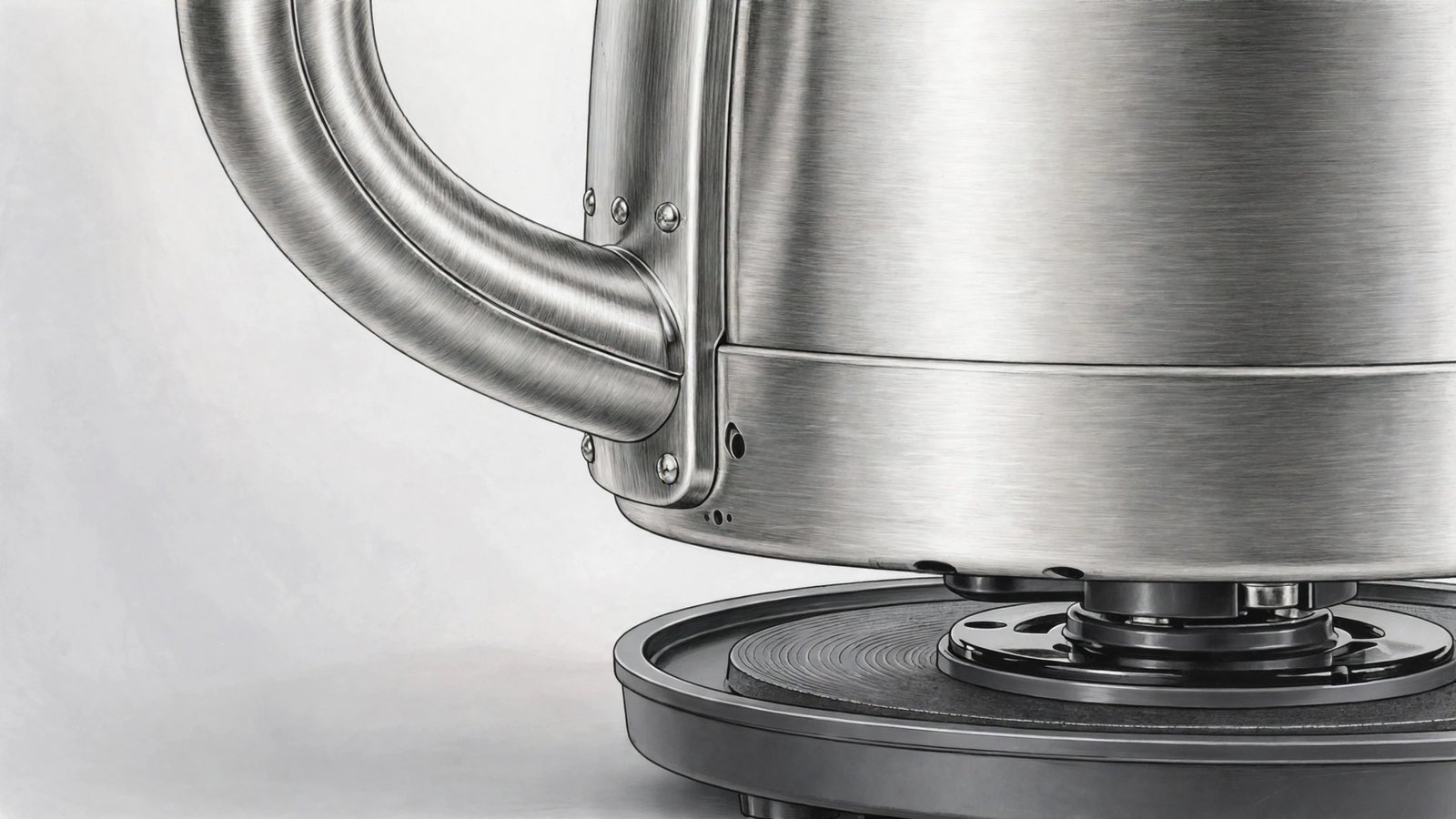
Wattage versus voltage fluctuations. Most kettles run at 1,500–1,800 watts — fast, but heavy on your wiring. In areas with frequent voltage dips, choose a kettle with thermal cut-off and overheat protection, and consider running it through a stabiliser.
Auto shut-off and boil-dry protection are non-negotiable. Every decent kettle should switch itself off when the water boils and refuse to heat when empty — the single most important safety feature.
Descaling matters more than you think. Much of Pakistan has hard water, and limescale builds up on the heating element within weeks. A scaled element boils slower, uses more electricity, and dies younger. Once a month, boil a 50/50 mix of white vinegar and water, let it sit for an hour, and rinse twice. A hidden element (flat steel base inside) is easier to descale than an exposed coil.
Check the warranty and the box. A genuine one-year warranty card from an official distributor beats a shopkeeper’s verbal promise. On Daraz, look for official brand stores and check buyer reviews for warranty-honouring complaints.
Small details that matter daily. A 360-degree cordless base for easy serving, a water-level window you can read at a glance, and a lid that opens wide for cleaning. Check the plug — it should be a proper three-pin Pakistani plug.
Frequently Asked Questions
How much does an electric kettle cost in Pakistan?
Prices typically range around Rs 2,500–8,000 depending on the material, capacity, and features (check the seller for the current price). Basic plastic kettles sit at the low end, stainless steel in the middle, and glass, gooseneck, or thermostatic models at the top of the band.
How much electricity does an electric kettle use?
A 1,500-watt kettle running for five minutes uses about 0.125 units (kWh) — a few rupees per boil. It is usually cheaper and always faster than a gas stove.
Can I make doodh patti directly in an electric kettle?
Milk boils over fast in a kettle’s narrow neck and scorches onto the element. Better: boil water in the kettle, then brew your chai or doodh patti in a separate pot.
Why does my new kettle smell like plastic?
A faint plastic smell on the first few boils is common, especially with plastic-bodied kettles. Wash it out, fill it with water, boil, and pour the water away — repeat two or three times. If a strong chemical smell persists after that, return the kettle; it is not worth using.
How long does an electric kettle last?
Two to four years is typical for daily use. Limescale and boiling it dry are the two main killers — monthly descaling gets you to the upper end of that range.
Conclusion
The best electric kettle in Pakistan matches your kitchen: stainless steel for most families, plastic for tight budgets, glass for looks and ritual, gooseneck for coffee and kahwa, thermostatic for precise temperatures. At typically around Rs 2,500–8,000 (check the seller for the current price), there is no reason to overspend — pick your type, check for auto shut-off and a real warranty card.
Want to see what’s trending in Pakistani homes right now? Browse the live product feed at trendz.pk — updated daily with the products Pakistan is actually buying.