Best Power Bank in Pakistan (2026): Price Guide & Buying Tips
Between load-shedding hours, long commutes in Karachi and Lahore, and university days spent far from a wall socket, a dead phone battery is a daily frustration for millions of Pakistanis. If you are searching for the best power bank in Pakistan right now, the market gives you plenty of choice — from slim 10,000mAh pocket units to heavy 20,000mAh bricks with 22.5W fast charging. The catch is that the same market is flooded with fake capacity claims and counterfeit branding that stop working within months.
This guide cuts through the noise. No sponsored picks, no invented specs — just the power bank types that actually make sense in Pakistan, what they should cost you, and how to avoid getting scammed.
Quick Picks
- Best for everyday use: A 10,000mAh compact power bank with 18W fast charging — light enough for a pocket, one full phone charge.
- Best value for long days: A 20,000mAh power bank with 22.5W output — two to three full charges, ideal for load-shedding nights.
- Best for travel and outages: A high-capacity unit with fast input charging, so it refills itself quickly between power cuts.
- Best on a tight budget: A basic 10,000mAh unit bought from an official brand store — never a no-name unit from a random seller.
1. 10,000mAh Compact Power Banks — The Daily Driver
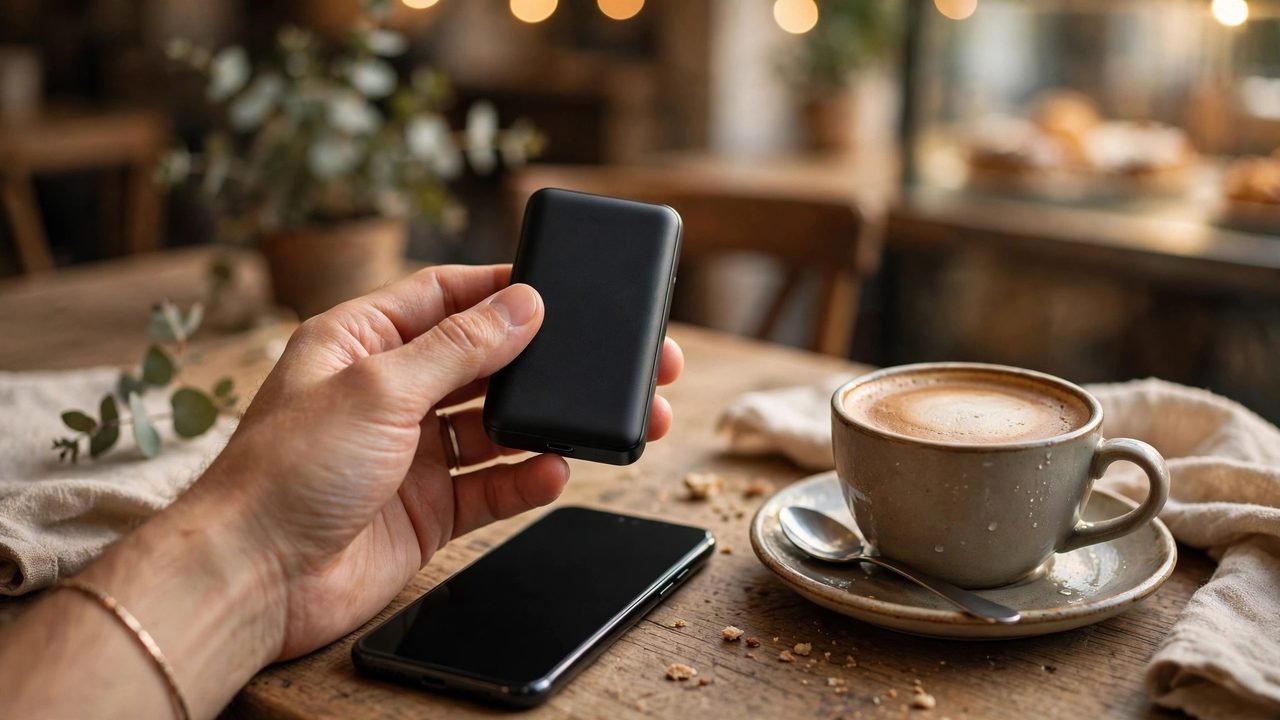
The 10,000mAh power bank is the sweet spot for most people. It weighs roughly 180–250 grams, slips into a jacket pocket or a small handbag, and holds enough energy for about one full charge of a modern smartphone (once you account for the real-world energy loss explained below).
Pros:
- Light and genuinely pocketable — you will actually carry it every day.
- Affordable; the cheapest way to get a power bank from a trustworthy brand.
- Charges a typical phone from 0 to 100% once, with a little left over.
Cons:
- Not enough for two full days away from a socket, or for charging two devices.
- Cheaper units often have slow input charging, so refilling the power bank itself takes 5–6 hours.
Who should buy one: Students, office workers, and anyone whose phone just needs a top-up to survive the day. If your area gets short, predictable load-shedding breaks, a 10,000mAh unit is usually all you need.
2. 20,000mAh Power Banks — The All-Day Workhorse
A 20,000mAh power bank is roughly double the capacity and double the weight — typically 400 grams or more. That is the size of a small brick, and you will feel it in your bag. In exchange, you get two to three full phone charges, or one phone charge plus a tablet top-up.
Pros:
- Gets you through multi-day trips, long load-shedding spells, and travel days without hunting for a socket.
- Usually comes with two or three output ports, so you can charge a phone and earbuds (or a friend’s phone) at the same time.
- Larger models often include a digital percentage display instead of vague blinking dots.
Cons:
- Heavy — not something you carry casually in a pocket.
- Takes longer to recharge itself; without fast input charging, a full refill can take 8–10 hours overnight.
- Pricier, and the market has the most counterfeits in this size.
Who should buy one: Frequent travellers, riders, field workers, and anyone in areas with long or unpredictable outages. If your phone dies every single day before evening, step up to 20,000mAh.
3. Fast-Charging Power Banks (22.5W, PD and Quick Charge)
“Fast charging” on a power bank box refers to how quickly it can push power into your phone — and, just as importantly, how quickly the power bank itself can be refilled. Units rated 18W, 22.5W, or higher with USB Power Delivery (PD) or Quick Charge (QC) support are worth the premium in Pakistan, where the window between load-shedding breaks can be short.
A few practical notes:
- Match the protocol to your phone. A Samsung or Pixel charges fastest over USB-PD; many Xiaomi, Oppo, and Vivo phones use their own fast-charge standards. A power bank that supports both PD and QC covers most phones sold in Pakistan.
- The cable matters as much as the brick. A 22.5W power bank paired with a cheap thin cable will still charge slowly. Use the cable that came in the box, or a known-good thick USB-C cable.
- Input speed matters. Look for 18W input (or higher) on the specs — that is what refills a 20,000mAh brick in a few hours instead of all night. This is the single most useful spec during load-shedding season.
Pros: Noticeably faster phone charging; fast self-refill between outages; USB-C ports work with modern phones and laptops.
Cons: Costs more than basic 10W/12W units; slightly heavier electronics inside; cheap “fast charge” labels on unbranded units are often fiction.
4. Solar Power Banks — For Outdoor and Rural Use
Solar power banks have a small photovoltaic panel on one face, marketed for camping, hiking, and areas with no grid access at all. They sound perfect for rural Pakistan — but go in with realistic expectations.
The panel on a typical solar power bank is tiny. In bright direct sunlight it trickles in a small amount of charge over many hours — enough to add a few percent to your phone in an emergency, not enough to meaningfully recharge the 10,000–20,000mAh battery inside. Think of the solar panel as a last-resort trickle, not a charger replacement.
Pros: Can add emergency charge when there is genuinely no socket for days; usually rugged with water-resistant shells; doubles as a normal power bank via cable.
Cons: Solar charging is extremely slow — a full recharge by sun alone can take days; the panel adds bulk and weight; many cheap solar units pair the panel with low-quality cells that degrade fast.
Who should buy one: Campers, hikers in the northern areas, and people who spend days in the field. For city load-shedding, a normal fast-charging power bank refilled from the wall is far more practical.
Power Bank Price Guide in Pakistan (2026)
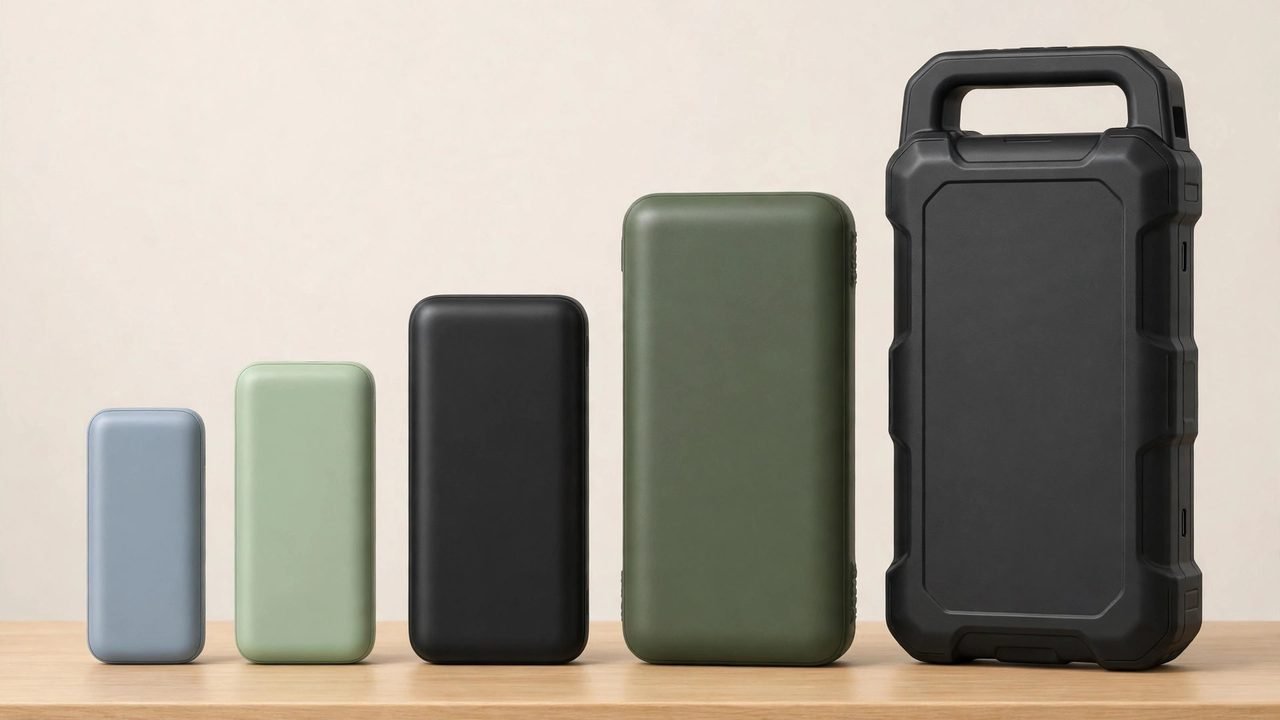
Power bank prices in Pakistan generally fall between Rs 2,000 and Rs 7,000, depending on capacity, charging speed, and brand. As always, treat these as approximate ranges — check the seller for the current price before you buy, because prices shift with the dollar rate and sale seasons.
- Basic 10,000mAh (10–18W): typically around Rs 2,000–3,500 from known brands’ official stores.
- Branded 20,000mAh (18–22.5W, PD/QC): typically around Rs 4,500–7,000.
- No-name or unbranded units: often listed below Rs 2,000 — this is exactly where most fakes live, so the low price is a warning, not a deal.
- Solar power banks: typically around Rs 3,500–6,000, with the premium paying for the rugged shell and panel rather than better charging.
A rule of thumb that holds up well: if a 20,000mAh “branded” power bank is selling for the price of a 10,000mAh one, it is almost certainly mislabelled or counterfeit. Genuine high-capacity cells cost real money, and nobody sells them at a loss.
Buying Tips for Pakistan
Capacity on the box is not capacity in your phone
Power bank capacity is rated at the battery’s internal voltage (3.7V), but your phone charges at 5V, and conversion loses energy as heat. A 10,000mAh power bank realistically delivers about 6,000–6,500mAh to your phone — roughly one full charge of a 5,000mAh phone battery. A 20,000mAh unit delivers about 12,000–13,000mAh. Keep this ~65% rule in mind and you will never feel cheated by the numbers.
Buy genuine — fakes are everywhere
Pakistan’s power bank market has a serious counterfeit problem. Protect yourself:
- Buy from official brand stores on Daraz or the brand’s own authorised sellers — not from random sellers with stock photos.
- Check the serial number or scratch verification code on the brand’s website after purchase.
- Be suspicious of familiar brand logos at half the official price. Counterfeit power banks not only die early — cheap cells are a genuine fire risk.
Match charging speed to your phone and your outages
If your phone supports 25W or 33W wired charging, a 22.5W PD power bank will use most of that speed. If your phone only supports 10–15W anyway, paying extra for 65W output is wasted money. And during load-shedding, prioritise fast input charging (18W+) so the power bank refills during the short windows when electricity returns.
Keep the warranty card and receipt
Reputable brands selling in Pakistan offer 6–12 month warranties through their official distributors. Keep the box, receipt, and warranty card — grey-import units bought from unofficial sellers usually carry no local warranty at all, which is another reason the cheapest listing is rarely the cheapest outcome.
Think about travel
Power banks go in cabin baggage only — airlines do not allow them in checked luggage. Units under 100Wh (which covers virtually all 20,000mAh power banks, rated around 74Wh) are fine on domestic and international flights from Pakistan without special approval. If you ever buy a giant 30,000mAh+ unit, check your airline’s policy first.
Frequently Asked Questions
Which power bank capacity is best for daily use in Pakistan?
For most people, 10,000mAh is the right daily capacity — one full phone charge in a pocketable size. Step up to 20,000mAh if your area has long load-shedding hours, you travel often, or you charge more than one device.
Are cheap power banks on Daraz worth buying?
Some are, most are not. Stick to official brand stores and authorised sellers on Daraz, and avoid no-name units priced far below the market range. A counterfeit power bank with fake capacity costs you twice — once at checkout, and again when you replace it months later.
How long does a 20,000mAh power bank take to fully charge?
With 18W fast input, roughly 5–7 hours; with basic 10W input, 8–10 hours or more. This is why input wattage matters so much in Pakistan — a slow-refilling brick may not be ready when the next outage hits.
Can I carry a power bank on a domestic flight in Pakistan?
Yes, in your hand carry. Power banks under 100Wh need no airline approval, and every common 10,000mAh and 20,000mAh model falls well under that limit. Never pack one in checked luggage.
Why does my power bank charge my phone slower than the box claims?
Usually one of three reasons: the cable is low quality, the phone and power bank use different fast-charge protocols, or the power bank’s claimed wattage was exaggerated. Test with the original cable first — it fixes the problem more often than people expect.
Conclusion
The best power bank in Pakistan for you comes down to one question: how long are you away from a socket? A compact 10,000mAh unit covers a normal day, a 20,000mAh fast-charging brick covers load-shedding nights and travel, and whatever you choose, buying genuine from an official store matters more than any spec on the box. Prices run roughly Rs 2,000–7,000 — stay in that range, check the seller for the current price, and keep your warranty card.
For more trending product guides, price breakdowns, and buying advice for Pakistan, browse the latest picks on the trendz.pk product feed.