Best Slow Cooker in Pakistan (2026): Price Guide & Buying Tips
If you are looking for the best slow cooker in Pakistan, you likely want tender daal, rich gravy, or soft meat without standing by the stove for hours. A slow cooker cooks food gently over a long time, so you can add ingredients, set the heat, and return later to a hot meal.
This guide helps you choose by family size, controls, and budget. You will find quick picks, a price breakdown in rupees, and honest pros and cons for each type. The focus is daily Pakistani cooking, including winter gas shortages and load-shedding.
A slow cooker will not replace your pressure cooker or frying pan. It does a different job. It gives you a calm, hands-off way to cook the dishes that usually need the longest time on the stove, and that is where its value lies.
Quick Picks: Best Slow Cooker in Pakistan at a Glance
- Best budget: Basic manual slow cooker with Low, High, and Keep Warm. Simple, affordable, and enough for daal and curries.
- Best value for most homes: Programmable digital slow cooker with a timer. Set it in the morning and let it switch to warm.
- Best for joint families: Large family-size slow cooker. It handles big batches of haleem, paya, and meat gravy.
- Best for small kitchens: Multi-cooker with slow-cook mode. One appliance covers slow cooking and other daily tasks.
- Best for couples: Small two-person slow cooker. Compact, easy to wash, and right for small portions.
Slow cooker prices in Pakistan are typically around Rs 8,000–35,000 (check the seller for the current price), depending on capacity, controls, pot quality, and extra functions.
How to Choose the Best Slow Cooker in Pakistan for Your Family
Slow cooking suits Pakistani food because many dishes improve with time. Daal turns smooth, nihari-style gravies gain depth, and haleem and paya become tender after long, gentle heat. Beans, lentils, and tougher meat cuts also soften well without constant stirring.
Capacity is listed in litres, and usable space is less than the full pot. Do not fill it to the brim. Small sizes suit one or two people, medium sizes suit families of four to five, and large sizes suit joint families, guests, and batch cooking.
Choose by your normal quantity. A large pot spreads a small meal too thin. A small pot forces a big family to cook in rounds. The right size saves time and electricity.
Wattage matters in Pakistan. A slow cooker draws modest power at one time but runs for hours. Load-shedding can interrupt a long cycle, and Keep Warm cannot fix a long cut midway. Plan cooking around your usual power schedule, and do not leave raw meat sitting in a switched-off pot.
In winter, low gas pressure makes stove cooking harder in many areas. An electric slow cooker gives a useful backup for daal, soup, and gravies. That backup value matters even if you already own a pressure cooker.
One cooking habit helps results. Add delicate ingredients and fresh garnish near the end, and give daal or curry a final tarka on the stove if you like that flavour. The slow cooker does the long work, while a short finish keeps the taste familiar and fresh.
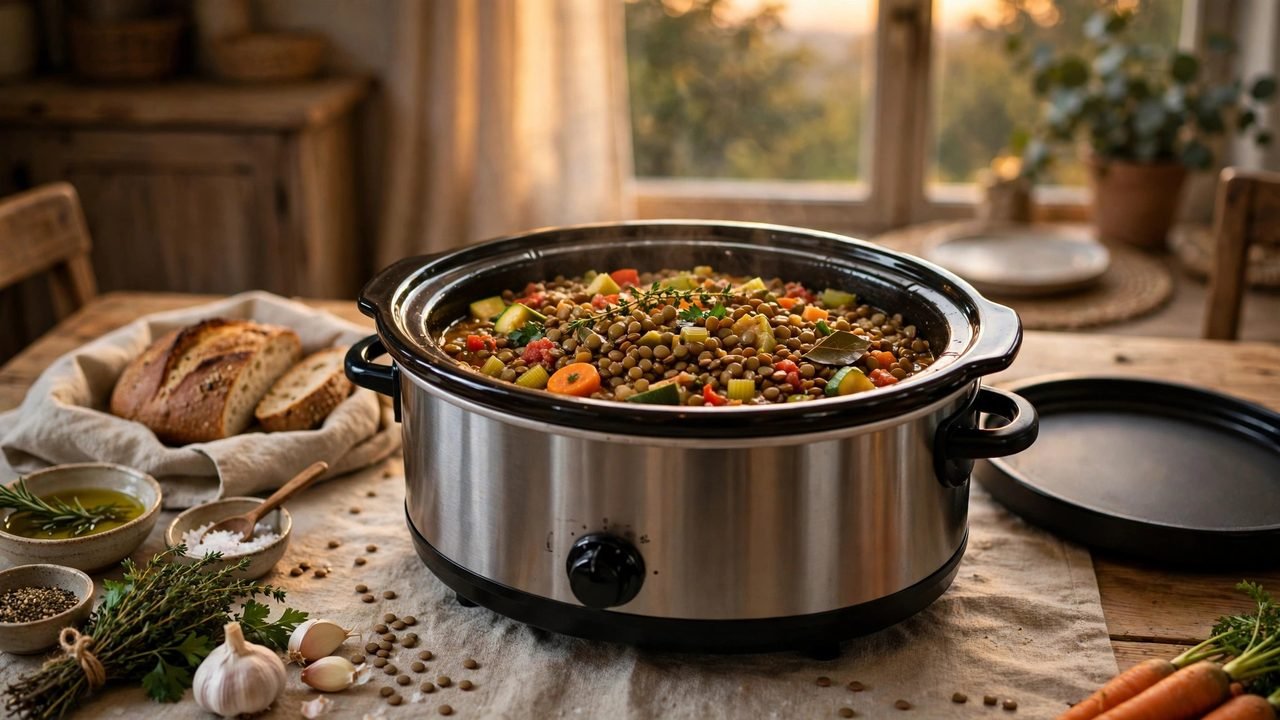
1. Basic Manual Slow Cooker – Best Budget Pick
A basic manual model has a simple dial for Low, High, and Keep Warm. It usually includes a removable pot and glass lid, with no timer screen. You set the heat and check back later.
It suits buyers who want the main benefit at the lowest relative cost. Daal, chana, mixed vegetables, and simple chicken curry all work well. Simple controls also help older family members who prefer a clear dial over a screen. If someone is home to switch it to warm, this type is hard to beat for value.
Pros:
- Lowest relative cost in this guide
- Easy controls for daily use
- Removable pot in many models eases washing
- Covers basic meals without extra settings
Cons:
- No timer, so you must switch settings yourself
- Fewer heat choices than digital models
- Basic lid may seal less tightly
2. Programmable Digital Slow Cooker – Best Value for Most Homes
A programmable model adds a timer and automatic Keep Warm. Set the hours in the morning, leave for work, and return to food that is ready and warm.
It costs more than a manual model, but busy families gain real convenience. Timed daal, chicken curry, or soup fits school and office routines with less clock-watching. Parents who return at different times also benefit, because the food stays warm instead of cooling on the counter.
Pros:
- Timer supports busy weekday routines
- Automatic Keep Warm helps avoid overcooking
- Display makes settings easy to check
- Strong fit for medium-sized families
Cons:
- Costs more than manual models
- Digital controls take a little learning
- Power cuts may reset some models
3. Large Family-Size Slow Cooker – Best for Joint Families
A large model has a wide, deep pot for bigger batches. It suits haleem, paya, beef gravy, and daal for joint families or guests. Batch cooking for the next day is also easier.
The trade-off is space. A large pot needs more counter and sink room and feels heavy when full. Buy it only if your normal cooking volume needs the size. Measure your counter and cabinet space first, because a pot that is hard to store soon stops being used.
Pros:
- Handles large batches for families and guests
- Wide pot supports even cooking
- Useful for weekend batch cooking
- Avoids cooking in two rounds
Cons:
- Needs more counter and storage space
- Heavy pot is harder to wash
- Less practical for small portions
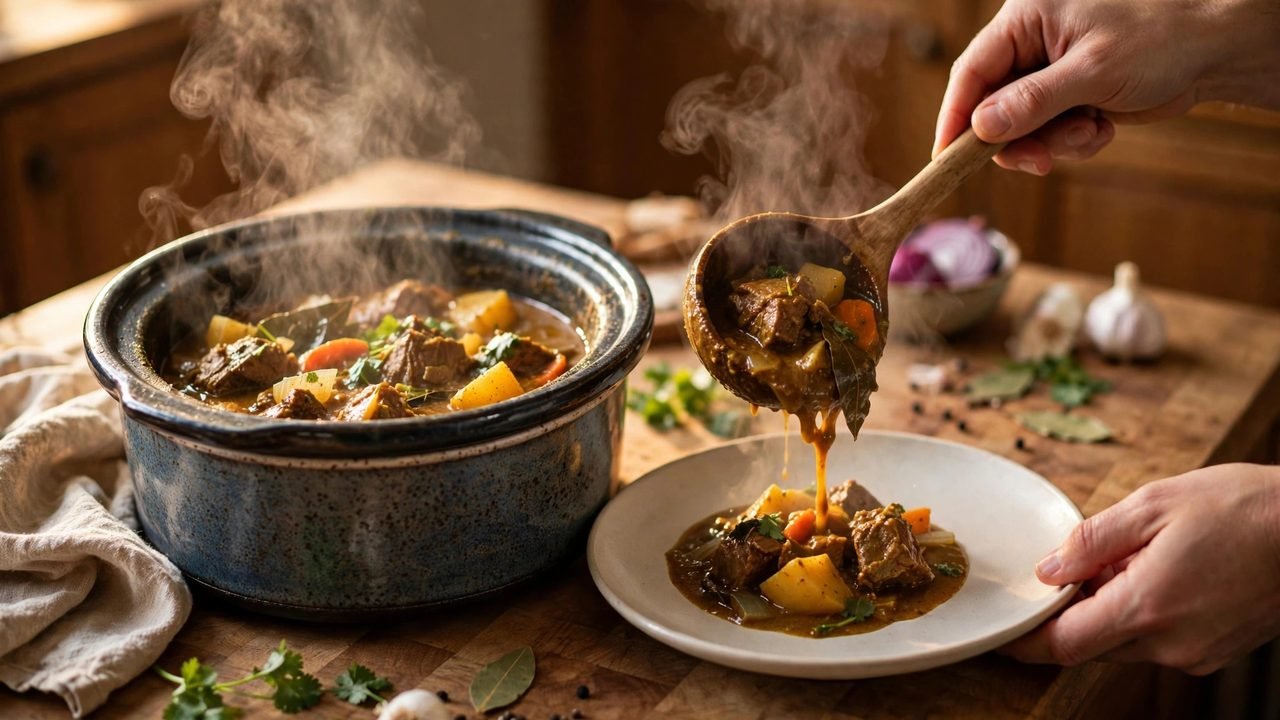
4. Multi-Cooker with Slow-Cook Mode – Best for Small Kitchens
A multi-cooker includes slow cooking as one mode among others. One body replaces separate appliances, which helps in compact kitchens and apartments.
It sits at the higher relative cost end. Buy it if you will use several functions. If you only want slow cooking, a dedicated model is simpler and cheaper. Before buying, confirm that the slow-cook mode runs for long hours and switches to warm, because short modes suit a different style of cooking.
Pros:
- Saves counter space with combined functions
- Slow-cook mode covers daal and gravies
- Good fit for small kitchens
- Supports different meals across the week
Cons:
- Higher relative cost than dedicated models
- More settings take time to learn
- Slow-cook quality varies by model
5. Small Two-Person Slow Cooker – Best for Couples and Hostels
A small model suits couples, single professionals, and parents who cook light portions. It stores easily and the pot is simple to lift and wash.
It works well for small daal, soup, or chicken curry portions. It is not made for gatherings. Its strength is convenience for small households. It also helps with portion control, because you cook what two people will eat instead of reheating a large pot for days.
Pros:
- Compact size fits small counters
- Easy to lift, wash, and store
- Good for small portions without waste
- Lower relative cost than large models
Cons:
- Too small for family batches
- Limited room for large meat cuts
- May need a second round for guests
Slow Cooker Price in Pakistan: What Each Budget Buys
Slow cooker prices in Pakistan are typically around Rs 8,000–35,000 (check the seller for the current price), depending on size, controls, and extra functions. Think in bands, because stock and seller offers change.
At the lower end, expect basic manual models. They cover the core job if Low, High, and Keep Warm are enough. In the middle, programmable models and better family sizes become common. Many buyers find the best balance there.
At the upper end, you pay for larger capacity, stronger build, or multi-cooker functions. Extra spend helps only if you use the size or settings often. A higher price alone does not make better daal.
Compare the full offer, not only the headline price. Check delivery charges, warranty terms, and what is included. Clear warranty support can be worth more than a small saving.
Also check the pot size in litres against your family needs before comparing prices. A cheaper small model is not a saving if it is too small for your daily cooking. The best value is the lowest price that still fits your portion size, controls, and warranty needs.
Buying Tips for Pakistani Shoppers
Match capacity to daily cooking, not the biggest gathering of the year. Couples can stay small. Families of four to five should look at medium sizes. Joint families should consider large models.
Choose a removable ceramic pot when possible. It is easier to wash, serve from, and store. Check that it fits your sink and that you can lift it when full of hot gravy.
Keep Warm is useful when meal times shift. It keeps food ready for late arrivals. A lid that sits well also matters, because a good seal holds heat and moisture for even cooking.
Ask about spare pots and lids before paying. Lids break and pots chip. A seller who can arrange spares gives more confidence, especially for less common models.
Prefer local sellers or Daraz official stores with clear warranty terms. Read what the warranty covers and where service is offered. Keep the invoice and warranty card safe for later claims.
Consider your power routine. With frequent load-shedding, simple manual controls may restart more easily. With stable power and fixed hours, a timer saves daily effort.
Check cleaning before you buy. A removable pot and lid should wash without struggle, and the outer body should wipe clean after spills. Easy cleaning matters because a slow cooker that is hard to wash will be used less, no matter how well it cooks.
Frequently Asked Questions
Is a slow cooker good for Pakistani food?
Yes. It suits daal, chana, haleem, paya, soups, and meat gravies. Long, gentle heat blends spices and softens beans and meat. It is less useful for quick frying or crisp dishes.
What size should a family buy?
Small sizes suit one or two people. Medium sizes suit families of four to five. Large sizes suit joint families. Leave space above the food instead of filling the pot fully.
Can it help during gas shortages?
Yes, as an electric backup for daal, soup, and gravies when gas pressure is low. It will not replace every stove task, but it helps prepare hot meals in winter.
Does a slow cooker use much electricity?
It runs for hours, so use depends on wattage and time. It draws less power at one moment than many larger appliances. Right-sizing your pot helps avoid waste.
Manual or programmable: which is better?
Manual suits simple use and lower relative cost. Programmable suits busy homes that want a timer and automatic Keep Warm. Most working families prefer the programmable type.
Conclusion
The best slow cooker in Pakistan for your home matches your family size, routine, and budget. Manual models keep cost low. Programmable models add daily ease. Large and multi-cooker options help only when you need them.
Check capacity, pot quality, lid seal, spare parts, and warranty before you buy. Those basics matter most. For more trending home products and guides, browse the feed at trendz.pk.